










You wash your sheets regularly, but the mattress underneath also collects dust, skin flakes, perspiration and the occasional spill. Learning how to clean a mattress helps keep the sleeping surface fresh without damaging the materials inside.
The safest approach is usually simple: check the care label, vacuum gently, treat small marks promptly and let everything dry before making the bed. This guide covers routine cleaning, stains and odours, plus the situations where home cleaning is not enough.
Before You Start: Check the Mattress Care Label
Mattresses are made from different combinations of foam, springs, latex, fabric and adhesives. A method recommended for one model may be unsuitable for another. Read the manufacturer’s instructions first, especially before using cleaning products, bicarb soda or any form of wet cleaning.
Gather clean white cloths, a dry towel, a vacuum with an upholstery attachment and fresh bedding. Use a mild cleaning solution only if the care instructions permit it. Avoid bleach, abrasive brushes, soaking the mattress or assuming a carpet or steam cleaner is safe for every design.
Step 1: Strip the Bed and Wash Your Bedding
Remove the fitted sheet, pillowcases, doona cover and mattress protector. Wash each item according to its own care label. If the mattress has a removable cover, check whether that specific cover is machine-washable before attempting to remove or wash it.
With the bed stripped, inspect the mattress for damp patches, unusual odours, torn fabric or visible mould. These signs can change how you should proceed. It is also a good opportunity to clear dust from the bed frame and the area underneath.
Step 2: Vacuum the Mattress
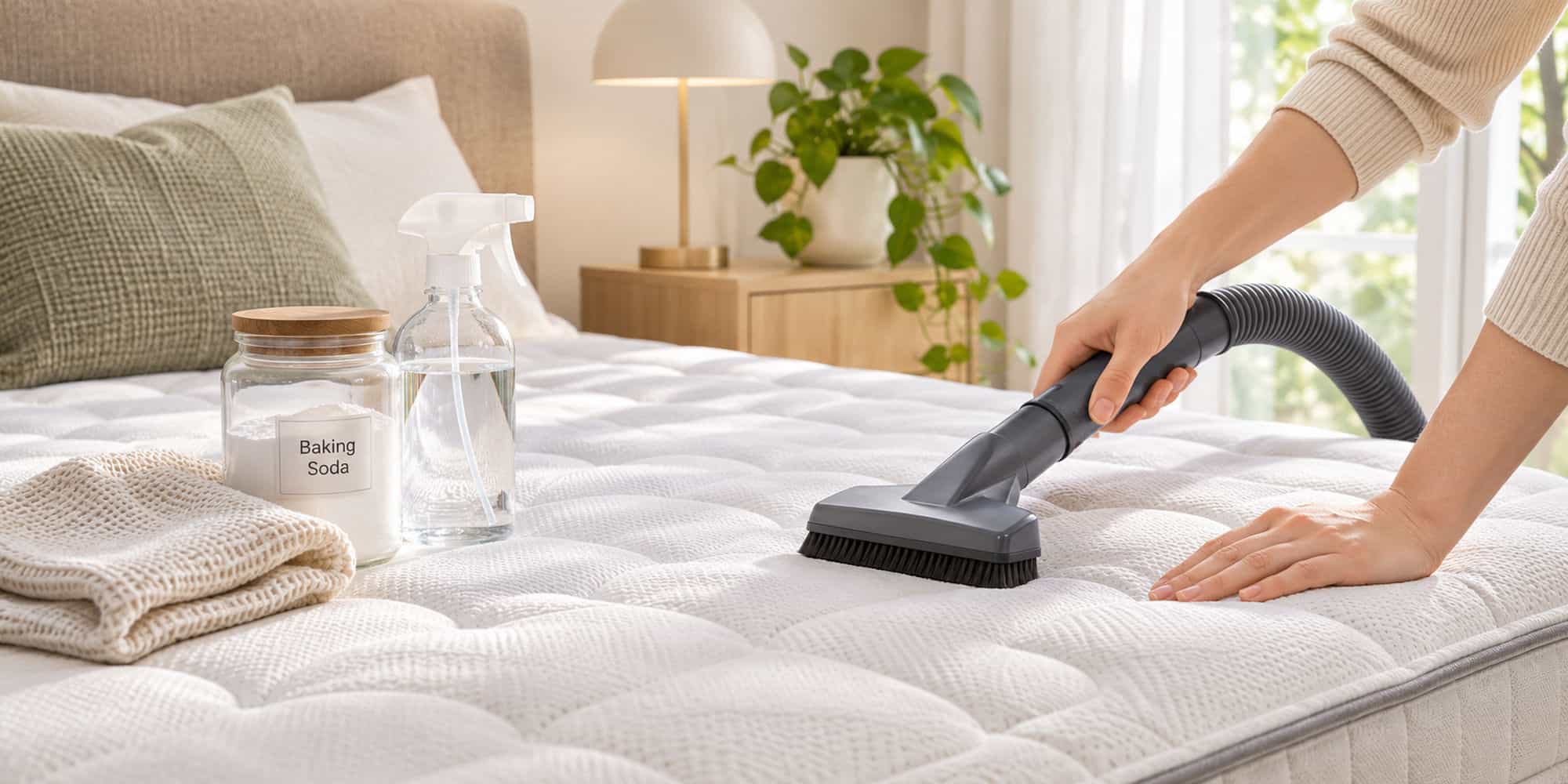
Use the vacuum’s upholstery attachment on an appropriate, preferably gentle, suction setting. Work slowly across the top, then around the seams, edges and sides where dust and debris collect. A narrow nozzle can reach stitching and recessed areas, provided the fabric is not being pulled or damaged.
Vacuuming removes surface dirt and loose particles, but it does not make a heavily contaminated mattress hygienic or remove moisture trapped inside. Some specialised mattress fabrics should not be vacuumed, so follow the product’s care guidance if it differs.
Step 3: Spot-Clean Small Stains
For a recent spill, immediately press a clean, dry towel gently onto the affected area to absorb liquid. Blot rather than scrub; rubbing can spread the mark or drive it further into the fabric. Test any approved cleaning method on a hidden area first.
If the care label allows it, use a white cloth lightly dampened with water, or the specified mild cleaner, to dab the stain from the outside towards the centre. Use as little moisture as possible. Never pour cleaning solution onto the mattress, and do not continue adding water to chase a stubborn stain.
Step 4: Freshen and Dry the Mattress Fully
Open the windows when conditions allow and use a fan to improve airflow. Airing the uncovered mattress can help with ordinary stuffiness, but it will not fix damp filling or serious contamination. Drying can take much longer in humid weather, particularly with thick foam layers.
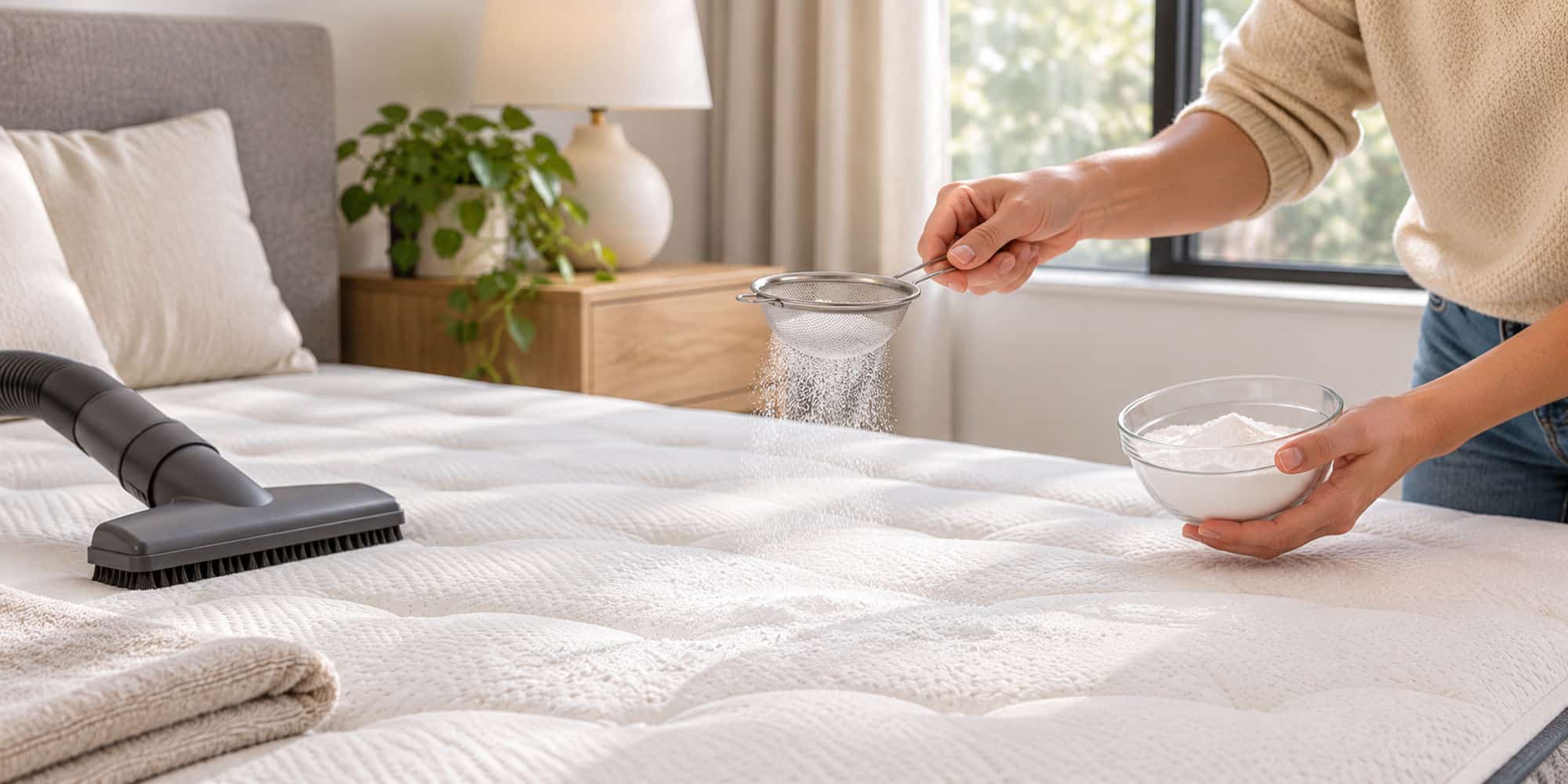
Some household guides suggest sprinkling plain bicarbonate of soda over a dry mattress, leaving it for several hours and vacuuming it away. Only try this if the manufacturer permits it; powders and fragrances are not appropriate for every model. Always confirm the surface and inner materials are completely dry before replacing sheets.
What About Urine, Sweat and Strong Odours?
Accidents need prompt attention. Blot fresh liquid with clean towels, then follow the mattress manufacturer’s stain instructions. An approved enzyme or upholstery cleaner may be an option for certain fabrics, but do not assume vinegar, peroxide or detergent is safe for all foams and finishes.
For a yellow sweat mark, start with gentle spot cleaning rather than saturating the area. If a stain is extensive, liquid has penetrated deeply, or a smell persists after drying and airing, seek advice from the manufacturer or a suitable professional. Covering an ongoing odour with fragrance will not remove its cause.
Take Extra Care With Foam, Moisture and Mould
Memory foam and other absorbent layers can hold water long after the surface feels dry. Avoid steam cleaning or wet extraction unless the manufacturer specifically approves the process and effective drying is possible. Never put fresh bedding over a damp mattress.
Visible mould is different from an ordinary stain. Because a mattress contains porous materials, mould can penetrate where surface wiping cannot reach. If you suspect mould inside the mattress or it remains wet after a significant spill, stop using it and seek qualified advice about replacement rather than trying to bleach it clean.
How Often Should You Clean a Mattress?
For routine care, vacuuming around every three to six months is a useful guide, with a more thorough inspection and refresh about twice a year. Clean spills as they happen instead of waiting for the next scheduled clean. Homes with pets or more dust may need attention more frequently.
A clean, well-fitted, washable mattress protector helps prevent stains reaching the mattress. Wash the protector as its label directs and keep the room ventilated. Rotate the mattress only if its manufacturer recommends it; many modern one-sided designs should not be flipped.
When Cleaning Is Not Enough
Cleaning can improve surface freshness, but it cannot repair a sagging mattress, restore damaged foam or guarantee that a heavily soaked mattress is safe to keep using. Persistent mould, structural damage or strong unexplained odours call for a more careful assessment.
If replacement is necessary, our mattress buying guide explains how to compare comfort and construction. You can also explore Dreamo mattresses while checking the care requirements of individual models.
Final Thoughts
The best way to clean a dirty mattress is to start gently and keep moisture under control. Vacuum its surface, blot minor spills, follow the care label and allow plenty of drying time. Regular bedding care and a washable protector make future cleaning easier.
When a stain or smell seems to have reached the inner layers, avoid repeated wet treatments. Protecting the mattress materials matters just as much as removing the visible mark.
FAQ
Can I steam clean my mattress?
Not unless the manufacturer specifically permits it. Steam introduces heat and moisture that can damage materials or remain trapped inside a mattress.
Can I use baking soda to freshen a mattress?
Some cleaning guides recommend plain bicarbonate of soda on a dry mattress, followed by vacuuming. Check the mattress care label first; it is not suitable for every construction.
How long should I let my mattress dry after cleaning?
There is no reliable fixed number of hours. Drying depends on how wet it became, the materials and airflow. Replace the bedding only once it is fully dry.
Should I clean or replace a mouldy mattress?
Visible or suspected internal mould in a porous mattress can be difficult to remove completely. Seek professional or manufacturer advice, and be prepared to replace a contaminated mattress rather than simply wiping the surface.