





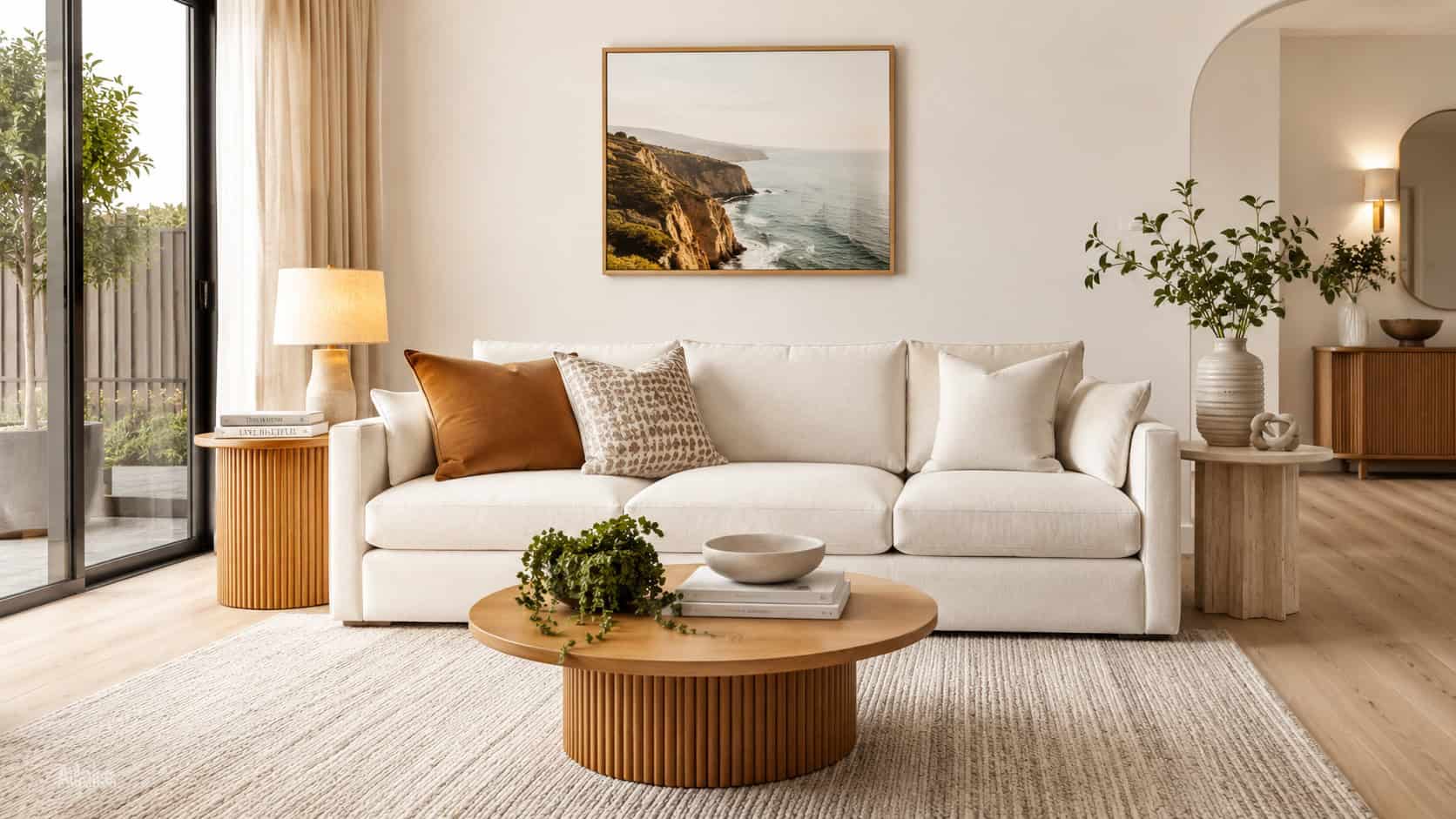
Side tables are easy to treat as an afterthought, but the right ones can make a living room noticeably easier to use. They give you a convenient place for a drink, phone, book or lamp while helping the seating area feel finished rather than leaving the ends of a sofa or armchair visually empty.
Because they are small, side tables also give you more freedom than larger furniture. You can use them to introduce a different shape, timber tone or material without changing the whole room. The key is getting the proportions and placement right first, then styling the surface without taking away the space you actually need.
What Is a Side Table Used For?
A side table is primarily a practical surface positioned within easy reach of seating. In a living room, that usually means beside a sofa, next to an armchair or between two occasional chairs. It can hold everyday items that would otherwise end up on the sofa, floor or coffee table, and it can also support a table lamp where you want softer evening light.
That practical role is what separates a useful side table from one chosen only because it looks good in a photo. Before thinking about styling, consider what you are likely to put on it most days. If you regularly use a lamp, charge a phone and keep a drink nearby, you will need a little more usable surface than someone who simply wants a small table beside an accent chair.
How to Choose the Right Height
Height is one of the most important details because it affects how comfortable the table is to use. As a general guide, the tabletop should sit close to the height of the sofa arm or armchair beside it. A slightly lower table can still work well, but a very low surface may make you reach down awkwardly whenever you pick up a drink or phone.
A table that sits much higher than the sofa arm can have the opposite problem. It may feel visually top-heavy and can make larger objects, such as lamps, dominate the seating area. Measure the height of the furniture the table will sit beside rather than choosing from product dimensions in isolation. If you are still deciding on your main seating, browsing our sofas can help you compare the proportions you will be working around.
Choosing the Right Size and Shape
Once the height is right, look at the available floor area. A side table needs enough surface to be useful, but it should not squeeze the gap beside the sofa or make a walkway feel tight. In a compact living room, a small round table can be particularly forgiving because there are no corners projecting into the circulation space. A square or rectangular table can make better use of a straight gap and may provide more surface area for the same footprint.
Shape can also be used to balance the rest of the room. If you already have a large rectangular sofa and a square coffee table, a round side table can soften the arrangement. If your furniture includes more curves, a clean rectangular table may add useful contrast. The aim is not to collect one of every shape, but to avoid making the room feel too repetitive.
Where Should You Place Side Tables?
The most obvious position is beside a sofa, where the table can serve the end seat without interrupting the main seating area. You do not automatically need one at both ends. In a smaller room, a single table on the most frequently used side may be enough, while a larger sofa can feel more balanced with a table at each end if there is adequate space.
A side table can also sit between two chairs, where one surface serves both seats. This is useful for a conversation corner or reading area and can make two separate chairs feel like a deliberate arrangement. Beside accent chairs, a compact table is often all that is needed to create a functional secondary seating spot without adding another large piece of furniture.
How to Match Side Tables with Your Sofa and Coffee Table
Your side tables do not need to match your sofa or coffee table exactly. In fact, using the same finish on every piece can make a living room feel more like a furniture set than a space that has developed naturally. A better approach is to repeat one or two elements, such as a timber tone, black metal detail, rounded edge or warm neutral finish.
Think of the side table as part of the same visual family rather than an identical sibling. A timber side table can work beside an upholstered sofa even if the coffee table uses a different material, provided there is another detail linking the pieces. If you are choosing both tables at the same time, compare our coffee tables with the side table rather than judging each product separately; their relative height, scale and shape matter as much as the individual designs.
How to Style a Side Table Without Cluttering It
The smaller the tabletop, the more selective you need to be. Start with the item that has a real purpose, such as a lamp, and build around it only if there is enough space left. A small vase, candle or book can add personality, but the table should still have room for the things you reach for during the day.
Scale matters here too. One medium-sized object often looks calmer than several tiny decorations spread across the surface. If you use a lamp, check that the shade does not overwhelm the table or sit where someone is likely to knock it when getting up from the sofa. Styling should make the table feel considered, not turn it into a display that is inconvenient to use.
Do Your Side Tables Need to Match Each Other?
Matching side tables can create a clean, symmetrical look, particularly with a traditional sofa layout or when the room already has plenty of other visual detail. They are also an easy choice when both ends of the sofa have similar space and the tables need to perform the same job.
Different side tables can work just as well. One side of the sofa may have room for a larger table and lamp, while the other only needs a small drinks table. To keep an unmatched pair looking intentional, give them something in common: a similar height, related material, repeated colour or comparable visual weight. They do not have to be identical, but they should look as though they belong in the same room.
Final Thoughts
A good side table should make your living room easier to use before it does anything else. Start with the height of your seating, measure the floor space beside it and think about what needs to sit on the table day to day. Once those practical decisions are settled, shape, material and styling become much easier to get right.
There is no rule that says every side table must match, or that every sofa needs one at both ends. Choose the number and style that suit the way your room actually works. Explore our side tables to find options that can add useful surface space without making your living room feel crowded.