





Round vs Rectangular Dining Table: The Quick Answer
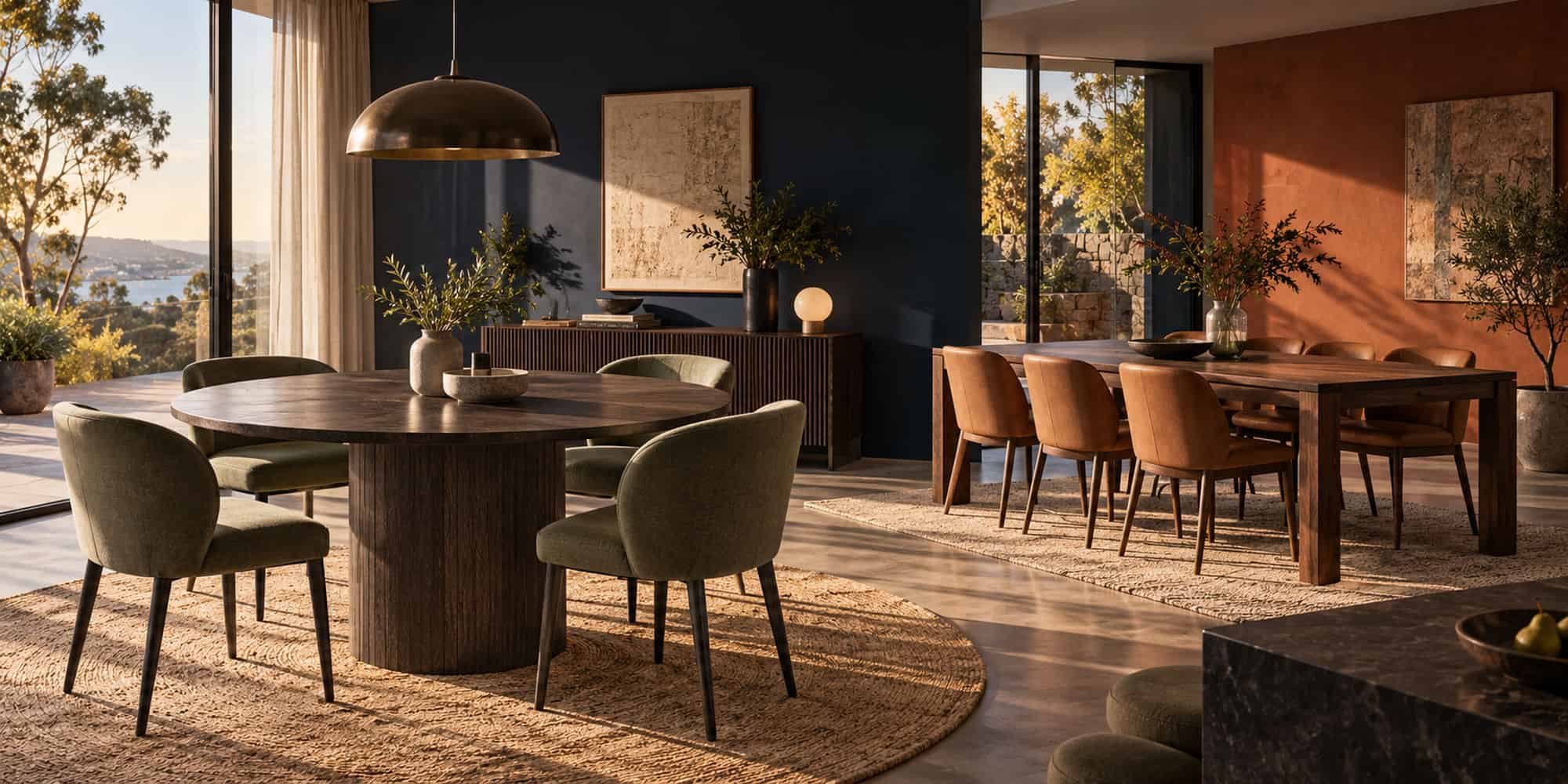
A round dining table is often a natural fit for a compact, roughly square dining area and for households that enjoy conversations around one shared centre. A rectangular dining table usually makes better use of a long room and gives families or frequent hosts a straightforward way to seat more people.
Neither shape is automatically more space-saving. The right choice depends on the actual table dimensions, its base, the chairs you plan to use and the clearance around them. Start with your room rather than a photograph of your favourite table.
Which Shape Works Best in Your Room?
Round tables soften the lines of a square or open dining nook. Because there are no projecting corners, moving around the table can feel natural when people approach it from several directions. But a wide circular top needs the same diameter of floor space in every direction, so it can be awkward in a particularly narrow room.
Rectangular tables follow the length of a narrow dining room or an open-plan kitchen and living area. Their straight edges can align with walls, cabinetry or a rug, helping define the dining zone. If your space has one long wall and a narrow walkway, a rectangular design may fit better even when a round table initially looks smaller.
Measure for Chairs and Walking Space
Before buying, mark out the exact tabletop dimensions on the floor with masking tape. Pull a chair away from the marked edge as though someone were sitting down, then walk behind it. Repeat the exercise near doorways, kitchen cupboards and nearby furniture.
As a planning starting point, allow roughly 90–100 cm from the table edge to a wall or other furniture where you want people to pull out chairs and walk past. More may be needed in a busy walkway, while some layouts can manage with less where no one needs to pass behind a chair. This is guidance rather than a fixed rule. Remember that the practical footprint includes chairs, not just the tabletop.
How Many People Can Each Shape Seat?
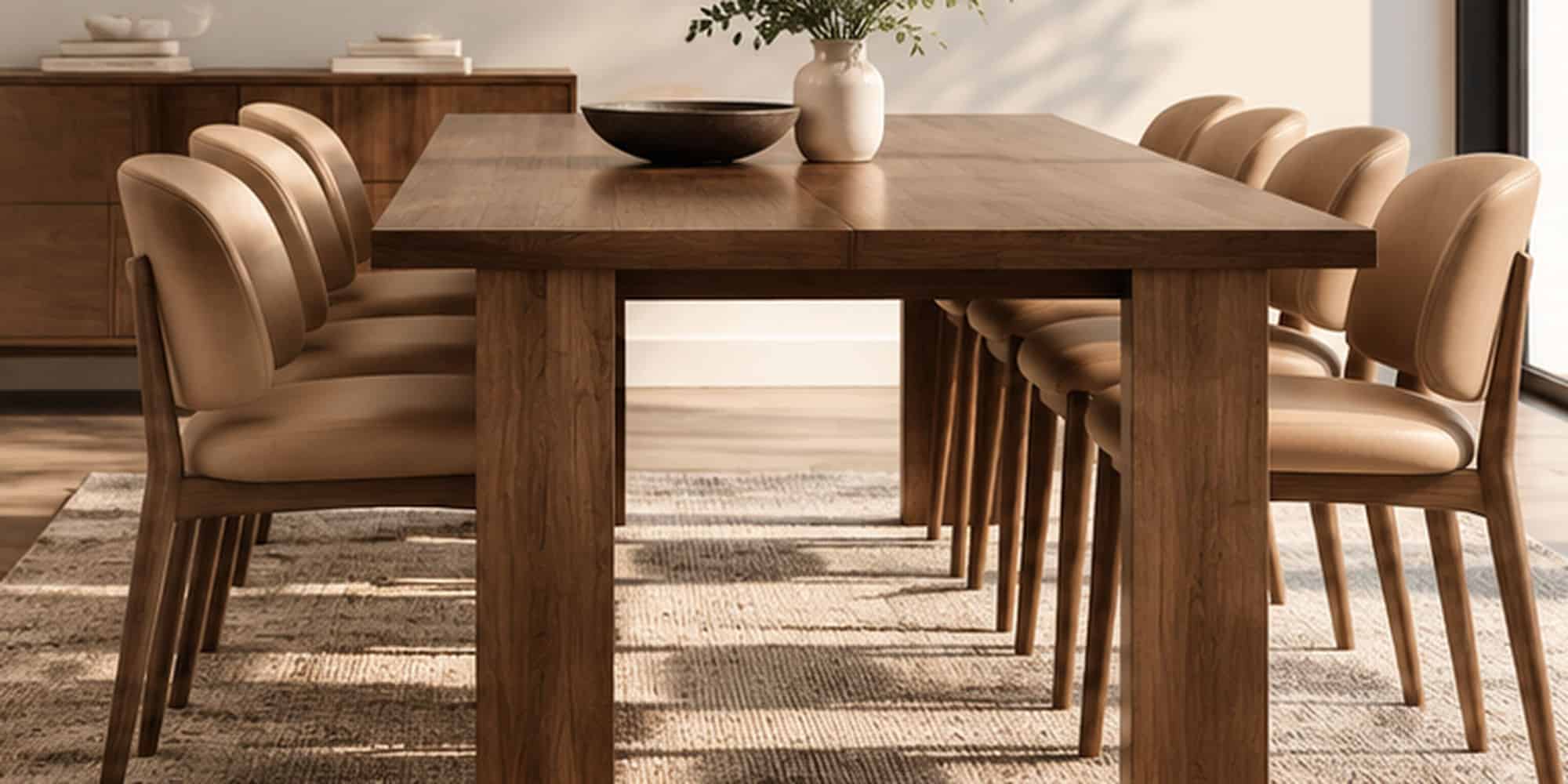
Rectangular tables are particularly flexible for larger gatherings because chairs can line both long sides, sometimes with a seat at each end. A table around 200 cm long is commonly considered for six diners, but usable seating changes with chair width, leg placement and how much personal space everyone prefers.
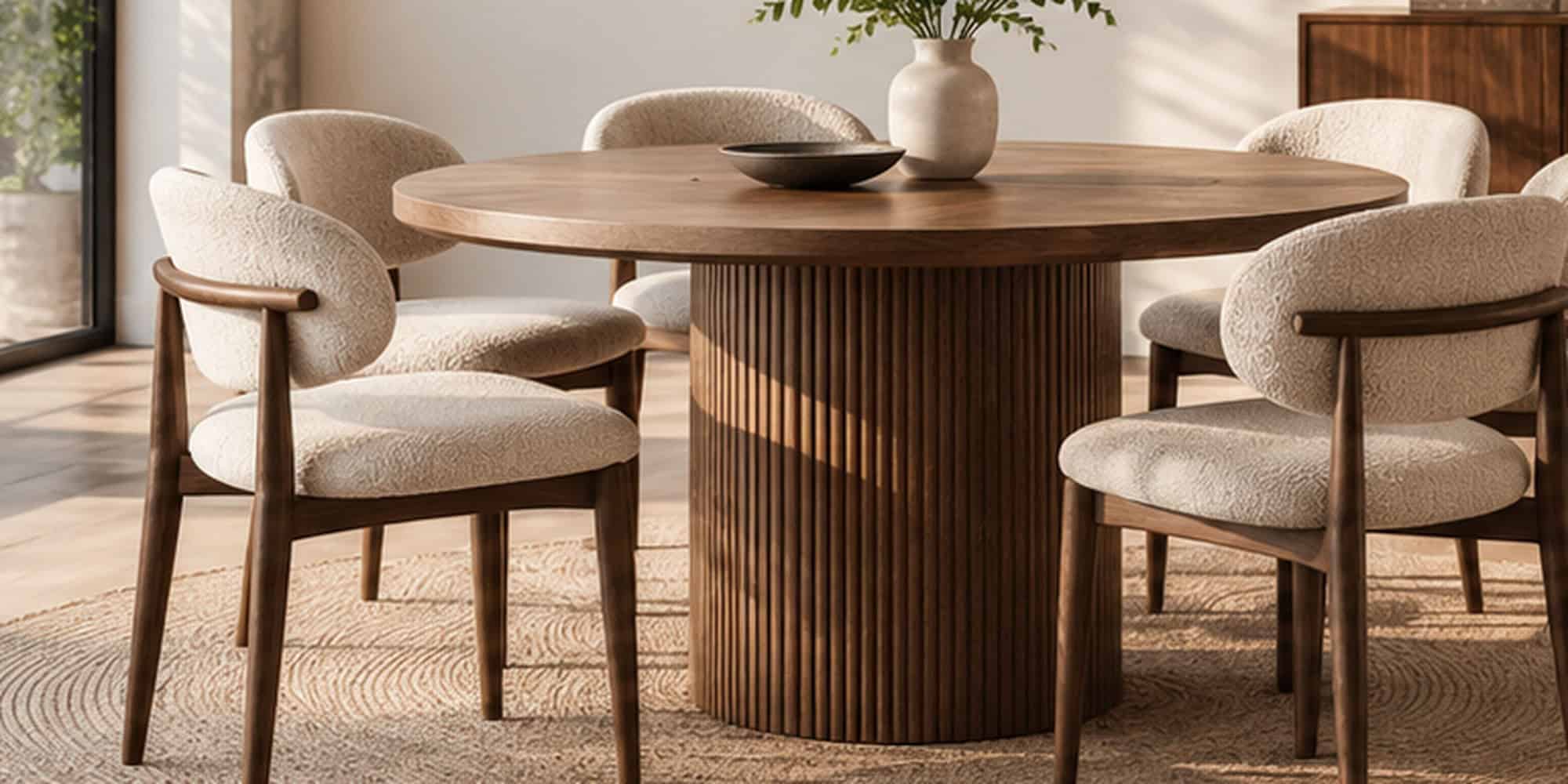
Round tables distribute chairs around the perimeter. For example, a 140 cm diameter design is often planned for around four to six diners, depending on its base and the chairs used. A pedestal may give legs more freedom than several table legs around the edge. Very large round tables, however, can place shared dishes out of easy reach. Check the stated seating capacity against actual chair dimensions.
Conversation, Family Meals and Entertaining
At a round table, everyone faces towards the centre, making it easy for a small group to join one conversation. Its softer outline also suits casual breakfasts, family dinners and compact dining corners. With children, the absence of pointed tabletop corners may be one practical consideration, although the edges and stability of the specific table still matter.
A rectangular table provides more of a shared working surface along its length. It can suit family meals, board games, homework and entertaining where serving platters need space. If you mostly seat four but entertain eight occasionally, look into an extending design rather than choosing a permanently oversized table. Check its full extended dimensions before deciding.
Compare the Look and Furniture Around It
A round table introduces curves into a room full of straight kitchen cabinetry and shelving. A rectangular table can create a stronger visual line in an open-plan room. Both shapes work with timber, stone-look, glass or metal finishes; style is not determined by shape alone.
The base deserves as much attention as the top. Central pedestals can keep chair positions flexible, while legs at a rectangular table’s corners may limit end seating. If you already own chairs, measure their total width and the space under the tabletop. Explore Dreamo dining chairs to compare suitable styles without assuming every chair will fit every table.
Choosing for Small Spaces and Bigger Gatherings
For a small, squarish dining nook, try a modest round table first and measure the full diameter plus clearance. If you need a four-person setting, four-seater dining sets provide a useful starting point for comparing overall dimensions.
For a long dining room or a household that regularly seats six, a rectangular table is often easier to plan around. Compare six-seater dining sets and measure the floor space around each one. An oval table is another option if you like the length of a rectangle with rounded ends, but check the same chair clearances.
A Simple Buying Checklist
Before you choose round or rectangular, check the following:
• Measure the room and the route people take through it.
• Mark the table footprint and test chair pull-out space.
• Check how many people sit down on a normal day.
• Measure your chairs and look at the table base or legs.
• If the table extends, check both its closed and open size.
Finally, look at the table’s care instructions and delivery dimensions. A shape that fits the dining room still needs to pass through doors, hallways or stairs on its way inside.
Final Verdict: Choose the Shape That Fits Your Routine
Choose round if your dining space is relatively square, you typically seat a smaller group and you enjoy a sociable layout. Choose rectangular if the room is long, you host larger gatherings or you want a table that gives the dining area a clear direction.
Treat those as starting points. Measuring the actual room, chairs and base is more reliable than picking by shape alone. The best dining table is the one you can use comfortably every day.
FAQ
Is a round dining table better for a small room?
Often, especially in a compact square-shaped space. But a large round diameter can be awkward in a narrow room. Measure the table and the space needed for chairs before deciding.
Which dining table shape seats more people?
For a similar practical room footprint, a rectangular table often offers easier seating for larger groups. Actual capacity still depends on table dimensions, chair width and the placement of legs or a pedestal.
How much space should I leave around a dining table?
Around 90–100 cm between table edge and nearby furniture is a useful starting point where people need to pull chairs out and pass behind them. Test the space using your own chairs.
Are oval dining tables a good compromise?
They can be. An oval table offers an elongated surface with softer ends. Its suitability still depends on the width, base design and space for chairs.