






Introduction – A Fire Pit Table Is More Than an Outdoor Heater
A fire pit table can completely change the way an outdoor area feels after the sun goes down. It brings warmth, light and a natural gathering point into one piece of furniture, which is why it can work so well in patios, alfresco areas and open backyards. But choosing one purely because it looks good in a photo can lead to problems later. Size, fuel type, seating distance, surface space and the way you actually entertain all affect whether the table feels useful or awkward once it is in place.
Before you buy, think of it as part heater, part table and part social hub. The best choice is one that fits comfortably into your layout, leaves enough room for people to move around it and suits the way your household spends time outdoors. If you are comparing styles, start with our fire pit tables to get a sense of the proportions and formats that can work in different outdoor settings.
What Is a Fire Pit Table?
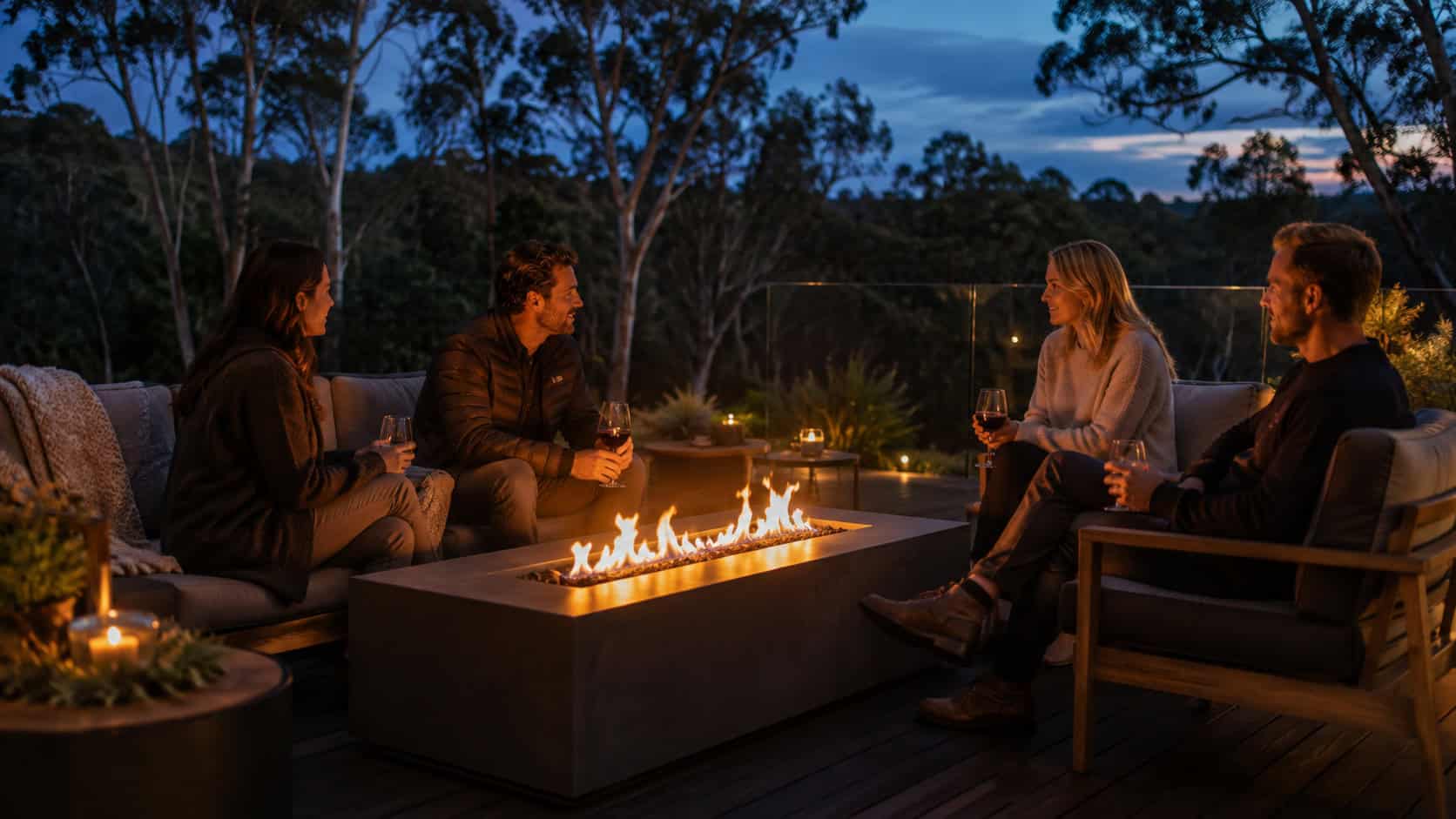
A fire pit table combines a fire feature with a usable tabletop or ledge around the flame. Unlike a traditional fire pit that sits low to the ground and is mainly there for heat, a table-style design is usually intended to sit more naturally within an outdoor entertaining area. Depending on the design, the surrounding surface may give you somewhere to rest drinks, small plates or other essentials while everyone gathers around the flame.
That combination is what makes the format appealing. It can create the atmosphere of a fire pit without making the entire area feel built around a single-purpose heater. For households that use the patio for casual drinks, conversation and relaxed evening entertaining, a fire pit table can feel more integrated with the rest of the furniture than a separate fire feature.
Gas vs Wood-Burning Fire Pit Tables
Fuel type changes the experience considerably. Gas fire pit tables are generally chosen for convenience: ignition is quick, the flame is easier to control and there is no need to store firewood or deal with ash after use. Wood-burning designs create a more traditional fire experience, including the sound, smell and stronger visual character of a real wood fire, but they also involve more preparation and clean-up.
Neither option is automatically better. The right choice depends on what you value most. If you want something that can be turned on for a short weeknight session, convenience may matter more. If the ritual and atmosphere of a traditional fire are part of the appeal, a wood-burning option may suit you better. Always follow the specific manufacturer’s instructions for the model you choose, particularly around fuel, ventilation and safe operation.
Choose the Right Size for Your Outdoor Area
A fire pit table needs more room than its own footprint suggests because the seating around it is part of the setup. Measure the table area first, then allow for chairs or lounges, comfortable legroom and a clear path for people to walk around the group. In a compact patio, a smaller table with a tighter seating arrangement may feel balanced. In a large alfresco area, an undersized fire pit can look lost and may not create the social focal point you were hoping for.
It also helps to decide how many people you want the space to serve most of the time. A couple who mainly use the area alone will have different needs from a household that regularly entertains six or eight guests. If your fire pit will sit alongside a larger seating zone, our outdoor lounges can help you judge how much visual and physical space the surrounding furniture may require.
How Much Clearance Do You Need Around a Fire Pit Table?
Clearance is one of the most important parts of planning the layout. People should be able to sit comfortably without feeling too close to the heat source, and there should still be enough room behind the seating for someone to pass without squeezing through. The exact distances depend on the fire pit design and the manufacturer’s requirements, so treat the product instructions as the minimum starting point rather than relying on a single universal measurement.
Think about what sits above and beside the table as well as what sits around it. Overhanging roofs, umbrellas, screens, plants and nearby structures can all affect where a fire feature should be positioned. A layout that looks spacious on paper can feel very different once chairs are pulled out and people are moving around the area, so marking the footprint on the ground before buying is a useful reality check.
Materials and Outdoor Durability
Because a fire pit table lives outdoors, the surrounding structure and tabletop need to make sense for the conditions in your space. Exposure to sun, rain, moisture and dirt will influence how much care the table needs over time. Smooth, easy-clean surfaces can be practical for frequent entertaining, while textured finishes may offer more visual character but require a little more attention when cleaning.
The location matters too. A table in a fully exposed backyard faces different conditions from one under a covered alfresco roof. Whatever material you choose, follow the care guidance supplied with the product and use an appropriate cover or protected storage strategy when recommended. That is usually more useful than assuming one material is maintenance-free in every Australian outdoor setting.
Think About How You Will Actually Use It
The most useful fire pit table is the one that matches your normal routine. If your ideal evening is a couple of drinks with friends, a comfortable conversation-height setup may be all you need. If you want the surface to play a bigger role during entertaining, look closely at how much usable tabletop remains around the flame. A dramatic fire feature can be visually impressive, but a very narrow ledge may not be practical if you expect the table to hold glasses and shared snacks.
Also consider how often the fire feature will be used compared with the table itself. Some households will turn it on whenever they sit outside; others may use it only on cooler evenings. That difference can affect which proportions and features feel worthwhile. Start with your real habits rather than imagining an idealised setup that you may rarely use.
Where Should You Position a Fire Pit Table?
Position the table where it can become part of the outdoor layout without blocking the main traffic flow. In an open backyard, that may be a dedicated seating zone away from the house. On a patio or deck, it may work better as the centre of an existing conversation area. Covered spaces need extra attention because overhead structures and ventilation can affect what is suitable, so always check the manufacturer’s placement requirements for the specific product.
Local fire restrictions, building requirements and property rules can also vary, especially when open flame or particular fuel types are involved. Rather than assuming a setup is suitable everywhere, confirm the requirements that apply to your location and property before installation or use. That keeps the buying decision practical and avoids designing an entire seating zone around a table that cannot be used as planned.
How to Style Seating Around a Fire Pit Table
The easiest way to make a fire pit area feel inviting is to build a clear conversation zone around it. Deep outdoor lounges create a relaxed setting for longer evenings, while individual chairs make it easier to adjust the layout when guest numbers change. Smaller additional pieces can help fill gaps without making the area feel crowded. If you need that extra flexibility, additional outdoor seating can be useful for completing the arrangement.
Keep the styling secondary to comfort and access. Cushions, throws and a few practical surfaces can make the area feel warmer, but there is no need to overfill it. The flame is already the visual focal point. For more ideas on building the surrounding setup, our guide to creating a cosy fire pit area covers accessories and furniture choices that can help the space feel more complete.
Safety and Local Requirements
A fire pit table should always be used according to the manufacturer’s instructions, including the required clearances, approved fuel type and any guidance around covers, ventilation or nearby combustible materials. Those details can differ from one model to another, so they should be checked before you finalise the position of the table or arrange furniture around it.
It is also sensible to check any local rules or seasonal fire restrictions that may affect use in your area. The goal is not to make the buying process complicated; it is simply to make sure the table you choose can be used safely and comfortably in the place you have in mind.
Final Thoughts
A good fire pit table should make your outdoor area easier to enjoy, not harder to arrange. Focus first on the fuel type, the size of the space, safe clearance, how much usable table surface you want and the way people will sit around it. Once those practical decisions are settled, material and style become much easier to judge.
The right choice can give you a warm, social centre for cooler evenings while still feeling like a natural part of the rest of your outdoor furniture. Plan the surrounding space as carefully as the table itself, and you are much more likely to end up with an area people genuinely want to use.