





An outdoor lounge can be comfortable on its own, but the way you use it often depends on the smaller pieces around it. Somewhere to put a drink, snacks, a book, sunscreen or your phone can make the difference between a setting that looks complete and one that actually works well day to day.
Coffee tables and side tables can both solve that problem, but they do it in different ways. A coffee table creates a shared central surface, while a side table keeps a smaller surface close to one seat. The right choice depends on your seating layout, available floor space and how you normally use the area.
What Is an Outdoor Coffee Table Best For?
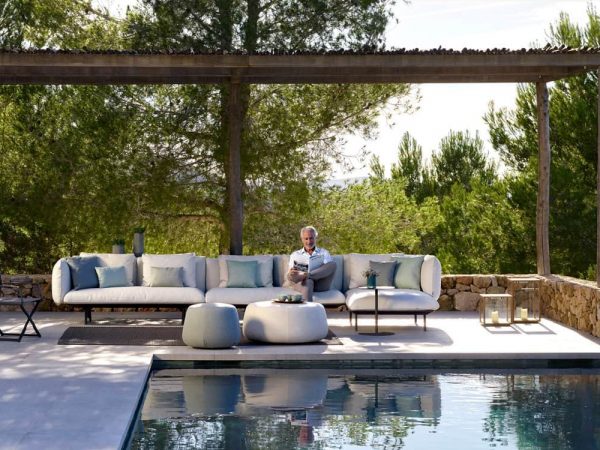
An outdoor coffee table usually sits in the centre of a lounge arrangement, making it a practical choice for larger sofas, modular settings and conversation areas. Its wider surface gives several people somewhere to place drinks or snacks at the same time, and it can visually anchor the seating around it.
This makes a coffee table especially useful if your outdoor space is used for entertaining. It can hold a serving tray, shared food or a few everyday items without requiring everyone to reach for separate surfaces. If you are building the whole seating zone from scratch, looking at our outdoor lounges alongside the table can help you judge the proportions as one complete setting.
What Is an Outdoor Side Table Best For?
A side table is smaller and more personal. It normally sits beside a sofa, individual outdoor chair or sun lounge, keeping the surface within easy reach without taking up the centre of the seating area. That makes it particularly useful on balconies, compact patios and layouts where a full coffee table would interrupt circulation.
Side tables are also easy to use as flexible extras. You can move one closer when needed, place it between two chairs or use it beside a sun lounge for a drink, sunglasses or a book. In a larger setting, side tables can supplement a coffee table rather than replace it.
Coffee Table vs Side Table – Quick Comparison
If you are deciding between the two, this quick comparison highlights the main practical differences.
| Feature | Coffee Table | Side Table |
| Typical position | Centre of the seating area | Beside a chair, sofa or sun lounge |
| Surface area | Larger shared surface | Smaller personal surface |
| Best for | Entertaining and shared use | Compact spaces and individual use |
| Floor space needed | More | Less |
| Flexibility | Usually stays in one main position | Easy to reposition as needed |
Getting the Height Right
Height affects how natural a table feels to use. An outdoor coffee table is generally intended to sit low in front of the seating, so it should relate comfortably to the sofa seat rather than standing noticeably above it. A side table is usually more useful when the top can be reached easily from the chair or sofa beside it.
The exact dimensions depend on your furniture, so compare the table with the seating you already own rather than relying on the table dimensions alone. A beautiful piece can still feel awkward if you have to lean down too far or reach behind an armrest every time you want to use it.
How Much Space Should You Leave Around the Table?
A coffee table needs enough room around it for people to sit, stand and move through the area without constantly stepping around corners. In a compact setting, placing a large table in the centre can make the whole arrangement feel tighter than expected. A side table requires less open floor space, which is why it often works better when the seating already sits close to walls, doors or walkways.
Before buying, mark the proposed table footprint on the ground with painter’s tape or another temporary marker. This lets you see whether the table interferes with legroom or circulation and whether there is enough comfortable reach from the surrounding seats.
Round, Square or Rectangular?
Shape should follow the layout rather than being chosen in isolation. A rectangular coffee table often works naturally in front of a longer sofa, while a round table can soften a compact conversation area and remove sharp corners from busy walkways. Square tables can suit more balanced seating arrangements, particularly where chairs or modular pieces face one another.
Side tables are more forgiving because of their smaller footprint. Round designs can tuck neatly beside chairs, while square or rectangular styles may sit more cleanly against the straight edge of a sofa. The best shape is the one that uses the available space efficiently without making the setting feel crowded.
Choosing Materials for Outdoor Use
Outdoor tables need to suit the conditions they will actually face. Think about exposure to sun and rain, how often you want to clean the surface and whether the table will need to be moved regularly. A heavier piece may feel stable in a permanent lounge area, while a lighter side table can be more convenient if you frequently rearrange the furniture.
Finish and texture also affect how the table relates to the rest of the setting. You do not need every piece to be made from exactly the same material, but repeating a frame colour, timber tone or other finish can help different pieces feel connected.
Do Your Outdoor Tables Need to Match the Lounge?
No. Matching sets are simple to coordinate, but a coffee table or side table can still look intentional without being from the same collection as the lounge. The aim is cohesion rather than perfect duplication.
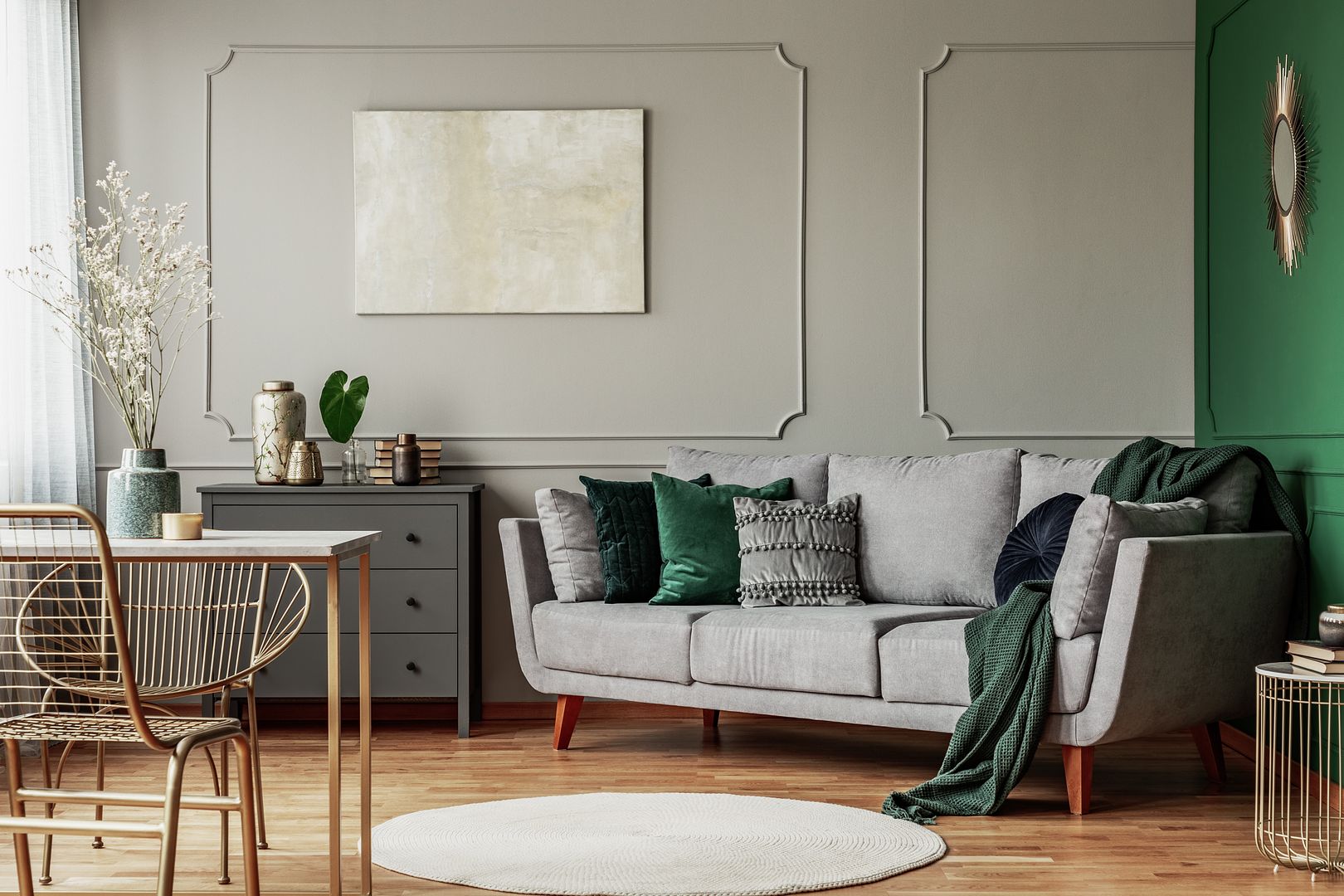
For example, a table may repeat the dark frame of the sofa while introducing a different tabletop material, or it might share the rounded lines of the seating even if the finishes are different. If the space already contains several materials and colours, choosing a simpler table can prevent the arrangement from becoming visually busy.
When Does It Make Sense to Use Both?
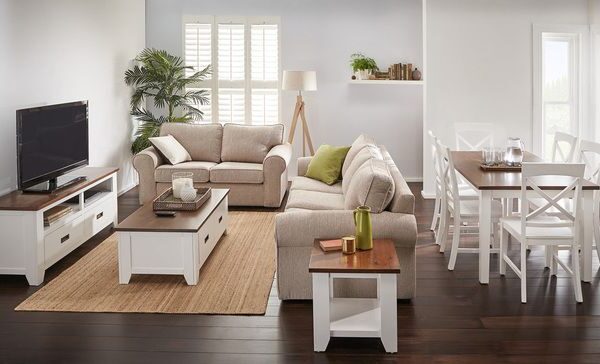
In a larger lounge setting, using both can be the most practical solution. The coffee table provides a central shared surface for food, drinks and entertaining, while side tables keep smaller everyday items close to individual seats. This can be particularly useful with modular lounges or deeper sofas where reaching the centre table from every position is not convenient.
You do not need to duplicate a table beside every seat. One coffee table and one or two strategically placed side tables are often enough to make the layout more functional without filling every gap with furniture. You can compare both formats within our outdoor coffee and side tables and choose the combination that suits your seating arrangement.
A Quick Check Before You Buy
A few measurements and practical questions can prevent most sizing mistakes:
- Measure the available floor space, not just the gap between seats.
- Compare the proposed table height with the seating beside or around it.
- Leave enough room for legs, walkways and people getting in and out of seats.
- Think about what you actually want to place on the table during normal use.
- Consider whether the table will stay in one place or need to move regularly.
Final Thoughts
The choice between an outdoor coffee table and a side table comes down to function, height, space, shape and how the seating area is used. A coffee table is the stronger choice when you need a shared central surface, while a side table is ideal when space is limited or you want something close to an individual seat.
For many larger outdoor settings, the answer is not necessarily one or the other. Using both in the right positions can make the space easier to use without making it feel crowded. Start with the way you relax and entertain, measure the area carefully, and choose the table combination that supports those habits.