






Why a Bunk Bed Is Worth Considering
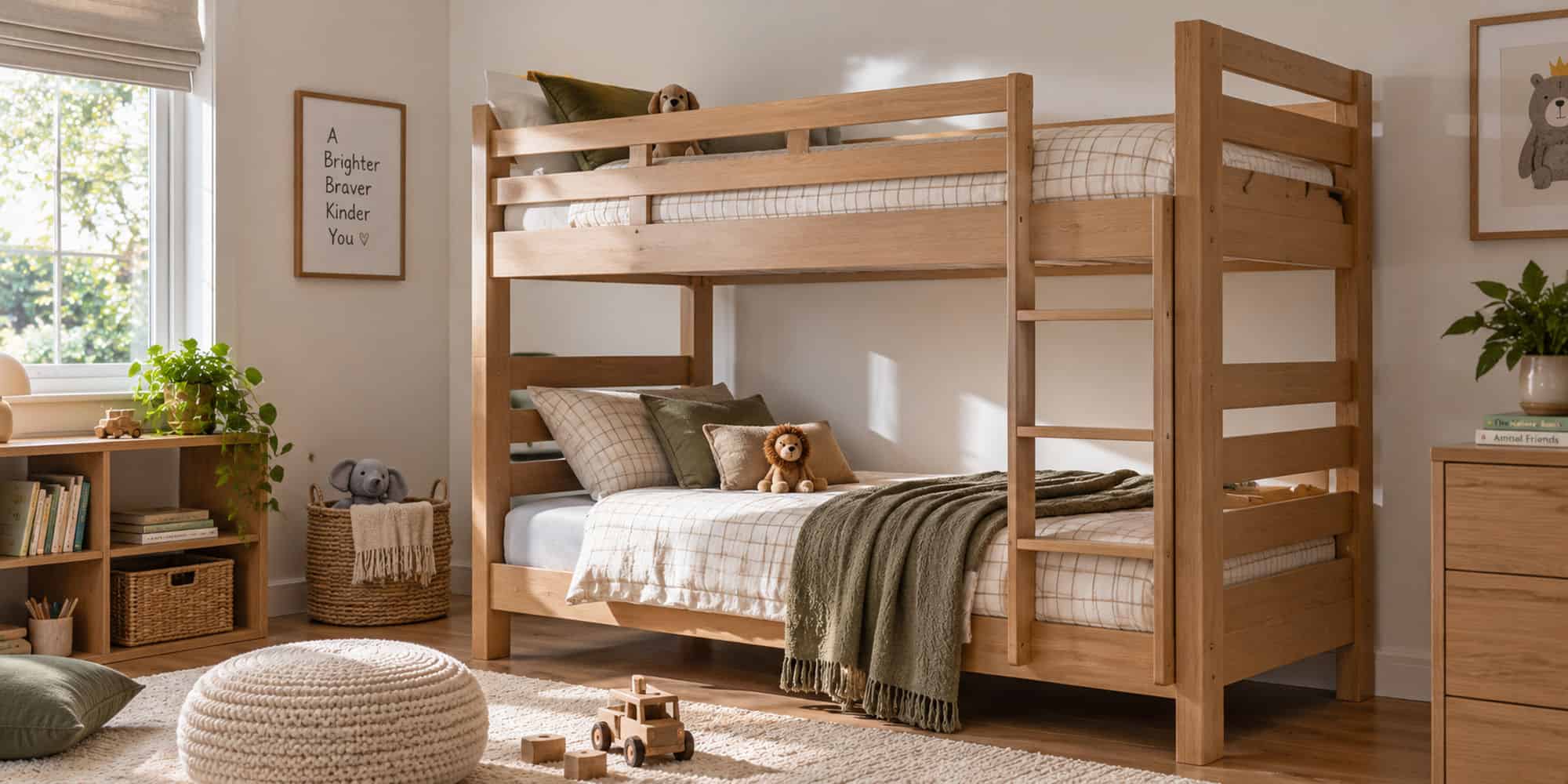
A bunk bed can make a shared children’s bedroom more practical by stacking two sleeping areas rather than placing two beds side by side. That can leave more usable floor space for getting dressed, reading or playing. But the right choice is not simply the tallest bed or the one with the most extras.
Start with the children who will use it, the layout of the room and the safety information supplied with the specific product. A well-chosen bunk bed should fit the space comfortably and be straightforward for the family to use every day.
Measure the Room, Including the Ceiling
Measure the intended wall, the bunk bed’s full width and length, and the height from floor to ceiling. Check any sloping ceiling, ceiling fan, pendant light or window that could affect its placement. Leave practical space to reach the ladder and change bedding without moving other furniture every time.
Remember to consider the person sitting up on the upper mattress, not just the frame’s overall height. Check nearby cupboards and drawers in their open positions too. If you are still deciding between mattress sizes, our Australian bed size guide is a useful starting point before comparing complete bed dimensions.
Start with Top-Bunk Safety and Age
In Australia, bunk beds sold for household use must meet the applicable mandatory safety standard. The ACCC Product Safety bunk bed guide advises that the upper bunk is not recommended for children under nine, with a child’s maturity and development also relevant. A younger child should use the lower sleeping level instead.
Look for permanent guardrails on all four sides of the upper bed, safe openings that cannot trap a child’s head or limbs, and a secure means of climbing. Keep the bed away from curtain and blind cords, heaters, light fittings and ceiling fans. Children should not jump or play on either level of a bunk bed.
Check the Mattress Size and Maximum Height
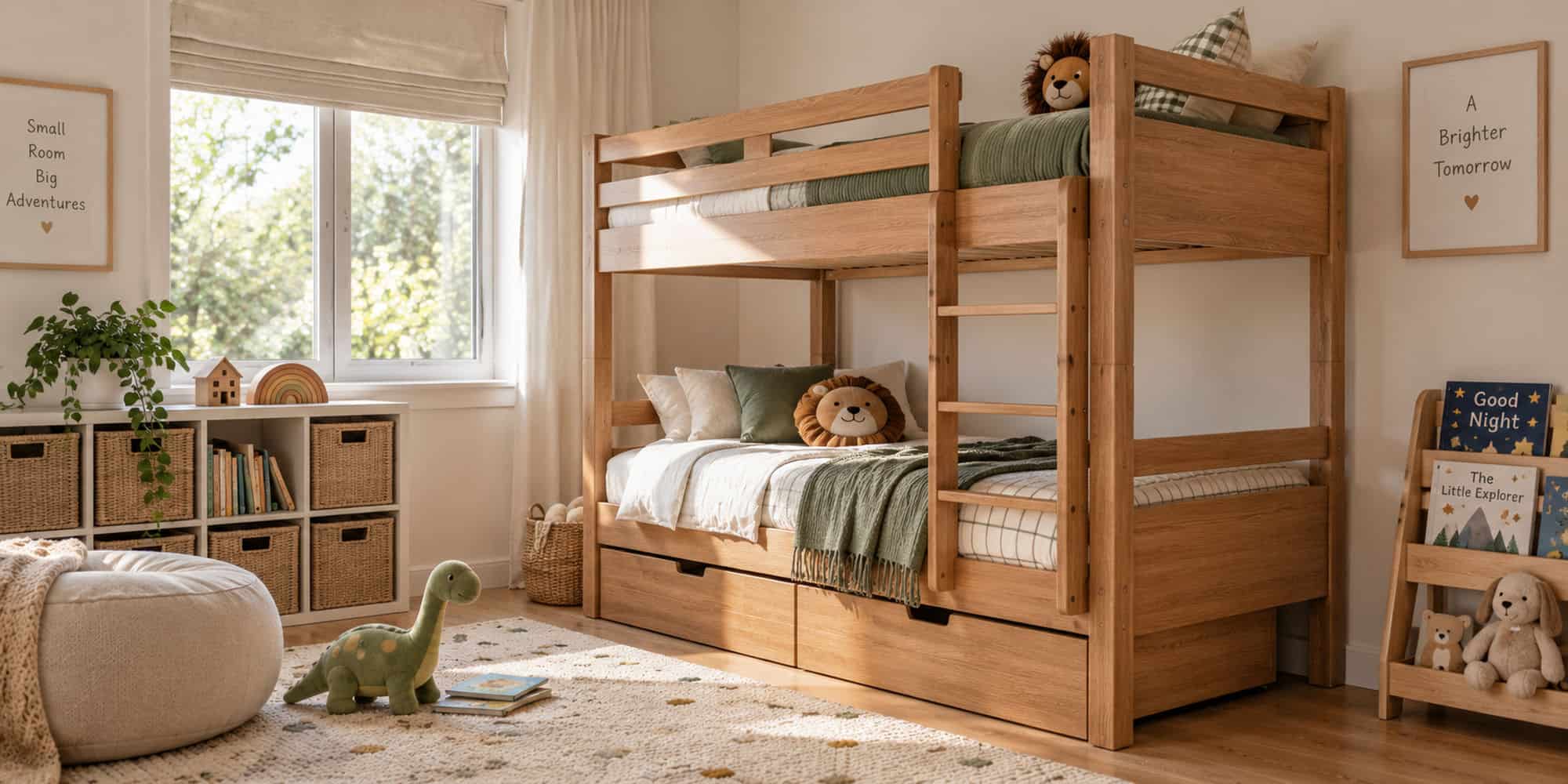
An upper mattress must match the bed’s required length and width without leaving unsafe gaps. Equally important is its thickness: a mattress that is too tall reduces the effective height of the guardrail and can increase fall risk. Read the manufacturer’s maximum mattress-height marking and use only a mattress within that limit.
There is no reliable single mattress-thickness number that fits every bunk bed. The frame’s design and specified maximum come first, not a general recommendation found elsewhere. For broader guidance on mattress construction and sizing, see our mattress buying guide.
Choose a Layout That Suits Your Family
A single-over-single bunk can be practical when two children share a room, while some other designs incorporate a different lower-bed size, drawers, or a pull-out trundle. A loft-style raised bed has space underneath rather than a second sleeping level; that area may be used for storage or a desk when the product is designed for it.
Not every bunk converts into separate beds, accommodates a trundle or includes storage. Check the exact model description, what comes in the box and whether any reconfiguration is explicitly supported. Choose the layout for the way you use the room now rather than assuming features that may not be included.
Think About the Ladder and Everyday Access
Consider where the ladder sits, how it is attached and whether its position works with the doorway, wardrobe and available floor area. A ladder that blocks a frequently used drawer can make an otherwise appealing layout frustrating. Check how someone will climb down at night without disturbing the person below.
Safety and convenience matter more than how sleek the ladder looks. Follow the assembly instructions closely and avoid changing a ladder’s position unless the manufacturer specifically permits it. A clear route from the bed to the bedroom door is worth planning before the furniture arrives.
Construction, Assembly and Ongoing Checks
Solid timber and metal are both used for bunk beds, but material alone does not prove that a frame is safe or durable. Pay attention to the supplied frame design, manufacturer instructions and stated load limits for each sleeping level. Do not use a general weight-capacity figure as a substitute for the specification of the product you are considering.
After assembly, check that the guardrails, mattress supports and fasteners are installed as directed. Inspect and tighten connections regularly according to the instructions, particularly if the bed is moved or dismantled. Keep the product’s safety label and assembly information for future reference.
A Quick Checklist Before You Buy
Before deciding, check these essentials:
• The intended users are suitable for the upper and lower sleeping levels.
• The bed complies with the Australian mandatory safety requirements.
• Its full footprint and overhead space work in your room.
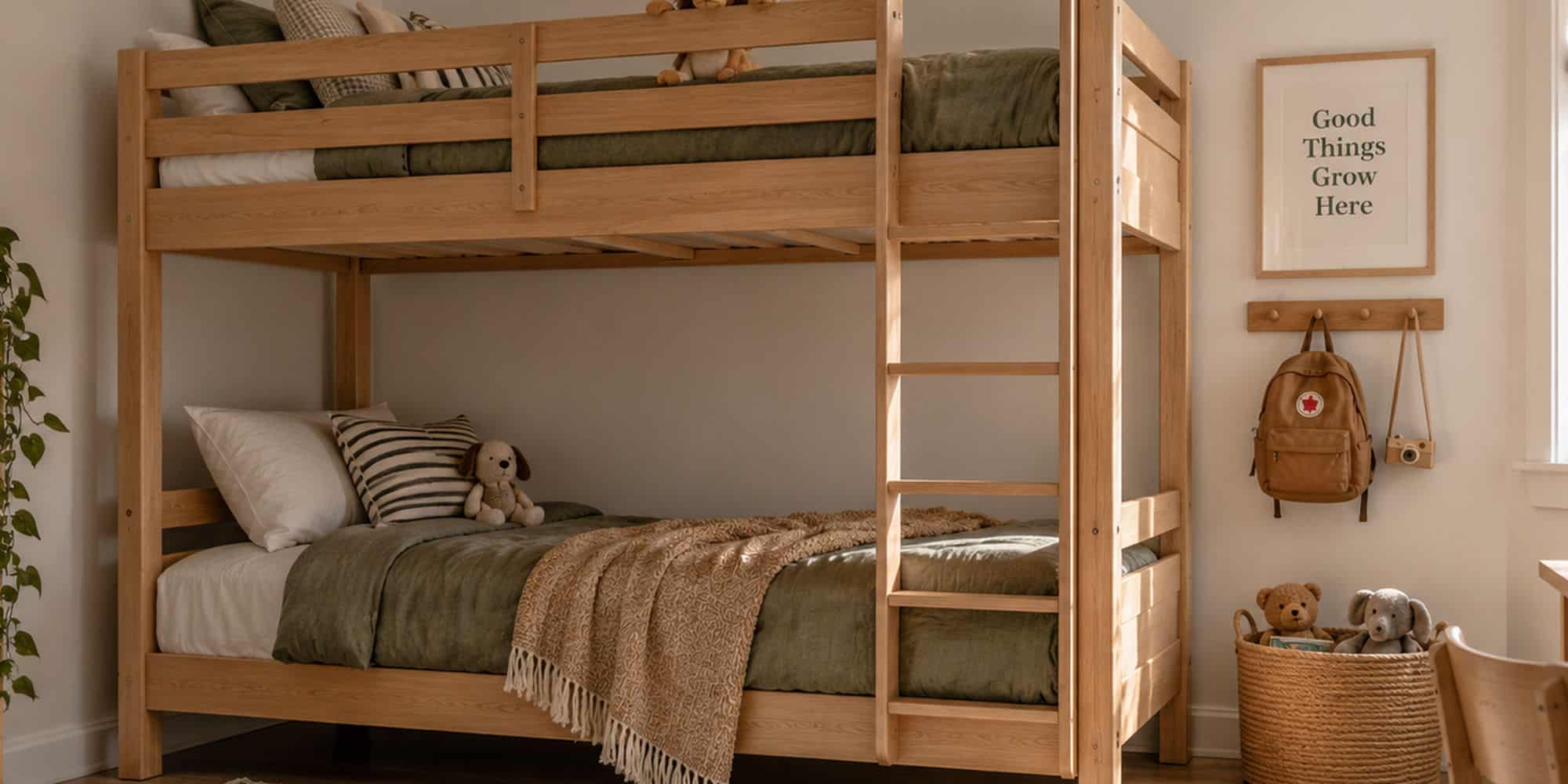
• The ladder position and guardrails are suitable.
• The mattress fits and stays within the marked maximum height.
• Any included storage, trundle or convertible feature is confirmed in the product details.
These checks are more useful than judging a bunk by its styling photograph alone.
Final Thoughts
A good bunk bed buying decision combines space planning with careful attention to the people using it. Measure the room, check the upper-bunk age guidance, read the mattress-height limit and verify the model’s actual features and assembly requirements.
When those details are clear, you can focus on a design that suits your household and its bedroom style. Browse our bunk beds to compare the available configurations and product information.
FAQ
What age can a child sleep on the top bunk?
The ACCC advises that a top bunk or raised bed is not recommended for children under nine. Age alone is not the only factor; consider the child’s maturity and ability to use the ladder responsibly.
Can any single mattress be used on a bunk bed?
No. The mattress must fit the required dimensions and stay within the maximum mattress height marked or specified for that particular bunk. A mattress that is too thick can reduce the guardrail’s protection.
How much ceiling space does a bunk bed need?
It depends on the specific bunk height and the bedroom. Measure from the upper mattress to the ceiling, allow room to sit up comfortably and keep clear of ceiling fans and other overhead fixtures. Follow the manufacturer’s placement requirements.
Do bunk beds always separate into two single beds?
No. Some models are designed to convert into separate beds, while others are not. Confirm the feature and any required parts in the manufacturer’s product information before making that a reason to buy.