







Why Bedside Table Height Matters
A bedside table may be one of the smallest pieces in a bedroom, but its height changes how convenient the space feels every day. When your phone, water glass or reading lamp is too far above or below the mattress, reaching for it can become awkward. The tabletop also affects how balanced the bed looks against the furniture beside it.
The best bedside table height is not a fixed number for every Australian home. Start with your own bed, how you use the surface and the space available. This guide focuses on getting that relationship right, rather than choosing a table for its appearance alone.
What Is the Ideal Bedside Table Height?
A useful starting point is to position the bedside tabletop roughly level with the top of your mattress, or a little below it. Australian furniture guides commonly suggest staying within around 5–8 cm of the mattress top. That is a practical rule of thumb, not a compulsory measurement, and a small difference above or below may suit your habits better.
You may see bedside tables described as approximately 50–70 cm tall, but that broad range is not a standard you must follow. A low platform bed and a tall bed base topped with a deep mattress can require very different tables. The real test is whether you can comfortably reach the surface while sitting or lying in bed.
How to Measure Your Bed Height
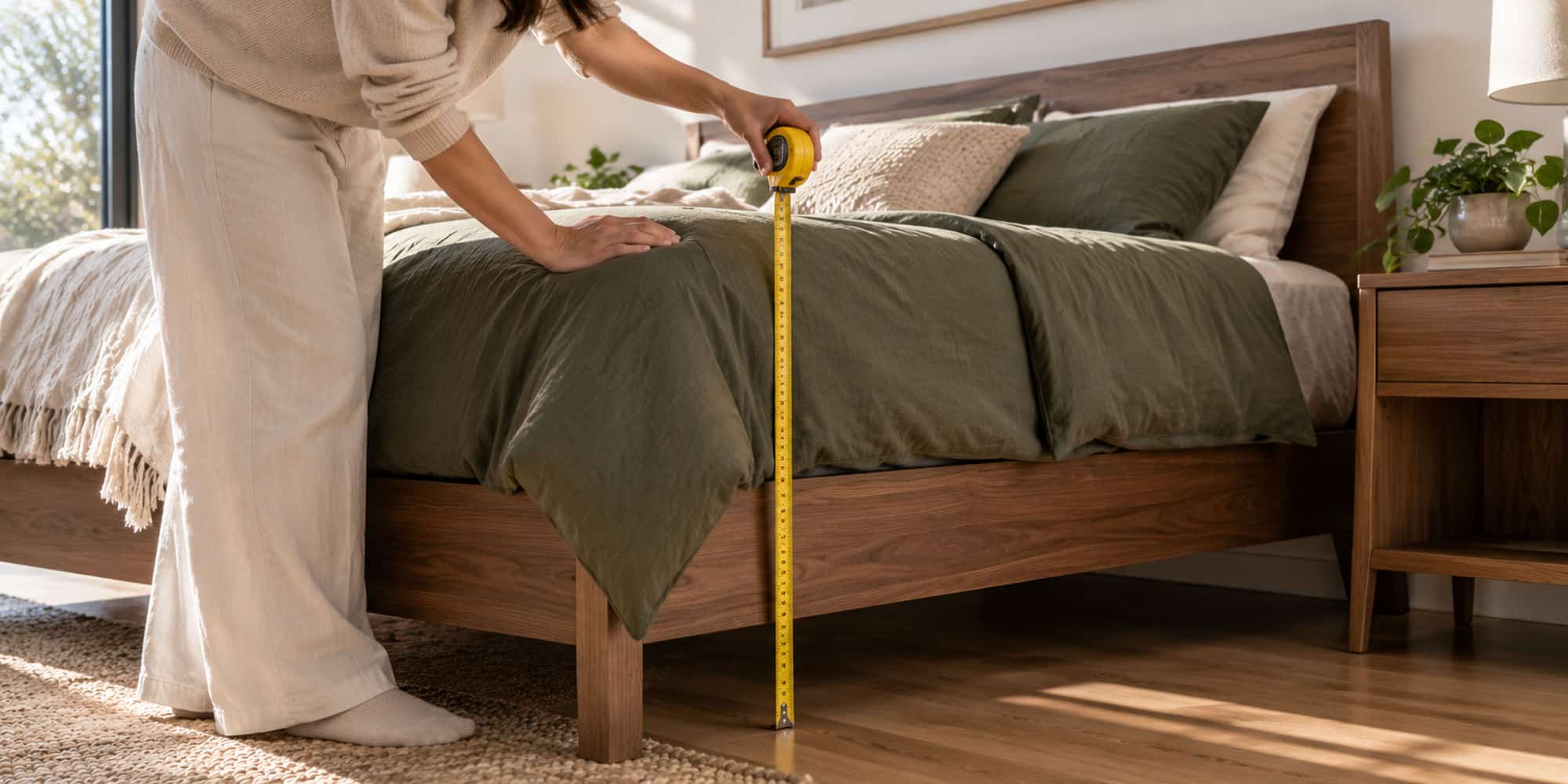
Measure from the floor to the top of the mattress where the bedside table will stand. Include any mattress topper you normally use, but do not measure to the top of stacked pillows or the doona. If the bed has a thick quilted edge, use the flat sleeping surface as your reference rather than a rounded corner.
For example, if the mattress top sits about 60 cm above the floor, start by comparing tables with tops in the region of 55–65 cm, then test your preferred position. Record the full height of the bedside table from the floor to the tabletop, not just the height of its drawers or legs. Measuring both pieces before purchasing is more dependable than trying to judge the proportions in photographs.
Should Your Bedside Table Be Higher or Lower?
A tabletop close to mattress level is usually the simplest choice. A slightly higher table can make a lamp switch or book easier to reach when you spend time sitting up; a slightly lower surface may feel natural if you mostly reach sideways while lying down. Your own arm position is more useful than a universal higher-or-lower rule.
A table that sits much lower can leave everyday essentials out of comfortable reach and may look lost beside a tall upholstered bed. One that sits substantially higher can feel bulky or place a drink awkwardly above the edge of the mattress. Before deciding, sit on your bed and imagine lifting an item from each proposed height.
Low Beds, Tall Beds and Different Bedroom Layouts
Low-profile platform beds often work well with shorter bedside furniture because keeping the surfaces at a similar level avoids a top-heavy appearance. A high bed base, thick mattress or topper may call for a taller table. Bed size alone—single, double, queen or king—does not tell you the right height, since mattresses and bed frames can differ greatly.
Where the room is narrow, consider a compact table or a correctly installed wall-mounted bedside shelf. These can preserve floor space, but you still need a reachable surface at a practical height. Check any wall-fixing instructions before choosing a floating design. If you have two bedside tables, they can have different styles without needing different heights.
Do Not Forget Width, Depth and Drawer Clearance
Once the height is right, check whether the table will actually fit beside the bed. Measure the gap between your bed frame and the wall or other furniture, allowing space for moving past it. Also check the table’s depth so it does not project awkwardly into the walkway or cover a doorway.
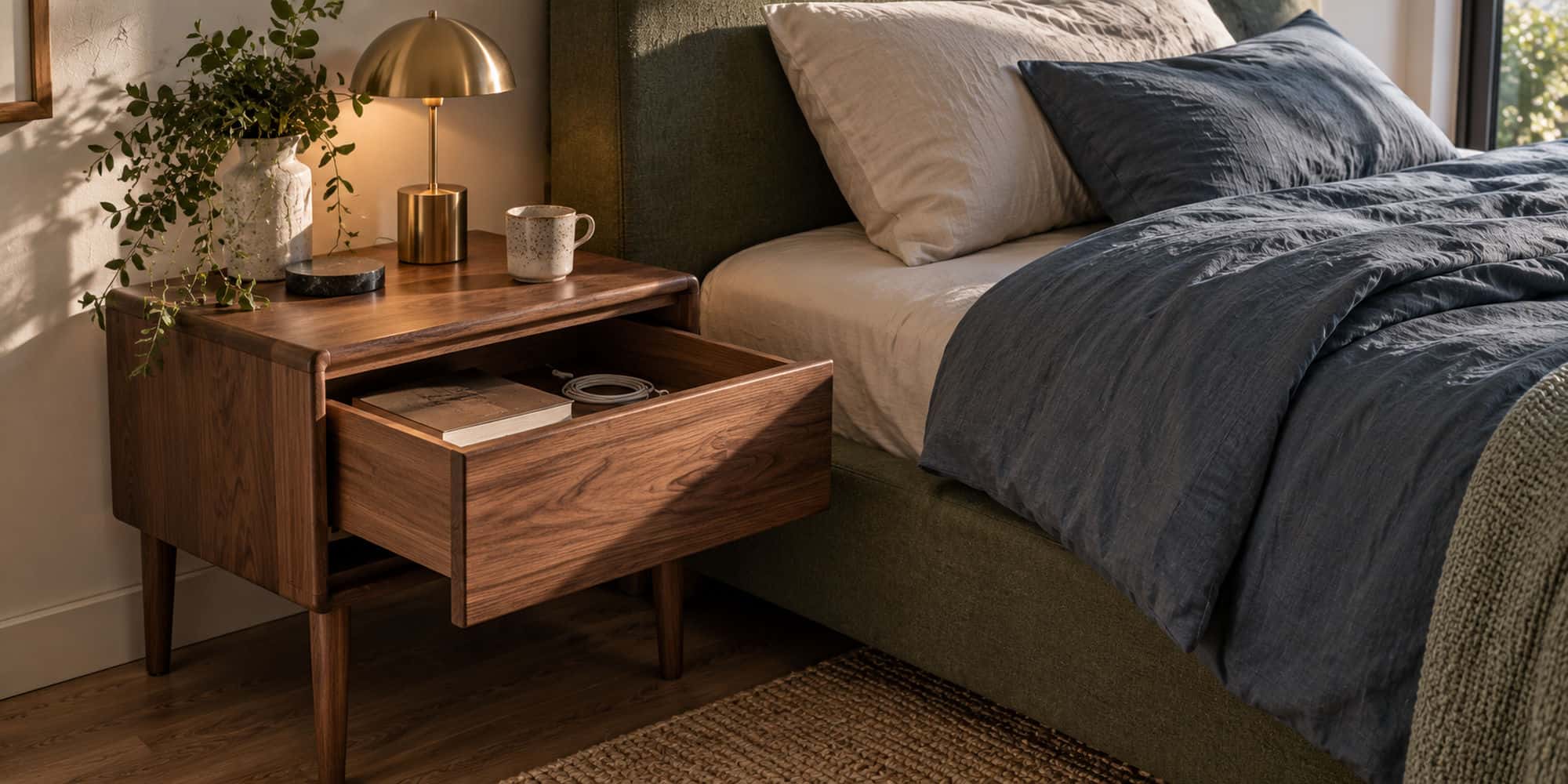
Drawers should open without colliding with the bed frame, while an open shelf should be easy to access. If you need to put away chargers, books and personal items, a bedside table with storage drawers is one example of a storage-oriented style; confirm its actual dimensions on the product page. Choose the tabletop area for what you genuinely use, rather than filling it with accessories.
Check Lamp Height and Everyday Reach
Even a well-positioned table can feel wrong if the lamp is disproportionately tall or its switch is difficult to reach. Compare the height of the whole lamp and the space it occupies with the table and headboard. A bedside light should work from your usual reading position without making you twist or stretch.
Think about where a phone, book or water glass will sit and whether cables can reach the nearest power point without crossing a walkway. Drawers are useful for hiding items you rarely need overnight, while a small clear area on top keeps frequently used things within reach. These functional details matter more than achieving exact visual symmetry.
A Quick Height Check Before Buying
Use this short checklist when comparing two bedside tables:
• Measure from the floor to the top of your mattress, including a topper if used.
• Compare that figure with the height of the candidate tabletop.
• Check the reach from your normal sitting and lying positions.
• Leave enough width for drawers, doors and the bedside walkway.
• Consider the size and placement of the lamp, phone and other essentials.
If you are replacing only one bedside table, measure the remaining one as well. A coordinated height often creates a calmer visual line even when the colours or materials differ.
Final Thoughts
Bedside table height is best chosen in relation to your own mattress, not a single advertised standard. Starting near mattress level and checking your natural reach is a reliable way to find the right balance between convenience and appearance. Width, drawer access and lamp placement are the next things to consider.
Explore our bedside tables to compare available designs, and check each listing’s measurements against your bed before ordering.
FAQ
How high should a bedside table be compared with the mattress?
Aim for a tabletop close to the mattress top, usually level or slightly below. Around 5–8 cm either side is a useful comparison range, but choose the height that is comfortable to reach from your bed.
What is the standard bedside table height in Australia?
Many Australian guides describe bedside tables around 50–70 cm high. That is a broad market range rather than a mandatory standard; measure your own mattress-top height before choosing.
Can a bedside table be taller than the bed?
Yes, if a slightly higher surface is comfortable when you sit up and does not obstruct normal use. Compare the actual height difference and check your reach before deciding.
Do two bedside tables need to be the same height?
They do not have to match exactly, particularly when the room is deliberately asymmetrical. Similar tabletop heights can, however, make both sides practical and visually coordinated.