









A fabric sofa sees everything from everyday dust to coffee spills and pet hair. Fortunately, routine care is often straightforward once you know what the upholstery can safely tolerate. The biggest mistake is assuming that every fabric couch can be scrubbed, soaked or steam cleaned in the same way.
This guide explains how to clean a fabric sofa at home, starting with the care label and moving through vacuuming, stain removal and drying. Follow your sofa’s own cleaning instructions whenever they differ.
Check Your Sofa’s Cleaning Code First
Look for the care label under the sofa or cushions, or check the product’s care instructions. Upholstery cleaning codes often indicate whether a cleaner can contain water. The exact instructions for your model take priority over general advice.
**W** usually allows a suitable water-based upholstery cleaning product. **S** means an approved water-free solvent cleaner, not a water solution. **W-S** or **S-W** permits either method as specified. **X** means vacuuming or gentle brushing only, without liquid or foam cleaning products. If you cannot find a code, do not experiment with a homemade solution; ask the retailer or a professional upholstery cleaner.
A W code does not automatically mean the cushion covers are machine washable or that a steam-cleaning machine is safe. These require separate permission in the care instructions.
Gather the Right Cleaning Supplies
For routine cleaning, begin with a vacuum cleaner and a suitable upholstery attachment. A soft brush and a few clean, absorbent, preferably white cloths are useful for loose debris and accidental spills. Have a fan or access to fresh airflow ready if the approved cleaning process involves moisture.
Only select an upholstery product after checking the label. Avoid bleach, strong household detergents, harsh brushes and improvised cleaning mixtures unless the manufacturer explicitly recommends them. Unapproved products can leave marks or transfer colour.
Step 1: Vacuum the Fabric and Crevices
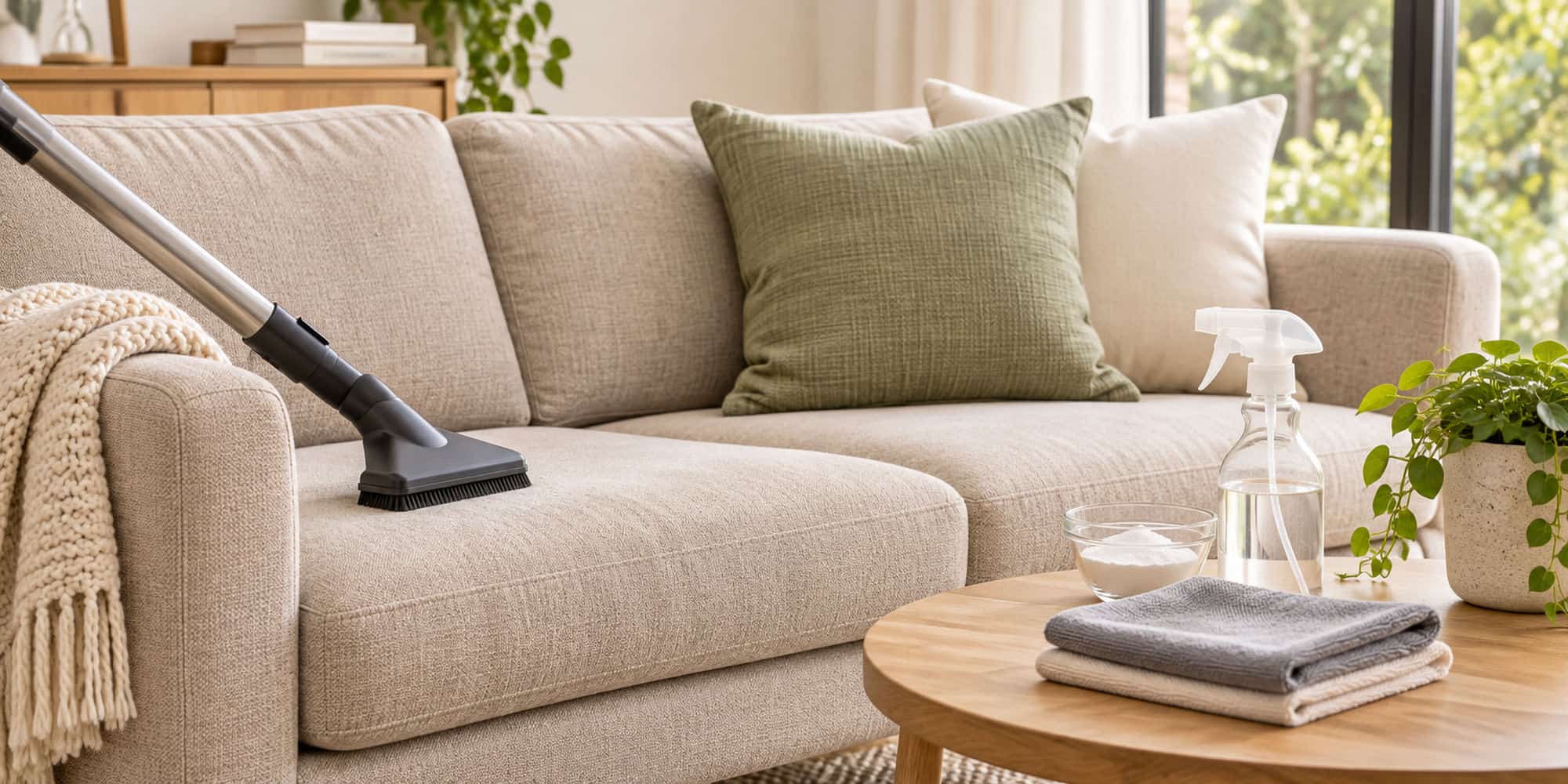
Remove loose cushions when the design permits. Vacuum the seat, arms, back and the narrow gaps where crumbs and dust collect, using gentle suction and the attachment recommended for the upholstery. Work slowly without dragging a rigid nozzle across delicate weaves.
If the care guidance permits it, lightly brush lint or pet hair before vacuuming. Brush or plump cushions as the manufacturer recommends.
Step 2: Blot Spills and Spot-Clean Carefully
When a spill happens, blot it promptly with a clean, dry cloth. Lift any loose solids gently rather than pressing them deeper into the fabric. Do not rub or scrub the stain; friction can spread it or alter the upholstery’s texture.
If the sofa’s code permits a particular cleaning product, test a small amount on an inconspicuous section and let it dry fully. Watch for colour transfer, fading or water rings. Then apply only the approved cleaner, following the product directions, usually to a cloth rather than soaking the sofa. Work gently from the edge of the spot towards the centre and blot away any excess.
Use the minimum moisture necessary. If the spot persists or grows, stop rather than repeatedly wetting the cushion. Deep-set or oily stains may require a trained upholstery cleaner.
How to Freshen a Fabric Couch Without Soaking It
Start with vacuuming and ventilation. Open windows when practical and keep the room well aired; everyday smells can become more noticeable when dust and moisture accumulate. Wash separate throws or cushion covers only when their own care labels explicitly allow washing.
Some household guides suggest bicarbonate of soda for odours, but do not assume it is suitable for every weave or upholstery code. Residue can be difficult to remove from textured fabrics. If the manufacturer permits the method, follow its directions and vacuum away all residue; otherwise choose professional advice for persistent smells.
Can You Steam Clean a Fabric Sofa?
Not automatically. Steam and hot-water extraction introduce heat and moisture, which may cause water marks, shrinkage or damage to the fabric, backing or cushion filling. Even upholstery labelled W or W-S may prohibit steam cleaning, as some manufacturers specifically do.
Check the sofa’s instructions and the equipment requirements before considering a machine. Do not use water-based machines on S-only or X-coded upholstery. For an unknown or delicate fabric, an experienced professional who can assess the material is the safer option. Never sit on or cover cushions again until they are completely dry.
Treat Different Fabrics as Different Fabrics
Linen blends, polyester, boucle, velvet and microfibre may have very different finishes, backing materials and cleaning requirements. The fabric name alone cannot tell you whether water, a solvent or steam is safe. Delicate or textured surfaces also need care to avoid flattening the pile or pulling fibres.
Removable covers are not automatically washable. If a manufacturer recommends professional cleaning with the covers in place, taking them off and putting them in a washing machine can distort the fit. Follow the label for both the main sofa and any removable covers.
How Often Should You Clean a Fabric Sofa?
Lightly vacuum the upholstery regularly, increasing the frequency if you have pets, children or high daily use. Several furniture manufacturers suggest weekly low-suction vacuuming, while the exact professional deep-cleaning interval depends on the fabric and household conditions.
Keep the sofa away from prolonged direct sunlight to reduce fading, and rotate cushions when the design allows. Consistent care beats aggressive cleaning.
When to Call a Professional
Seek professional upholstery advice for large stains, a soaked cushion, recurring odours, visible mould or a missing cleaning code. A professional may also be appropriate when the sofa requires solvent treatment or the care instructions specify professional cleaning only.
If you are planning a new lounge and comparing upholstery upkeep, our leather versus fabric sofa guide outlines material differences. For everyday cushion arrangements after cleaning, see how to style a sofa with cushions and throws.
Final Thoughts
The best way to clean a fabric sofa is to start gently: read the care label, vacuum loose debris, blot spills and use only a compatible product that has been spot-tested. Protect the upholstery from excess water, heat and harsh rubbing.
If you are unsure whether a stain treatment or deep-cleaning machine is appropriate, checking with the manufacturer or a specialist is better than risking permanent damage to the fabric.
FAQ
How do you clean a fabric couch at home?
Check the care code, vacuum with an upholstery attachment and blot spills. Only spot-clean with a product approved for the fabric, after testing a hidden area.
Can you use water to clean every fabric sofa?
No. W typically allows specified water-based products, S calls for water-free solvent cleaning, W-S can allow either, and X excludes liquid cleaners. Always follow the model’s care instructions.
Can you wash removable fabric sofa covers?
Only if the cover’s own label explicitly says it is washable. A zip does not mean machine washing is safe; some removable covers require professional cleaning.
How do you remove odours from a fabric sofa?
Start with vacuuming, clean permitted removable textiles and improve ventilation. For stubborn smells, follow the maker’s approved treatment or consult a professional rather than saturating the cushions.