





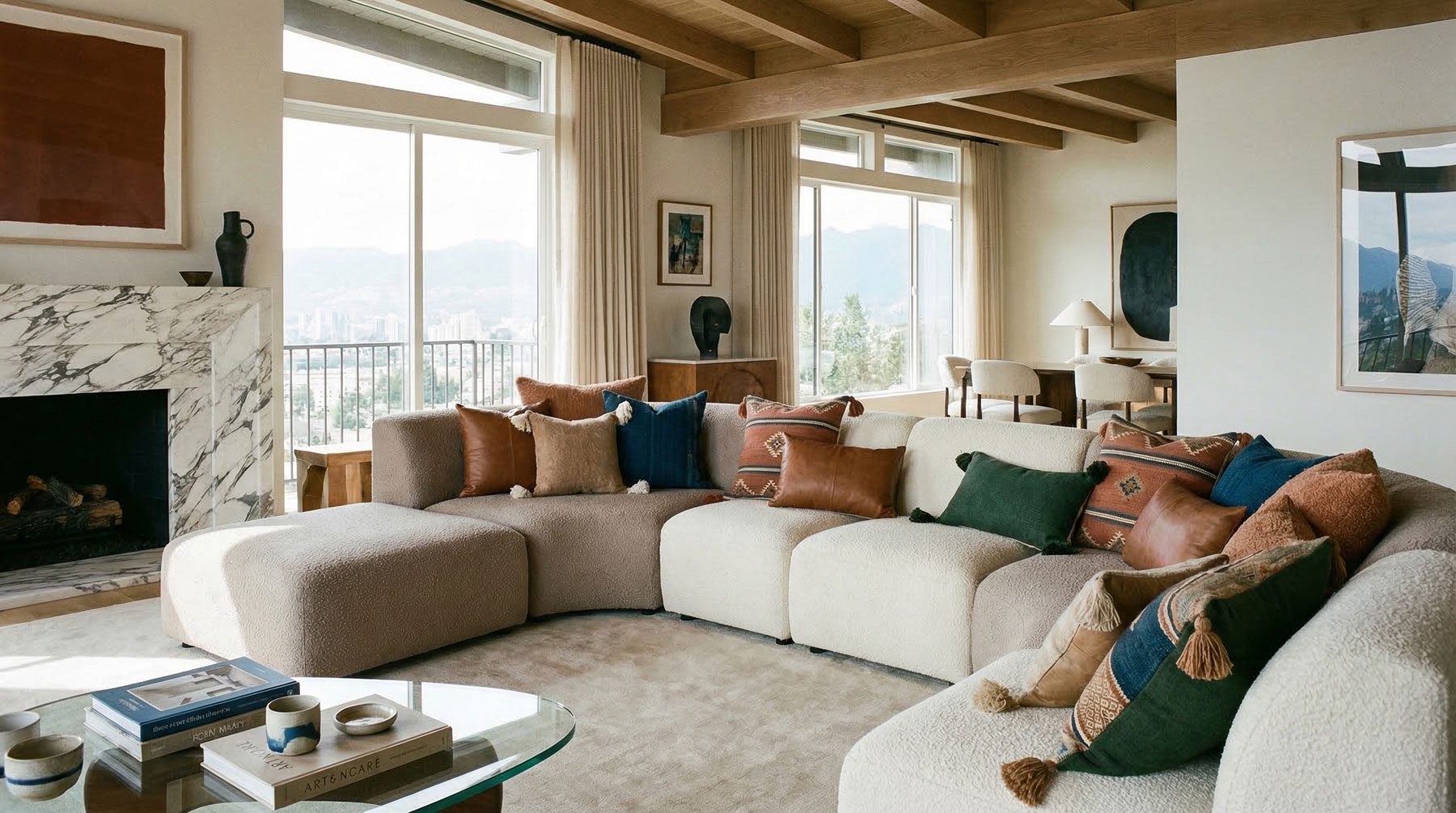
A sofa can look completely different depending on how it’s dressed. The right cushions and throws can make a plain sofa feel curated and intentional, while the wrong combination can make even an expensive piece look a bit tired. The good news is that styling your sofa doesn’t require a design degree – just a few simple principles and a bit of confidence to experiment.
Start with Your Sofa as the Base
Before you start piling on cushions, take a step back and look at your sofa as a starting point rather than the finished product. Consider its colour, texture and overall shape.
A neutral sofa – think grey, beige, cream or charcoal – gives you the most flexibility. You can go bold with cushions, keep things understated, or change them out with the seasons without having to rethink the whole room.
A sofa in a stronger colour or pattern requires a bit more care. In this case, cushions work best when they pull from one of the tones already in the fabric rather than introducing too many competing colours.
If you’re still in the process of choosing a sofa, our sofa range includes a variety of neutral and upholstered options that work well as a styling base.
How Many Cushions Is Too Many?
There’s no single right answer, but a general rule is: enough to look intentional, not so many that sitting down becomes an exercise in furniture removal.
For a 2-seater sofa, two to four cushions is usually plenty. For a 3-seater, three to five works well. For a large modular or sectional, you have more room to play – but resist the urge to fill every corner.
The goal is for your sofa to still look like somewhere you’d actually want to sit. If guests have to stack cushions on the floor before they can settle in, you’ve probably gone a bit far.
Mixing Sizes, Shapes and Textures
This is where a lot of people play it too safe – and the result can look flat. The key to a well-styled sofa is contrast.
Mix sizes: Combine larger cushions (around 55-60cm) at the back with smaller ones (45cm or under) layered in front. This creates depth and makes the arrangement look considered rather than uniform.
Mix shapes: Square cushions are the standard, but adding a rectangular lumbar cushion in front brings a different line into the mix and breaks up the symmetry in a good way.
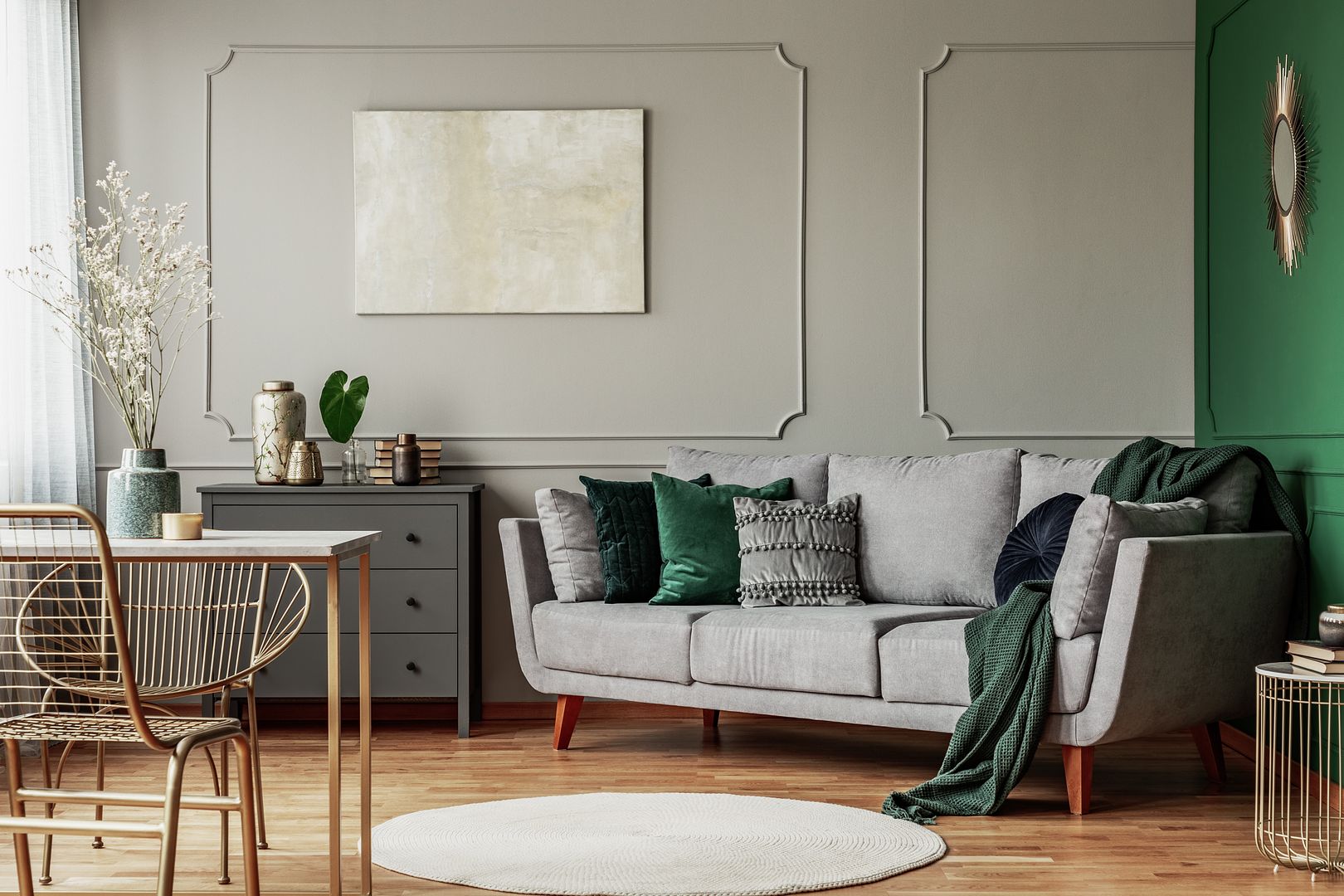
Mix textures: This is arguably the most important element. A sofa piled with cushions all made from the same fabric looks one-dimensional. Try combining a linen cushion with a boucle or velvet one – the contrast in texture is what makes it feel layered and interesting.
You don’t need to overthink the combinations. Pick two or three textures you like and rotate them across your cushions.
How to Choose a Colour Palette
The easiest approach is to work with three colours: a dominant tone, a secondary tone and an accent.
Your dominant tone will likely come from the sofa itself or the largest cushions – something neutral that grounds the arrangement. The secondary tone is a complementary colour that ties into the rest of the room, perhaps pulled from a rug, artwork or curtains. The accent is where you can have a bit of fun – a deeper, richer or more unexpected colour that gives the whole setup a bit of life.
For example, a light grey sofa might work well with warm ivory cushions as the dominant tone, dusty green as the secondary, and a terracotta or rust cushion as the accent. It’s a combination that feels cohesive without being matchy-matchy.
If you’re unsure where to start, look at the colours already in the room and work backwards from there rather than trying to build a palette in isolation.
Where Throws Fit In
A throw serves two purposes: it adds another layer of texture to the sofa, and it makes the whole thing feel more inviting and lived-in. A sofa with a casually draped throw always looks more comfortable than one without.
The key word is casually. A throw that’s folded too neatly can look more like a display home than a real living space. Drape it loosely over one arm, let it fall slightly onto the seat, or fold it roughly and tuck it into one corner of the sofa.
In terms of material, chunky knit throws work well in cooler months and add warmth and texture. Lighter cotton or linen throws are better suited to warmer weather and give a more relaxed, airy feel.
Choose a throw colour that works with your cushion palette – it doesn’t need to match exactly, but it should feel like it belongs in the same family.
Common Mistakes to Avoid
Matching everything too precisely. Cushions and throws that are too coordinated can look more like a showroom than a home. A little variation is what makes it feel real.
Ignoring scale. Tiny cushions on a large sofa can look lost. Make sure your cushion sizes are proportionate to the sofa itself.
Sticking to one texture. As mentioned above, mixing textures is what creates visual interest. Don’t be afraid to combine materials.
Buying a complete set. Pre-packaged cushion sets in matching fabrics are convenient but often end up looking flat. You’ll get a better result building your own combination piece by piece.
Forgetting the sofa underneath. Cushions and throws are accessories, not a rescue mission. If you’re relying on them to hide a sofa you don’t really like, it might be worth revisiting the sofa itself. Browse our sofas if you’re starting fresh.
Final Thoughts
Styling your sofa with cushions and throws is one of the easiest ways to refresh a living room without spending a lot of money or making any permanent changes. Start with your sofa as the base, choose a simple colour palette, mix textures and sizes, and don’t overthink the arrangement. The best-looking sofas are the ones that look comfortable enough to actually use – so once you’ve styled it, sit in it and see how it feels.