






There’s a reason recliner sofas have stayed popular for decades – there’s genuinely nothing quite like sinking into one after a long day. But not all recliners are created equal, and buying the wrong one can leave you with something that’s either too bulky for your room, uncomfortable to actually sit in, or built to last about three years before the mechanism gives out. This guide covers everything you need to know before you buy.
Manual vs Electric Recliners – What’s the Difference?
This is usually the first decision to make, and it comes down to personal preference and budget.
Manual recliners use a lever or push-back mechanism to recline. You pull a handle on the side and the footrest extends, or you simply push back against the seat to lean. They tend to be more affordable, have fewer things that can go wrong over time, and don’t require a power source.
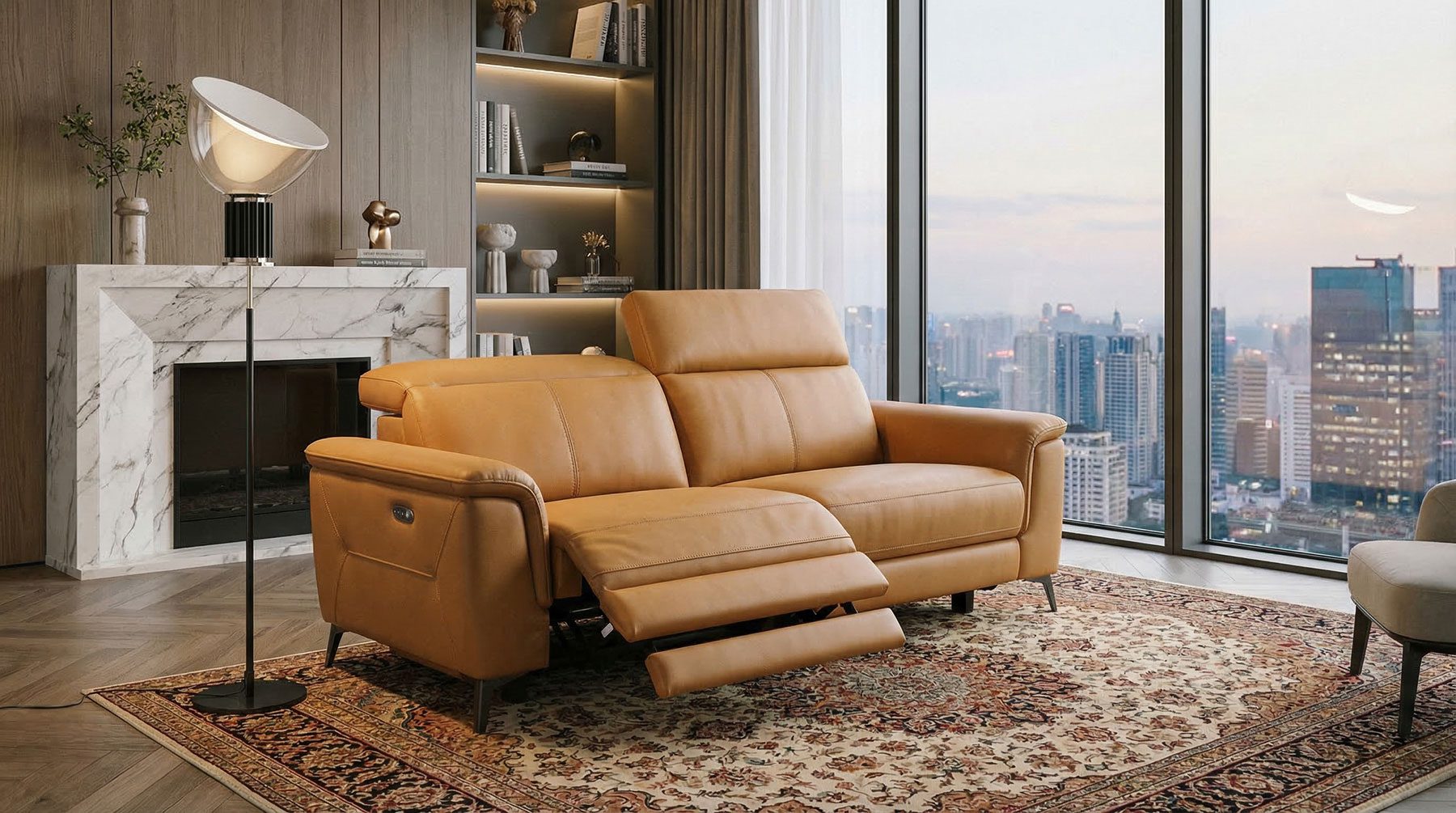
Electric recliners use a motor to adjust the position at the touch of a button. Some models offer multiple adjustable positions – backrest angle, footrest height and headrest separately – giving you much finer control over your seating position. They’re particularly popular for people with mobility issues or back concerns who need to adjust positions frequently throughout the day.
The trade-off with electric models is cost and the occasional need for servicing if the motor or wiring develops a fault. For most people, a good quality manual recliner does the job perfectly well.
Single Recliner vs Recliner Sofa – Which Do You Need?
A single recliner chair and a recliner sofa serve quite different purposes, so it’s worth being clear on which one you actually need.
A single recliner chair works well as an accent piece – placed beside a sofa in the living room, or in a reading nook or bedroom. It gives one person a dedicated spot to relax without taking up the footprint of a full sofa. If you’re considering adding a standalone chair to your living space, it’s worth looking at our accent chairs for options that complement a recliner layout.
A recliner sofa seats multiple people and typically has reclining seats built into a standard sofa configuration. These come in 2-seater and 3-seater formats, sometimes with a fixed centre console in between the reclining seats. They’re the better choice if your main living area needs seating for a family or if you and a partner both want to recline at the same time.
Size and Space Requirements
Recliners need more space than standard sofas – this is the detail most people overlook until delivery day.
When a recliner is fully extended, it takes up significantly more floor space than when it’s upright. As a rough guide, allow for at least 30-45cm of clearance behind the sofa if it’s a wall-hugger model, or up to 60cm or more for a standard recliner that extends outward from the back.
Measure your room with the recliner in its fully extended position in mind, not just its upright footprint. If you’re working with a smaller living area, look specifically for wall-hugger or zero-wall-clearance recliner models – these are designed to sit much closer to the wall when reclined.
Our guide on how to choose the right sofa size covers room measurement in more detail and is worth a read before you commit to any large seating purchase.
What to Look for in Comfort and Support
Comfort in a recliner comes down to a few specific things that are easy to check if you know what to look for.
Seat depth and height: The seat should allow your feet to rest flat on the floor when upright, with your knees at roughly a 90-degree angle. Too deep a seat and shorter people will find themselves perching on the edge; too shallow and taller people won’t feel properly supported.
Lumbar support: A good recliner supports the natural curve of your lower back both when upright and when reclined. If the lumbar area feels flat or hollow when you sit in it, that’s a sign it won’t be comfortable for extended use.
Headrest position: When fully reclined, your head and neck should feel supported without being pushed forward. Some models include an adjustable headrest for this reason.
Footrest length: When extended, the footrest should support your legs from the back of the knee to the heel. A footrest that’s too short leaves your legs dangling; one that’s too long can put pressure on the back of the knee.
Materials and Durability
The mechanism is only half the equation – the upholstery needs to hold up too.
Fabric recliners tend to be the most comfortable in Australian conditions, especially in warmer months. Look for tightly woven fabrics that resist pilling and are easy to spot clean. Performance fabrics with stain-resistant finishes are worth considering if you have kids or pets.
Leather and PU leather recliners are easy to wipe down and tend to look sleek and polished. Real leather softens beautifully with age but requires occasional conditioning. PU leather is more affordable and still easy to maintain, though it can crack over time if exposed to direct sunlight for extended periods.
The mechanism itself: For manual recliners, test the lever or push-back action in store if possible. It should feel smooth and controlled, not stiff or jerky. For electric models, check the warranty on the motor – a minimum of two years is a reasonable expectation.
Browse our recliner sofa range to see the current options available.
Final Thoughts
A recliner sofa is one of those purchases that can genuinely improve your day-to-day comfort at home – but only if you choose the right one. Take the time to measure your space with the recliner fully extended, think carefully about how many people need to use it and how often, and don’t compromise on the quality of the mechanism. A well-chosen recliner should last you a decade or more, so it’s worth spending a bit of extra time getting the decision right.