










A leather sofa is easy to enjoy, but cleaning it properly takes more care than a quick wipe with a household spray. The wrong product can leave a dark patch, remove a protective finish or make a delicate hide look uneven.
The good news is that everyday maintenance is usually simple. This guide explains how to clean a leather sofa at home, what to do when spills happen and why genuine leather, PU leather and suede need different approaches. Always check your particular sofa’s care instructions before applying anything to its surface.
Identify Your Leather Type Before Cleaning
Start with the product care label, purchase documents or retailer’s description. Protected or pigmented leather generally has a surface finish that offers some resistance to everyday spills. Aniline leather has a more natural, absorbent finish and can mark easily. Semi-aniline sits between those categories, but its exact treatment still depends on the finish.
PU or faux leather is a synthetic-coated material rather than the same thing as genuine leather. Suede and nubuck have a textured, brushed surface. A cleaner or conditioner intended for smooth protected leather may be unsuitable for these materials. If you cannot identify the finish, stick to gentle dry dusting and ask the retailer before attempting a wet clean.
What You Need for Routine Leather Sofa Care
Keep the kit simple: a clean, soft microfibre cloth, another dry absorbent cloth and a vacuum with a soft upholstery brush attachment. Only add a leather cleaner or protection product specifically approved for your sofa’s finish.
Avoid bleach, ammonia, rubbing alcohol, disinfectant wipes, furniture polish and ordinary multi-purpose sprays. Even popular home remedies such as vinegar, dishwashing liquid and cooking oils can damage some finishes. There is no single DIY formula that is safe for every leather lounge.
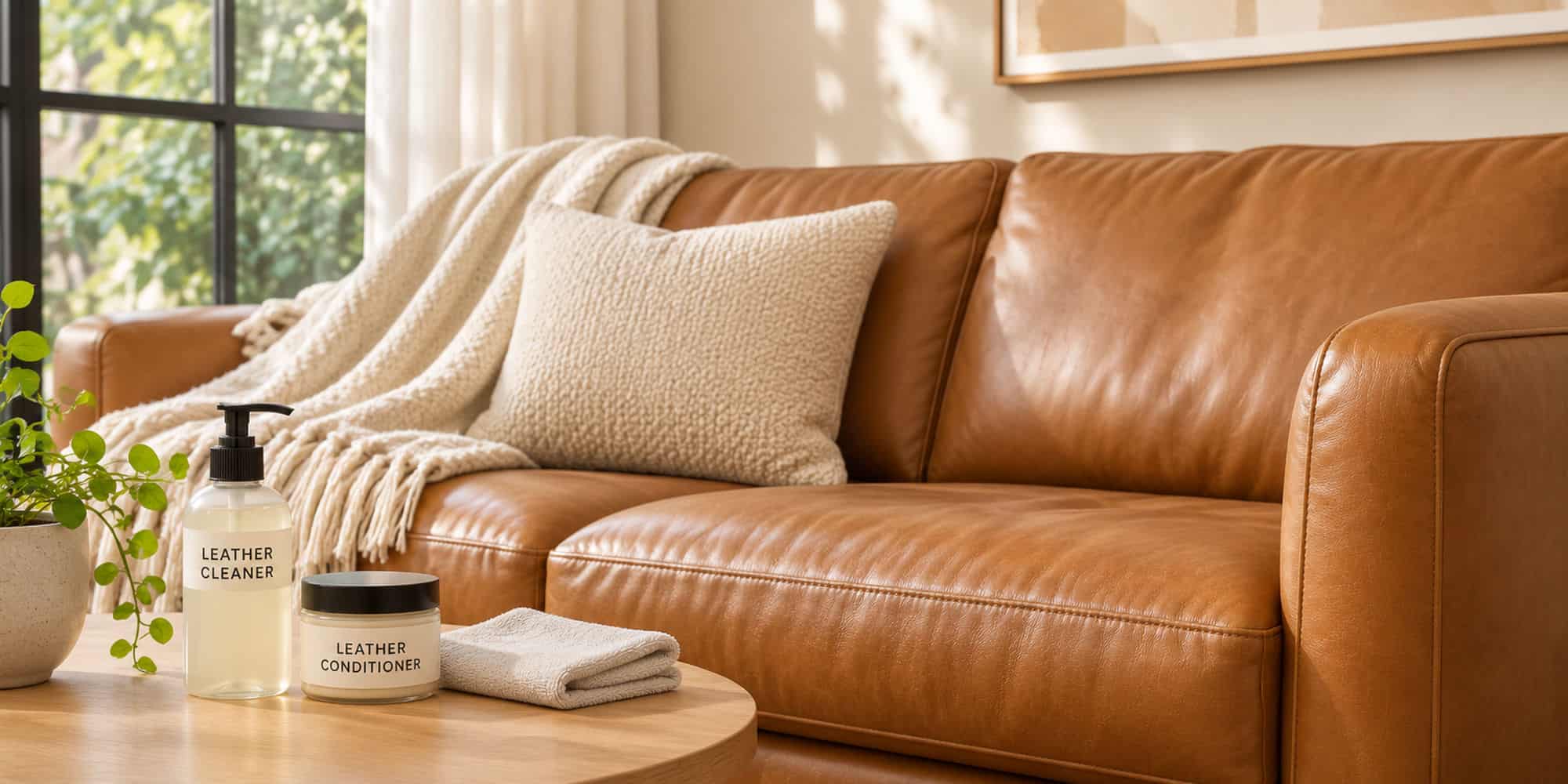
How to Clean a Leather Sofa Step by Step
First, remove loose dust using a dry cloth. If the sofa’s care guide permits vacuuming, use a soft brush nozzle at gentle suction to collect crumbs from seams and crevices. Avoid dragging hard attachments across the leather.
Next, inspect the arms, seats and headrests, where body oils and everyday dirt tend to accumulate. On leather that specifically permits a lightly damp cloth, wipe gently without saturating the surface and follow with a clean dry cloth. On unfinished or sensitive leather, follow its dry-care or specialist instructions instead.
For a more thorough clean, test the manufacturer-approved leather product in a hidden area and allow it to dry before proceeding. Apply it exactly as directed rather than soaking or scrubbing the hide. Let the sofa dry naturally, away from heaters or a hairdryer.
How to Handle Spills and Stains
Act quickly when a drink or food spills onto your couch. Blot the liquid with a clean, dry, absorbent cloth, working gently without rubbing it across the surface. Remove loose solids carefully without pressing them into seams.
Do not automatically reach for alcohol to remove ink, or sprinkle baking soda onto grease. These remedies may be suggested online, but can cause discoloration or finish damage on certain leathers. Persistent ink, oil, dye transfer or stains on aniline leather are better assessed by the retailer or a leather-cleaning specialist.
Cleaning White or Cream Leather Sofas
Light leather shows dark clothing dye, oil and grime more readily. Keep an eye on heavily used arms and seats, and blot any new marks promptly. Use only the cleaning method approved for the specific leather finish, not an abrasive sponge or stronger detergent simply because the colour is pale.
Be especially careful with non-colourfast denim and other fabrics that may transfer dye. A small hidden-area test is useful before any approved cleaner is used across a larger pale section.
When Should You Condition a Leather Couch?
Some genuine leather finishes benefit from an appropriate conditioning or protection product, but others need a different regimen. Follow the manufacturer rather than automatically conditioning every few months. A product suitable for pigmented leather might be unsuitable for aniline, suede, nubuck or a special coated finish.
Never use olive oil, body lotion or shoe polish as a substitute. If conditioning is specified, use the recommended product, test discreetly and follow the instructions for application and frequency. PU leather generally should not be treated with an ordinary genuine-leather conditioner.

PU Leather and Suede Need Different Methods
For PU or faux-leather upholstery, check the synthetic material’s care instructions. Some finishes can be wiped with a lightly damp cloth and an approved mild cleaning solution, followed by gentle drying. Other coatings require particular products; excess moisture and harsh solvents can still damage them.
Suede and nubuck require substantially more caution. Their raised surface can be marked by water or conventional leather cream, so use only the maker’s recommended brush or specialist treatment. Do not assume a method designed for smooth leather applies to these finishes.
Keep Your Leather Lounge Looking Its Best
Regular light dusting is more useful than waiting for grime to build up. Vacuum seams when permitted, deal with spills promptly and avoid leaving the sofa in strong direct sunlight or close to heaters. Sunlight may fade leather, while intense heat can dry and damage it.
Check the cushions and stitching during cleaning, and follow the manufacturer’s guidance about moving or rotating cushions. For more information on material differences, read our leather sofas versus fabric sofas guide. Once the lounge is clean, our sofa cushions and throws styling guide has ideas for finishing the space.
Final Thoughts
To clean a leather sofa safely, identify the leather first, remove dust gently, blot spills and use only compatible care products. The most important rule is not to treat protected leather, natural aniline, synthetic PU and suede as interchangeable.
If you are unsure about a stain or a care product, get advice before trying it. A cautious approach helps preserve the texture and finish that made you choose leather in the first place.
FAQ
Can I use soap and water to clean a leather sofa?
Only when the manufacturer’s instructions allow that method for your specific leather. Some finishes require a specialist cleaner or dry treatment rather than a household soap solution.
Can I clean a leather couch with vinegar or alcohol?
Avoid vinegar, rubbing alcohol and other improvised household cleaners unless the maker expressly approves them. They can strip or change a leather finish.
How often should I clean a leather lounge?
Remove surface dust regularly and promptly blot spills. Follow the maker’s schedule for deeper cleaning, protection or conditioning, as this varies by leather finish and use.
Can I steam clean a leather sofa?
Do not steam clean leather unless the furniture manufacturer specifically approves it. Heat and excessive moisture can damage certain finishes and construction materials.