





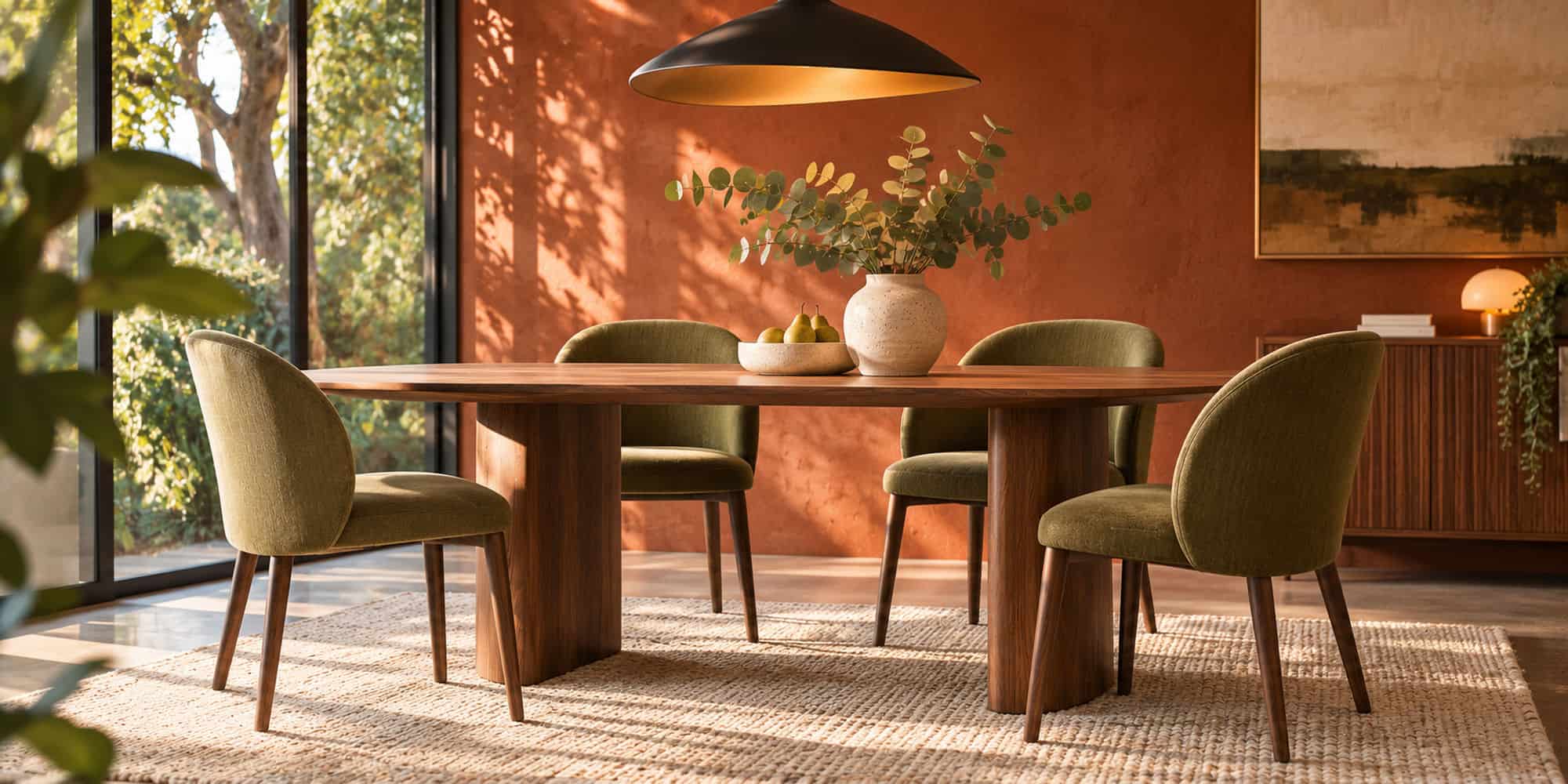
A dining table can look just right in a photo yet feel uncomfortable when everyone sits down. If its surface is too high for the chairs, reaching your plate can feel awkward. If it is too low, there may be little space for knees beneath the frame.
For most Australian homes, the best starting point is the standard dining table height. But before ordering, it is worth checking your chairs, the underside of the tabletop and how your family uses the space. A few measurements can save you from an expensive mismatch.
What Is the Standard Dining Table Height in Australia?
Most standard-height dining tables measure approximately 71–76 cm from the floor to the top of the tabletop. About 75 cm is a particularly common reference for everyday dining furniture. These figures describe conventional furniture sizes, rather than a mandatory Australian standard.
The range applies to many round, square and rectangular designs. Shape and the number of seats do not automatically change the table height: a four-seater and a six-seater may have the same height but very different lengths. Always read the individual product measurements rather than assuming every dining table is exactly 75 cm tall.
How High Should Dining Chairs Be?
Table height only tells half the story. Standard dining chairs often have a seat height around 45–48 cm, measured from the floor to the top of the seat. A useful buying guideline is approximately 25–30 cm between the chair seat and the tabletop. This usually offers enough vertical distance for comfortable seated dining.
For example, a 75 cm dining table paired with a 47 cm-high chair seat gives a 28 cm difference. However, an upholstered cushion can compress in use, and the thickness of the tabletop changes the actual room available for your thighs. Treat the numbers as a starting point and check how the complete furniture combination feels.
Measure the Tabletop and the Space Underneath
Use a tape measure to find the distance from the finished floor to the top surface of the table. Then measure from the floor to the lowest point beneath it, especially where there is a thick tabletop, apron or structural rail. These two measurements are not interchangeable.
When trying chairs, sit naturally and check that your knees and thighs do not contact the underside. Chairs with armrests also need enough clearance to slide beneath the table without catching. If your existing chairs have deep padded seats or high arms, take their measurements with you when shopping.
Does Table Shape or Seating Capacity Affect Height?
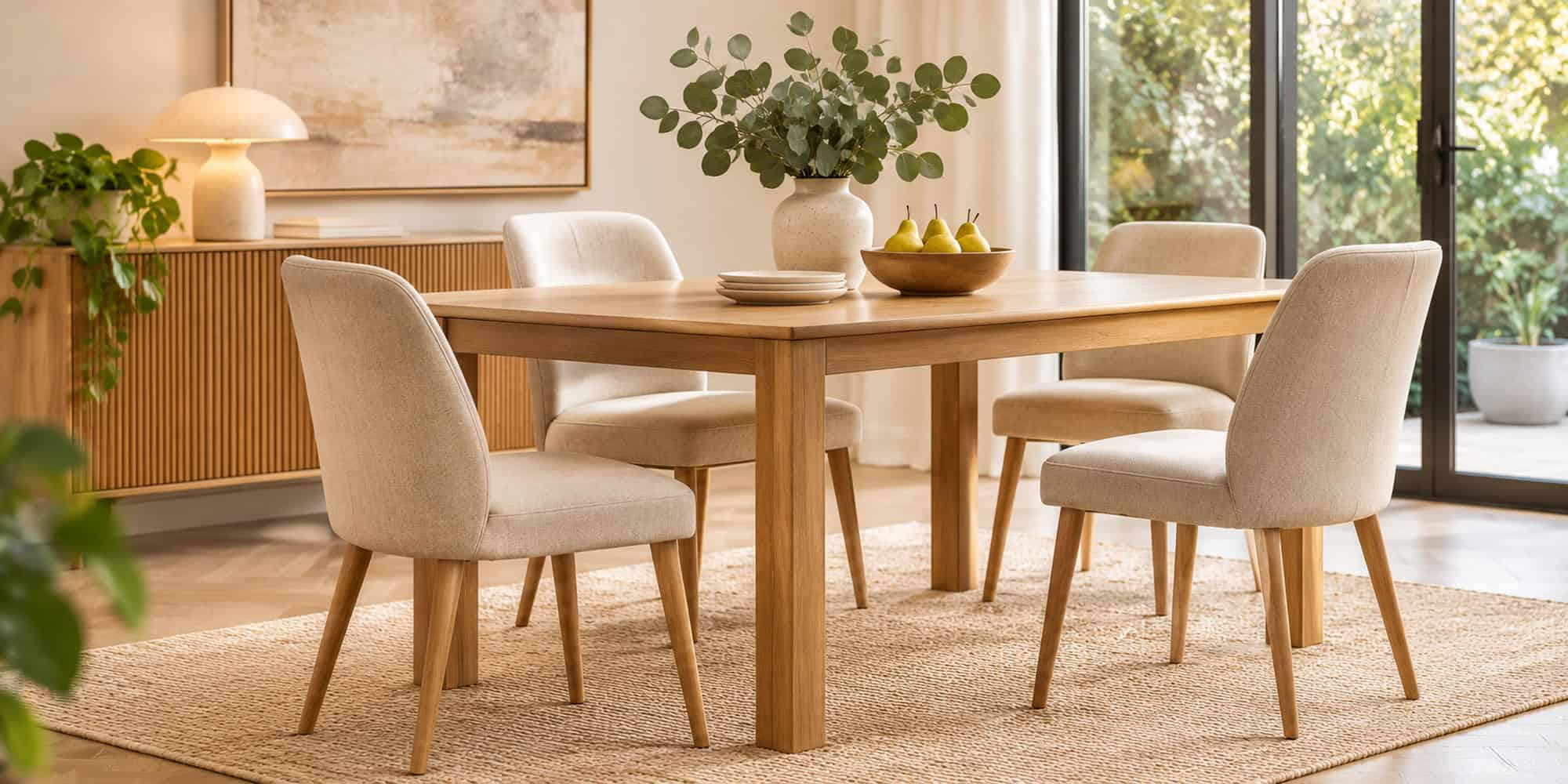
A rectangular table for six people is not necessarily taller than a round table for four. For conventional dining, seat capacity usually changes the tabletop length or diameter rather than its height. What matters more is whether everyone has enough elbow room and whether the base blocks chair positions.
Allow roughly 60 cm of usable table edge per diner as a planning guide, adjusting for wide dining chairs or generous place settings. A pedestal table may give chairs more leg freedom than a design with corner legs, but check the actual base dimensions rather than relying on the shape alone.
Standard Dining Tables vs Counter-Height Tables
Do not confuse a regular dining table with a counter-height or bar-height setting. A counter-height table may be about 86–91 cm high, while bar-height furniture is often higher still. These styles require appropriately taller stools or chairs and are not a direct replacement for a standard dining set.
If you are buying chairs separately, verify both the seat height and the manufacturer’s recommended table range. Ordinary dining chairs around 45–48 cm high are not intended to pair automatically with a 90 cm counter-height tabletop. Choose a combination that is comfortable to sit at for an entire meal.
Leave Enough Space Around Your Dining Table
Correct height will not help if guests cannot pull their chairs out. Allow approximately 90 cm from the table edge to a nearby wall or cabinet where practical; busy walkways may need more. Check this with chairs in their pulled-out position, not just pushed underneath the table.
Mark the intended table footprint on the floor with masking tape and walk around it. Make sure doors, drawers and dining chairs can move freely. If your room is compact, a smaller or extendable table may be more practical than a large fixed design, provided its open and closed dimensions suit the space.
Choosing a Table for Your Household
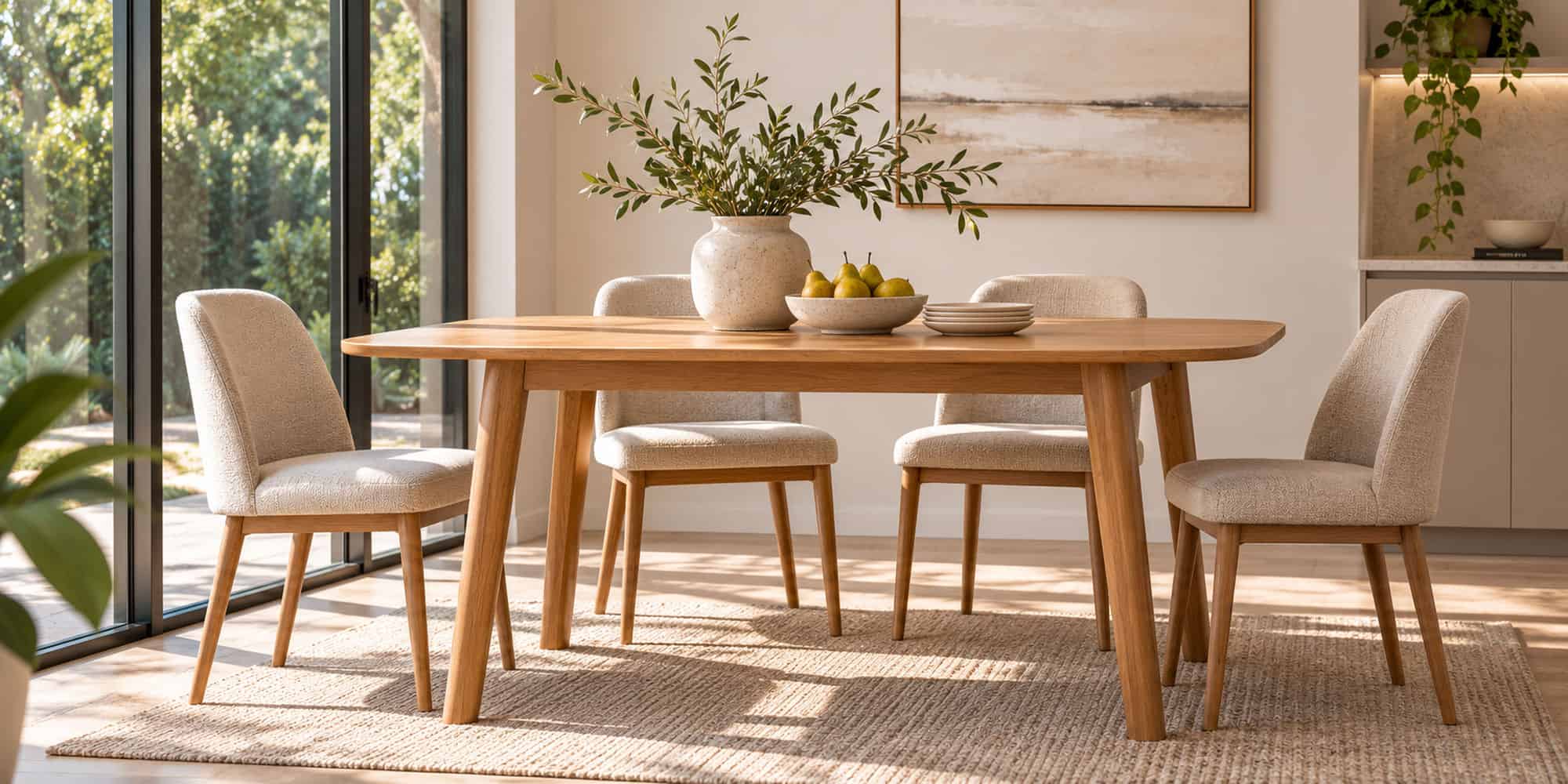
If you are furnishing a family dining area, think about the people who will use the table most often. A standard-height surface with compatible chairs is often a versatile choice for meals, conversation and occasional homework. Comfort needs can vary with individual height and mobility, so sitting at a similar setup before ordering is useful whenever possible.
For a coordinated option, browse four-seater dining sets and compare the listed table and chair dimensions. If you already own a table and only need seating, explore Dreamo dining chairs and check their seat heights against your tabletop.
A Quick Dining Table Height Checklist
Before purchasing, confirm these practical details:
• Measure from the floor to the top of the dining table.
• Compare the tabletop height with the chair seat height.
• Check the underside of the table for aprons, rails and legroom.
• Confirm any chair armrests fit beneath the table edge.
• Leave enough floor space for chairs to pull out and people to walk past.
If you are comparing a dining set with an existing table, remember that a good-looking match in colour does not guarantee a comfortable match in height. Actual dimensions should take priority.
Final Thoughts
Standard dining table height in Australia is typically around 71–76 cm, with approximately 75 cm a common choice. The most useful test is how that tabletop works with your chairs and the clear space underneath it.
Measure both the table and the seats, allow room around the setting and choose the combination that feels natural for everyday dining.
FAQ
What is the standard dining table height in cm?
Most standard dining tables are around 71–76 cm high, with 75 cm a common reference. Measurements run from the floor to the top of the tabletop.
What dining chair height suits a 75 cm table?
A chair with a seat around 45–48 cm high is a useful starting point. Check for approximately 25–30 cm between the seat and tabletop and make sure there is enough space below any apron.
Are six-seater dining tables taller than four-seater tables?
Not usually. Standard dining tables can have similar heights regardless of seating capacity. A six-seater generally needs more length or surface area, rather than a taller tabletop.
How much space should I leave around a dining table?
Around 90 cm from the table edge to walls or furniture is a practical starting point, with more in busy walkways. Test the clearance while the dining chairs are pulled out.