




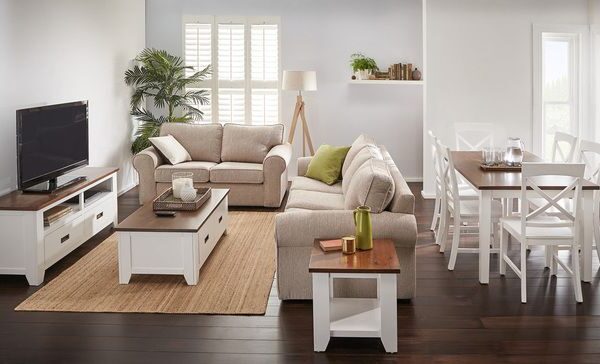


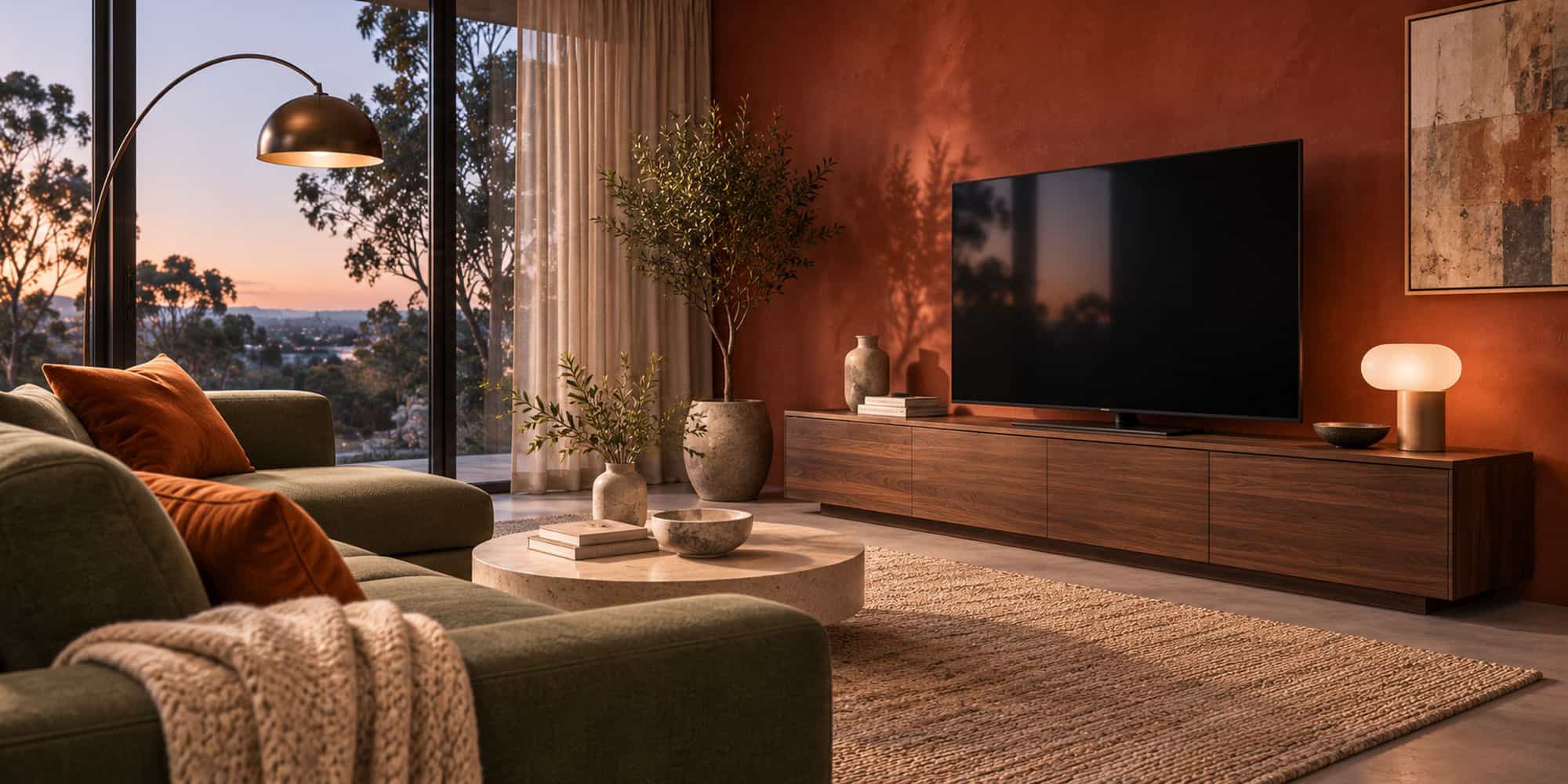
TV unit height is easy to overlook when you are choosing living room furniture. Yet the height of the cabinet affects where your television sits, how comfortably you watch it and whether your soundbar or other devices fit underneath.
The best height is not the same for every home. A low sofa, a large television and a wall-mounted screen can all call for a different setup. Start by measuring your seated viewing position, then choose a unit that works with your TV rather than relying on a fixed number.
What Is the Standard TV Unit Height?
As a general buying reference, many entertainment units used in Australian living rooms are around 40-55 cm high. Some designs sit much lower, while taller cabinets may suit upright seating or smaller screens. This is a common furniture range, not an official standard or a guarantee that a particular height will suit your television.
Measure height from the finished floor to the top of the unit. Do not confuse that measurement with the distance from the floor to the centre of the TV screen. A 45 cm cabinet can place two different televisions at different viewing heights because their screens and stands have different dimensions.
Measure Your Seated Eye Level First
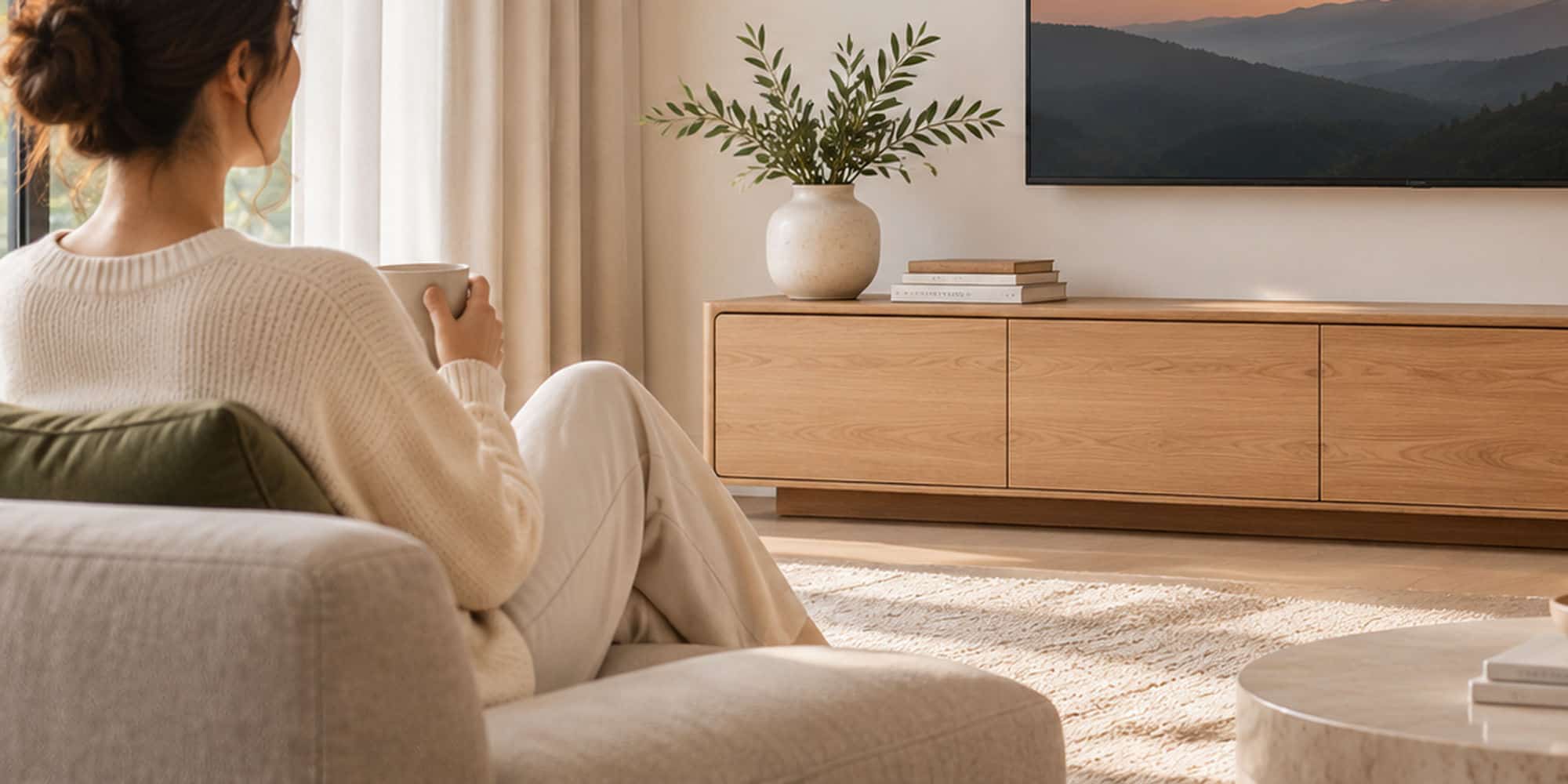
Sit in your usual spot on the sofa, looking straight ahead in a relaxed position. Ask someone to measure your eye level from the floor, or mark the approximate sightline on the wall opposite. The centre of the screen is a useful starting point for that height, although personal comfort and reclining positions may change what works.
Vogel’s, a TV-mount manufacturer, also recommends using seated eye level as the reference point rather than following a single installation height. Test the proposed position from the seat you use most. If you naturally have to tilt your head upwards for a long time, the screen may be higher than you would prefer.
Work Out the Right Height for a Freestanding TV Unit
To estimate the cabinet height, measure the vertical distance from the bottom of your television’s stand to the centre of its screen. Subtract that distance from your measured seated eye level. The answer is a starting height for the cabinet top, assuming the TV will sit directly on it.
For example, if your eye level is 105 cm and your TV’s screen centre is 55 cm above the base of its stand, a cabinet around 50 cm high would bring the screen centre close to your sightline. Those figures are only an illustration: use the dimensions of your actual television and base, and allow for the screen’s position when it is assembled.
Does TV Size Change the Unit Height?
Often, yes. A larger television usually has more vertical distance between its stand and the centre of its screen. When it sits on furniture, a lower unit may therefore help keep the image at a comfortable viewing position. Smaller TVs and higher seating can change the calculation.
Do not choose a cabinet just because you own a 55-inch or 65-inch television. The diagonal screen size does not tell you the stand height or the location of the screen centre. Check the actual model dimensions, viewing position and the load rating of the furniture before buying.
Freestanding vs Wall-Mounted Entertainment Units
A freestanding TV unit supports a television directly if its top is designed and rated for that purpose. Its overall height influences the TV’s position, so measure from the floor to the surface where the TV stand will rest.
A floating entertainment unit is different: its cabinet can be mounted at a practical storage height while the TV is fixed to the wall independently. There is no universal rule for how high a floating unit must sit. Plan enough room for doors, drawers, cleaning beneath it and any soundbar. Follow the unit’s instructions and use suitable fixings for the wall type and expected load.
Allow for Width, Storage and Ventilation
Height is only one dimension. Make sure the TV’s feet fit securely on the cabinet, with no overhang, and check the unit’s supported weight. Measure the room and allow access to power points, cables, streaming devices and game consoles. The ventilation clearances specified by each electronic device should also be respected.
If you want a wider look at size, storage and layout, read our entertainment unit buying guide. A unit with the correct height but insufficient surface depth or closed-off equipment space may still be the wrong choice.
Secure Your TV and Furniture
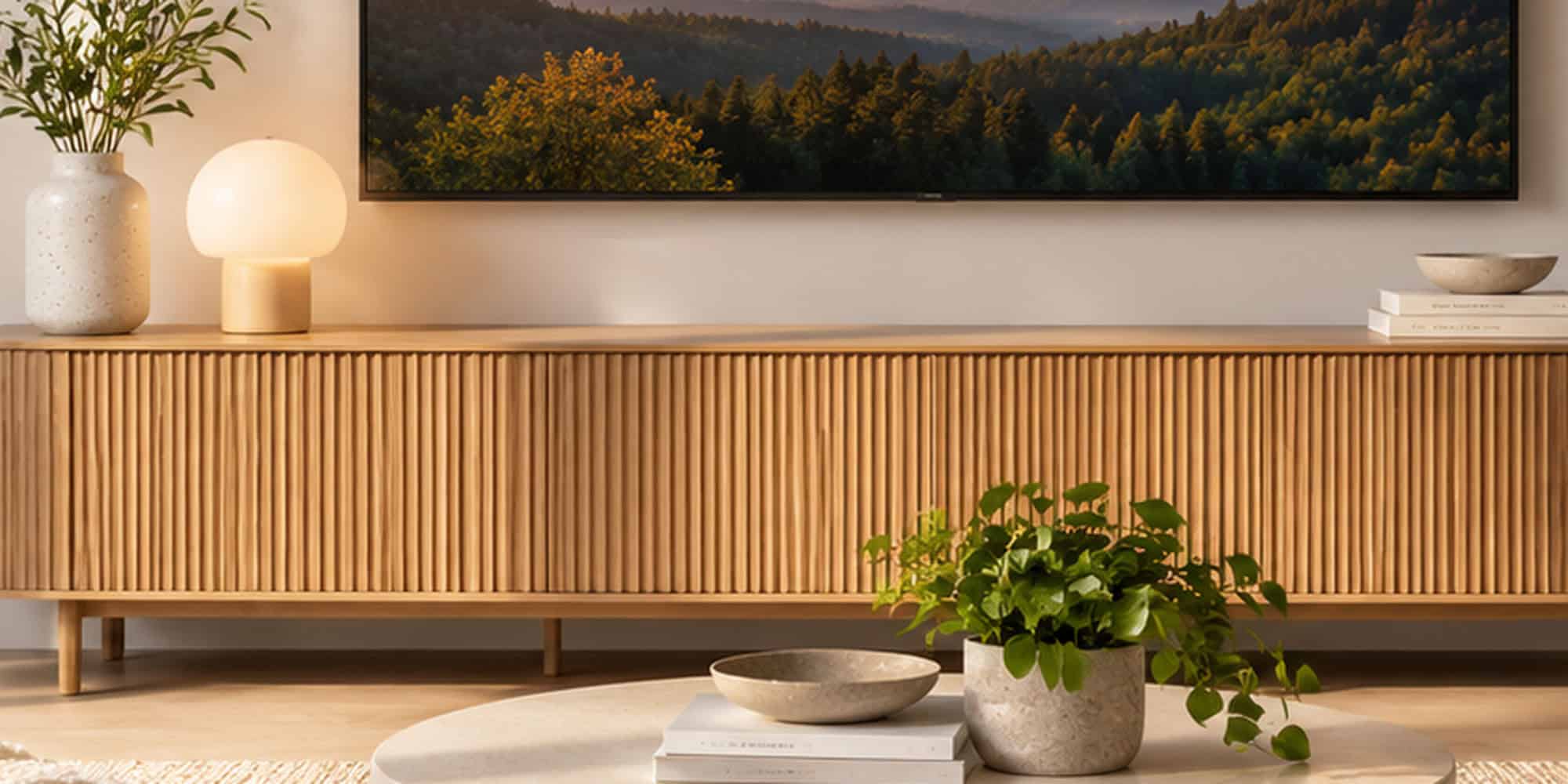
An entertainment unit should stand on a stable, level surface. In Australia, the ACCC warns that freestanding entertainment units and televisions can topple, particularly if children climb or pull on furniture. Where applicable, secure both the TV and the unit using appropriate anchoring hardware and the manufacturers’ instructions.
Do not assume a short, heavy-looking cabinet cannot tip. Check stability, follow the warnings provided and get professional advice if you are unsure about wall fixings or the type of surface behind the unit.
A Quick TV Unit Height Checklist
Before ordering, check these essentials:
• Measure your seated eye level and the height of the TV screen centre above its stand.
• Compare the resulting cabinet height with the actual product dimensions.
• Check the TV stand’s footprint, weight and available surface depth.
• Allow access to drawers, cables, power points and device ventilation.
• Follow the TV and furniture anchoring instructions.
After making those checks, browse Dreamo entertainment units to compare dimensions and designs. For ideas about finishing the space without crowding the screen, see how to style an entertainment unit.
Final Thoughts
The best TV unit height is the one that works with your seated eye level, television dimensions and living room layout. A cabinet around 40-55 cm is a useful place to start comparing products, but the screen position matters more than the advertised cabinet height alone.
Measure before purchasing, check the safety and storage details, and choose a unit that will remain comfortable to use every day.
FAQ
What is a good TV unit height for a living room?
Around 40-55 cm is a common starting range for freestanding entertainment units. The best choice depends on your sofa, television and the position of the screen centre when you are seated.
How do I measure TV unit height from the floor?
Measure vertically from the finished floor to the cabinet’s top surface. If the television stands on it, include the distance from the bottom of its stand to the middle of the screen when planning the viewing height.
Should a 65-inch TV sit on a lower unit?
It may, because a larger screen can position its centre farther above the cabinet. Check the television’s actual stand and screen dimensions rather than relying on diagonal size alone.
How high should a floating TV cabinet be?
There is no one-size-fits-all height. Position it for practical storage, clearance and visual balance, while planning the wall-mounted television’s viewing height separately. Use appropriate wall fixings and follow its installation instructions.