



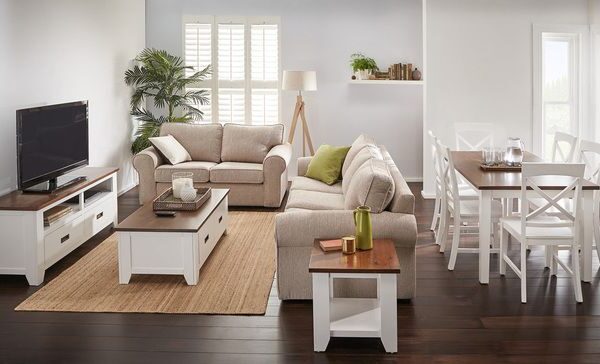


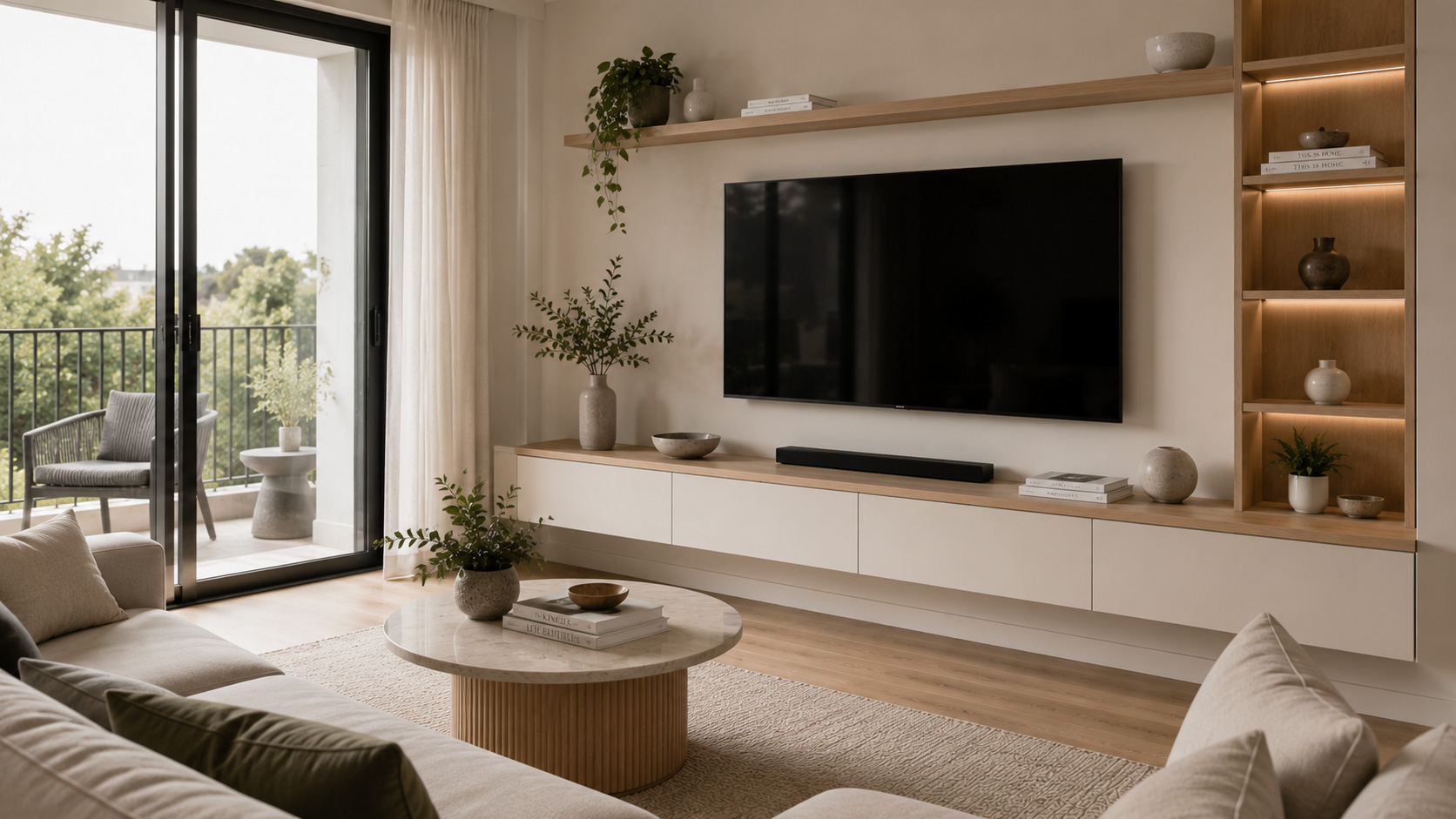
The entertainment unit is one of the most functional pieces of furniture in the living room – and one of the most visually prominent. It sits on the main wall of the room, usually opposite the sofa, and anchors the entire space. Get the size wrong and the TV looks awkward. Get the style wrong and it clashes with everything around it. Get the storage wrong and it becomes a cable management nightmare. Here’s how to approach the decision properly.
The Entertainment Unit Is More Than a TV Stand
It’s tempting to think of the entertainment unit purely as something to put the TV on – but it does considerably more than that. It houses the media devices, provides storage for cables and accessories, displays decorative objects alongside the TV, and contributes significantly to the overall visual balance of the living room wall.
A well-chosen entertainment unit makes the TV feel like part of the room rather than dominating it. A poorly chosen one – wrong size, wrong height, wrong style – can make even a beautifully furnished living room feel unfinished.
Start with Your TV Size
TV size is the logical starting point because it determines the minimum width the entertainment unit needs to be.
The unit should be at least as wide as the TV, and ideally wider. A TV that overhangs the sides of the unit looks precarious and unbalanced. As a general rule, aim for an entertainment unit that extends 15-30cm beyond the TV on each side. This gives the TV a visual frame and leaves room for decorative objects alongside it.
For a 65-inch TV (approximately 145cm wide), an entertainment unit of 180-200cm provides a well-proportioned base. For a 75-inch TV (approximately 167cm wide), 200cm or wider is a better fit.
Also check the unit’s weight capacity and the TV mounting or placement options. If you plan to place the TV directly on the unit rather than wall mounting it, make sure the surface depth is sufficient – most TVs need at least 30-35cm of depth to sit securely.
Width, Height and Depth – Getting the Proportions Right
Beyond matching the TV width, the overall proportions of the entertainment unit need to work in the context of the room.
Width: The entertainment unit doesn’t need to span the full width of the wall, but it should feel proportionate to it. On a 4-metre wall, a 1.2m unit looks undersized; a 2.4m unit reads as more considered and intentional. If budget allows, a wider unit with open shelving on either side of a central cabinet gives the most flexibility for both storage and display.
Height: Standard entertainment units sit at around 45-55cm high when the TV is placed on top – which puts a 65-inch TV at roughly 100-110cm to the centre of the screen. The ideal viewing height has the centre of the TV screen at or slightly below eye level when seated. If your sofa seat height is around 45cm and you typically watch TV in a relaxed, slightly reclined position, the centre of the screen at around 90-100cm from the floor is usually comfortable.
Wall-mounted units or floating TV consoles tend to sit lower than freestanding options, which often improves viewing angles and gives the room a lighter, more contemporary feel.
Depth: Most entertainment units are 35-45cm deep, which accommodates most media devices and provides enough stability for a TV placed on top. If you plan to store larger items inside – a games console, a soundbar, or a receiver – check the internal dimensions of any enclosed sections before buying.
Wall-Mounted vs Freestanding – Which Is Right for Your Space?
This is one of the first decisions to make, and it has significant implications for both the look of the unit and the practicality of installation.
Freestanding entertainment units sit on the floor and require no installation. They’re more flexible – you can reposition them if the room layout changes, and they don’t require any wall fixings. They tend to have more storage capacity than wall-mounted options and are available in a wider range of styles and sizes. The trade-off is that they have a heavier visual footprint, which can make smaller rooms feel more enclosed.
Wall-mounted or floating entertainment units are fixed to the wall and appear to float above the floor. This creates a sense of lightness and space that suits contemporary interiors particularly well. The exposed floor beneath the unit makes the room feel larger, which is particularly valuable in smaller living rooms. Wall mounting does require installation into wall studs and is more difficult to reposition once installed – it’s a more permanent commitment than a freestanding option.
For rental properties where wall fixing isn’t permitted, a freestanding unit is the only practical choice. For owner-occupied homes where a more permanent, built-in look is the goal, a wall-mounted unit often delivers a better result.
Storage Needs – How Much Do You Actually Need?
Entertainment units typically offer a combination of enclosed cabinets, open shelving and drawers. Working out what you need before you buy avoids ending up with either too little storage or a unit with large empty sections that look awkward.
Take stock of what you need to store:
- Media devices: streaming sticks, set-top boxes, game consoles, Blu-ray players
- Remotes, controllers and accessories
- DVDs, games or other physical media
- Cables and power boards
- Decorative items for display on open shelving
Enclosed cabinets are best for devices with remotes that need infrared access – check that the cabinet doors allow remote signals to pass through, or look for units with push-open doors that can be left open during use. Open shelving is better for devices that need ventilation, like amplifiers or receivers that generate heat.
Cable management is worth thinking about at the buying stage. Look for units with cable access holes at the back of shelves or enclosed sections, which allows cables to be run neatly between compartments rather than trailing down the front of the unit.
Browse our entertainment units to compare storage configurations and dimensions across available styles.
Style and Material Considerations
The entertainment unit should feel like it belongs in the same room as the sofa, coffee table and other living room pieces – consistent in style direction even if the materials differ slightly.
Timber entertainment units are the most versatile and suit contemporary, Japandi, farmhouse and coastal interiors. Light oak suits neutral and Scandinavian-influenced spaces; darker timber tones suit more dramatic or traditional interiors.
High gloss or lacquered finishes suit contemporary interiors and have a sleek, polished quality that works well in modern apartments and newer builds. They do show fingerprints more readily than matte finishes, which is worth considering in a high-traffic living room.
Matte or textured finishes in white, grey or charcoal are clean and versatile. They tend to recede visually rather than dominate, which keeps the focus on the TV and any displayed objects.
Mixed material units – timber with metal legs, or a timber cabinet with a marble-effect top – add visual interest and suit contemporary interiors where mixing materials is part of the design direction.
For guidance on how entertainment unit styles work within different interior aesthetics, our furniture style guide covers the main style directions in detail.
Final Thoughts
Choosing the right entertainment unit comes down to starting with the TV size and working outward from there – width first, then height, then storage, then style. It’s a piece of furniture that needs to be both highly functional and visually considered, which makes it worth spending more time on than it usually gets. Get the proportions right, think through your actual storage needs before you buy, and choose a style that connects to the rest of the room – and the entertainment unit becomes one of the most hardworking and well-integrated pieces in the home.