



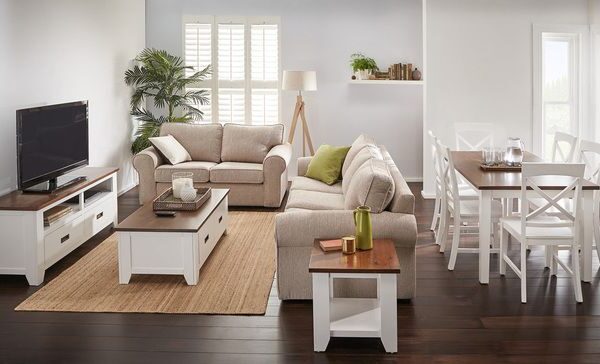


Most entertainment units end up looking the same: a TV in the middle, a few devices on the shelves, cables trailing down the back. Functional, but not particularly considered. The entertainment unit wall is actually one of the most prominent surfaces in the living room, and with a bit of thought it can look genuinely well-styled without becoming a distraction from the TV itself. Here’s how to approach it.
The Entertainment Unit Wall Is Prime Real Estate
The wall where your entertainment unit sits is usually the first thing you see when you walk into the living room, and it sits in the direct sightline of everyone seated on the sofa. That makes it one of the most visually impactful surfaces in the home – and one that most people leave largely unstyled beyond the TV itself.
The goal isn’t to compete with the TV or create something so visually busy that it’s distracting. It’s to make the whole wall feel considered and balanced, with the TV as the anchor and everything around it working in support rather than at random.
If you’re still deciding on the right unit, our guide on how to choose the right entertainment unit covers sizing and style selection in detail.
Start with the TV as the Anchor
Everything on and around the entertainment unit should be arranged in relation to the TV, not in spite of it. The TV is the focal point and the largest element – styling choices work best when they acknowledge this rather than try to distract from it.
One practical implication: keep the area immediately beside and above the TV relatively clear. Objects placed too close to the TV screen compete with it visually and can look cluttered. The styling belongs in the shelving sections to the sides of or below the TV, not directly adjacent to the screen itself.
If the TV is wall-mounted above the unit, the space between the bottom of the TV and the top of the unit becomes a zone to think carefully about – left empty it can look like a gap rather than a design choice, but overcrowded it feels busy. A single low object or a long horizontal decorative piece works well here.
How to Style Open Shelving
Open shelving is where the real styling work happens on an entertainment unit, and the same principles that apply to bookshelves and coffee tables apply here – varying heights, mixing objects with books, and leaving breathing room between groupings.
A few approaches that work well:
Mix books with objects. A shelf of only books looks like a library; a shelf of only decorative objects looks like a shop display. Combining the two – a small stack of books alongside a ceramic piece or a plant – creates a more natural, lived-in arrangement.
Vary the heights within each shelf. Group taller items at the back or sides and shorter items in front. Use a stack of horizontal books as a plinth to raise a smaller object to a more interesting height.
Leave some space. Not every shelf needs to be full. Empty space on a shelf reads as intentional and gives the eye somewhere to rest. Overcrowded shelves look like storage, not styling.
Repeat elements across shelves. Using the same material or colour in two or three different spots across the unit creates visual cohesion – a white ceramic on one shelf and a white candle on another, for example, ties the arrangement together without being too matchy.
For more on how grouping principles apply across different surfaces, the same logic used in our coffee table styling guide translates well to shelf arrangements.
What to Do with Closed Cabinets
Enclosed sections of an entertainment unit are for function, not display – and that’s entirely fine. The goal here is organisation rather than styling.
Inside closed cabinets, use baskets, boxes or cable management trays to keep things tidy. Even if the cabinet doors are always closed, an organised interior is easier to navigate and prevents the avalanche of cables and accessories that tends to build up over time.
The outside of cabinet doors can be left plain – in most cases, a clean, undecorated cabinet face is more visually restful than one with hardware or decoration added to it. If the unit has minimal or recessed handles, keep them that way; simple and understated tends to age better than decorative.
Managing Cables and Devices Neatly
Cables are the single biggest enemy of a well-styled entertainment unit, and managing them properly makes a significant difference to the overall look.
A few practical steps:
Run cables through the back of the unit. Most entertainment units have cable access holes at the rear of shelves – use these to route cables between sections rather than letting them trail down the front or sides.
Use cable ties or velcro straps. Bundle cables together behind devices and secure them with a tie. This prevents the tangled nest of cables that tends to accumulate at the back of shelves.
Consider a power board inside a cabinet. Routing all device cables to a single power board stored in a closed section means only one cable needs to exit the unit to the wall – far cleaner than individual cables from every device.
Position devices out of sightline where possible. Streaming devices, set-top boxes and hard drives are rarely attractive objects. Place them inside enclosed sections or at the back of shelves where they’re accessible but not the first thing you see.
How to Balance the Wall Around the Entertainment Unit
The entertainment unit doesn’t exist in isolation – it sits within the context of the whole wall, and the space around and above it contributes to how balanced the wall feels overall.
Above the TV: If the TV is on the unit rather than wall-mounted, the wall above it is often left bare. A single large piece of art or a grouping of smaller frames above the TV adds height and visual interest to the wall without crowding the TV itself. Keep artwork at least 15-20cm above the top of the TV to give it room to breathe.
Beside the unit: If the entertainment unit doesn’t span the full wall, the space on either side needs some consideration. A floor lamp beside the unit adds height and warmth. A tall plant in the corner brings life and fills vertical space without requiring any wall fixing.
Symmetry vs asymmetry: A symmetrical arrangement on either side of the TV – matching lamps, matching plants, matching shelving – creates a formal, considered look. An asymmetrical arrangement – different heights and objects on each side – feels more relaxed and contemporary. Neither is wrong; it comes down to the overall style direction of the room.
Browse our entertainment units if you’re starting from scratch or considering an upgrade – the right unit makes the styling significantly easier.
Final Thoughts
Styling an entertainment unit well is really about managing three things: the open shelving, the cables, and the wall space around the unit. None of it requires expensive accessories or a complete redesign. A few well-chosen objects on the shelves, cables managed out of sight, and a balanced approach to the wall above and beside the unit – that’s usually all it takes to make the most prominent wall in the living room feel genuinely considered.