






A sofa can look inviting online yet feel completely different when you sit down. One often-overlooked measurement is sofa seat depth: the amount of space between the front of the seat and the back cushion. It influences whether you naturally sit upright, lean back or curl up with your legs on the sofa.
Getting the depth right is about more than choosing the biggest sofa that fits. Your leg proportions, seat height, back cushions and favourite way to relax all affect what feels comfortable. Here’s how to understand the numbers before buying.
What Is Sofa Seat Depth?
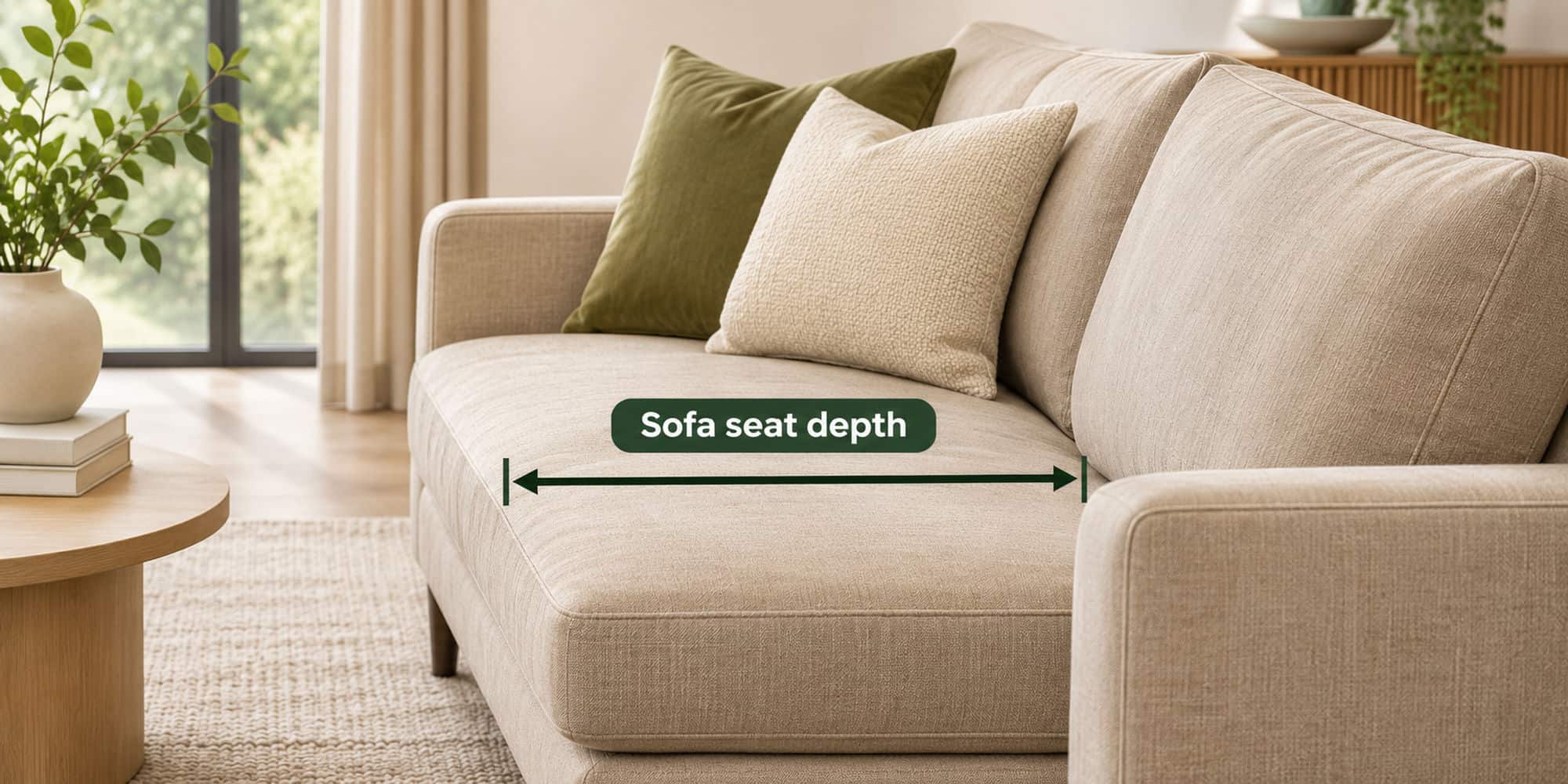
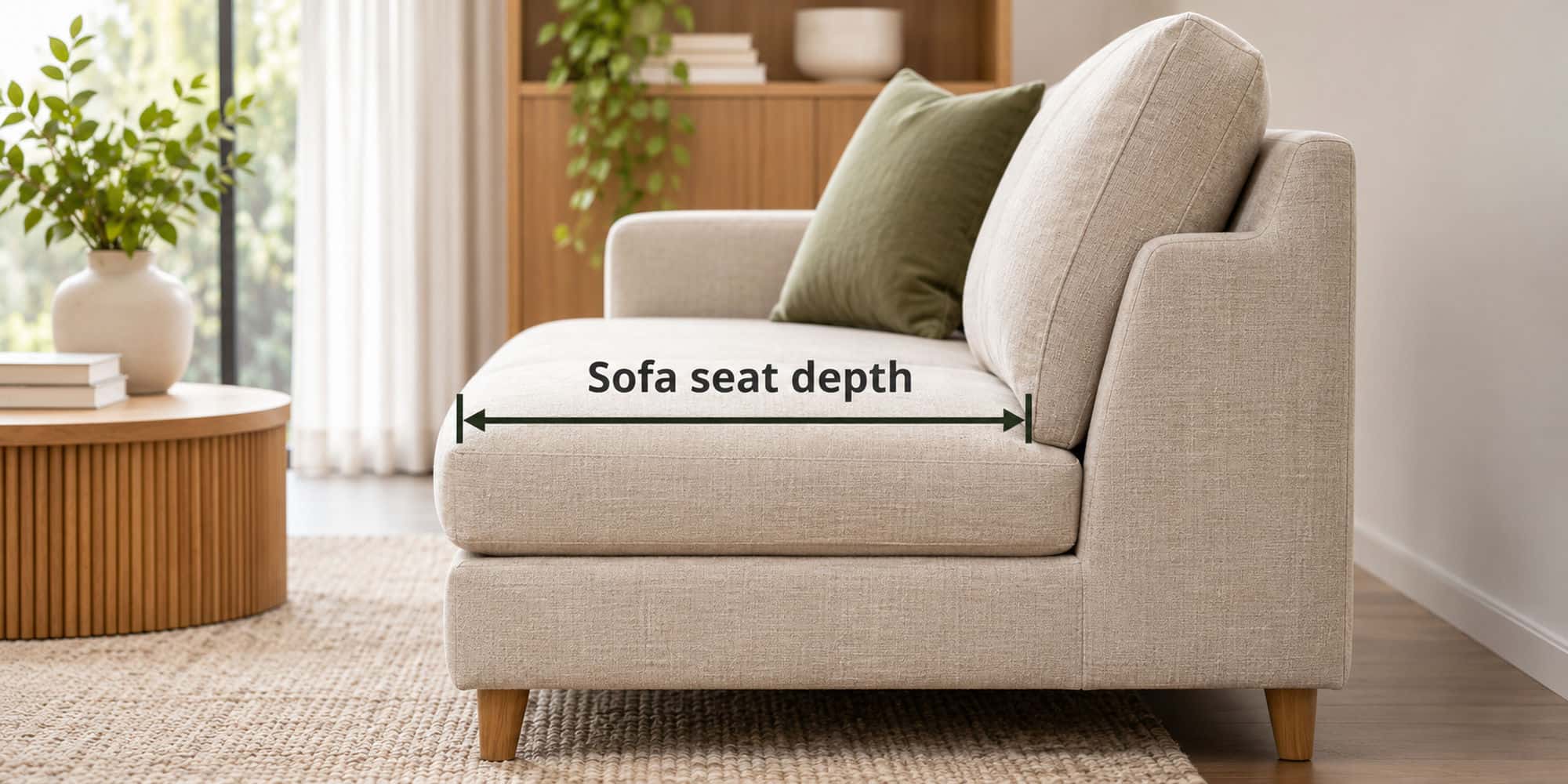
Sofa seat depth is the usable horizontal distance from the front edge of the seat cushion to the front of the back cushion or backrest, with the cushions in their normal position. It tells you how much sitting space you have once you lean back.
That is different from overall sofa depth, which measures the entire piece from its front to the back of the frame. A sofa with a chunky backrest or thick cushions can have a large overall footprint but a comparatively modest usable seat. When shopping, check which measurement a retailer has listed rather than treating the two numbers as interchangeable.
What Is a Good Seat Depth for a Sofa?
For many people who prefer a more upright sitting position, a usable depth around 55–60 cm is a helpful comparison point. Around 60–65 cm gives a little more room to lean back and lounge. Deeper seats of 65 cm or more may appeal if you like curling up, sitting cross-legged or stretching out.
These are practical furniture-shopping ranges, not universal comfort standards. Designs with unusually thick back cushions may feel shallower than their specifications suggest. If you already have a sofa you love, measure its usable seat and compare the number with any new model before assuming that deeper means better.
How to Measure Sofa Seat Depth Correctly
Place the back cushions as you would when sitting normally. With a tape measure held horizontally along the seat, measure from the front edge of the sitting cushion to the point where your back meets the front of the back cushion. Record that as the usable seat depth.
Then measure the full front-to-back depth of the sofa separately for your room plan. If the cushions are removable or unusually soft, ask the retailer whether the published seat-depth figure includes them. Checking the measurement method can explain why two sofas with similar specifications feel very different.
Shallow Seats Versus Deep Seats
A shallower seat can make it easier to sit upright with your back against the cushion and your feet comfortably on the floor. That can suit a living room used for conversation, reading or welcoming guests. It may also feel more convenient when sitting down and standing up frequently.
A deep seat creates more space for relaxed positions, such as tucking a leg underneath you or lounging through a film. However, if you must slide forward to put your feet down, you may lose contact with the backrest. Neither style is automatically more comfortable; the better choice depends on how you usually use the sofa.
Does Height Affect the Ideal Seat Depth?
People with longer legs may appreciate extra room beneath their thighs, especially on a sofa designed for lounging. Shorter people may prefer less depth when they want to sit back and keep their feet on the floor. Even so, two people of the same height can prefer different sofas because torso length, leg proportions and sitting habits vary.
If several people share the lounge, try a depth that works for upright sitting and use an ottoman when someone wants to stretch out. Alternatively, a deeper sofa with separate back cushions can be more adaptable, provided cushions do not interfere with stability or normal use.
Seat Height, Back Cushions and Firmness Matter
Seat depth never works in isolation. A higher seat can make your feet feel further from the floor, even when the depth seems reasonable. A lower seat changes how you bend your knees when getting up. Compare seat height and usable depth together rather than choosing either number on its own.
Backrest angle and cushion fill also change the experience. A soft back cushion may compress when you lean into it, effectively increasing the available space, while a firmer cushion can maintain a more defined seating position. These differences are why photos and overall measurements alone cannot guarantee comfort.
Try a Five-Minute Sofa Fit Test
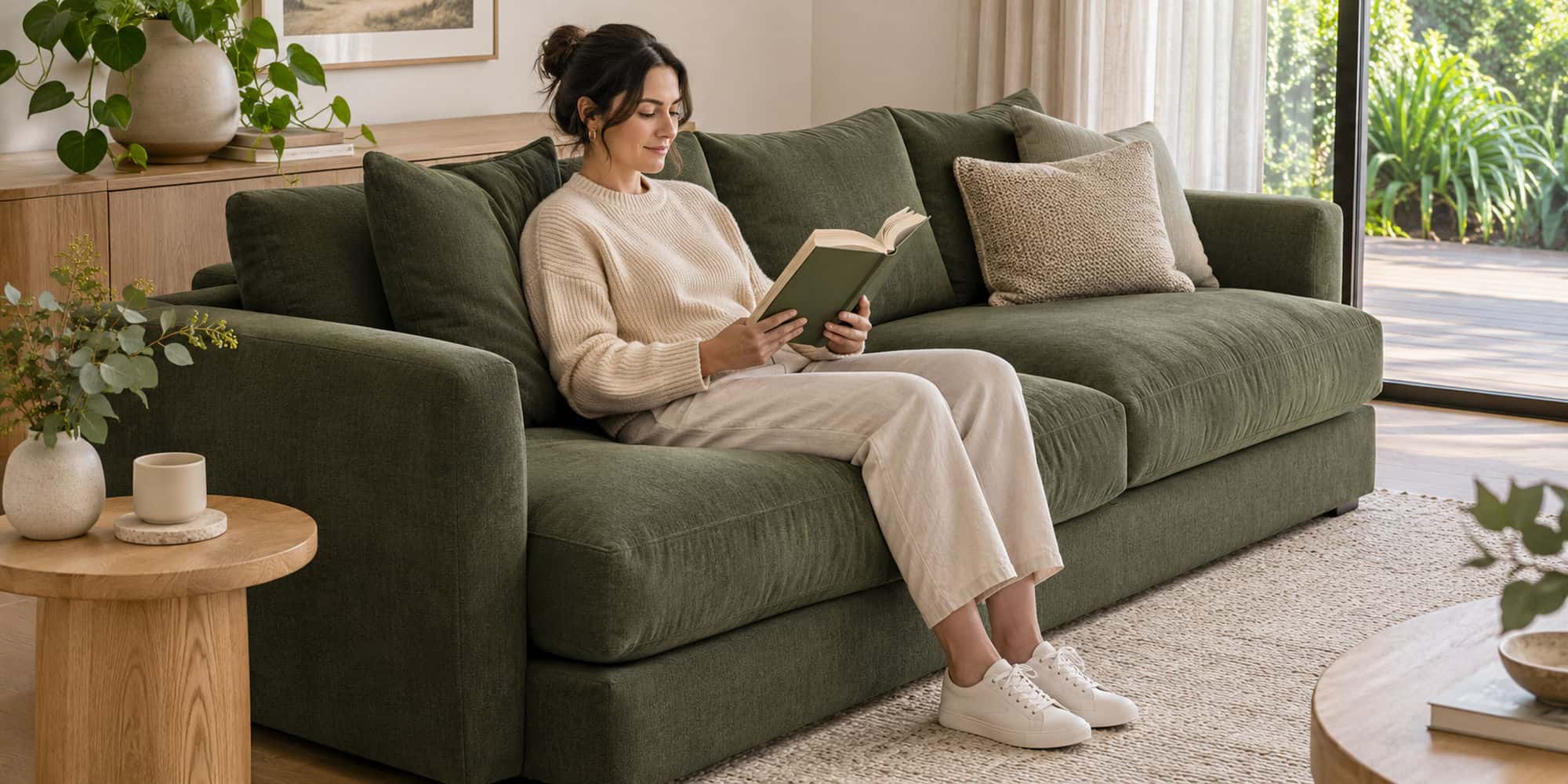
If possible, sit right back against the cushion as you normally would at home. For upright sitting, check whether your back feels supported and your feet can rest naturally on the floor. Notice whether the seat edge presses awkwardly against the backs of your knees or whether your thighs feel unsupported.
Now try the positions you use most: chatting, watching television or sitting with a book. Does the depth still suit you? Pay attention to how easily you get up. If you’re buying online, compare the published usable depth, seat height and backrest design with a sofa you’ve tried, and check the retailer’s returns and delivery information.
Remember the Room’s Overall Dimensions
Usable seat depth is for comfort; overall depth is for room planning. A deeper sofa may extend much further into your living space, so measure the full footprint and leave room for walking past a coffee table or other furniture. Mark the proposed position on the floor with painter’s tape if you’re unsure.
For a broader size-and-layout approach, see our guide to choosing the right sofa size. If you want to fine-tune the support of a deeper seat, our guide to styling sofas with cushions and throws offers ideas for using soft furnishings without overcrowding the seating area.
Final Thoughts
The best sofa seat depth is the one that suits your normal posture and the people sharing the sofa. Around 55–60 cm offers a useful starting point for upright sitting, while a deeper seat may be more appealing for lounging. Measure the actual sitting area, not just the outer frame, and consider seat height and cushion construction as part of the decision.
A few minutes comparing dimensions and sitting positions can tell you more than choosing a sofa by appearance alone.
FAQ
What is the standard sofa seat depth in cm?
A usable depth around 50–60 cm is common in more upright designs, while many lounging sofas are around 60–65 cm or deeper. There is no single fixed standard across manufacturers.
How do I know whether a sofa is too deep?
Sit with your back supported. If your feet cannot comfortably reach the floor without sliding forward, the seat may be deeper than you prefer for upright sitting.
Is a deeper sofa better for tall people?
It can give longer legs more room, but not everyone tall prefers a deep sofa. Backrest shape, seat height and whether you lounge or sit upright still matter.
Is seat depth the same as overall sofa depth?
No. Seat depth measures the usable sitting surface up to the back cushion. Overall depth includes the backrest and full frame, so it is generally a larger number.