





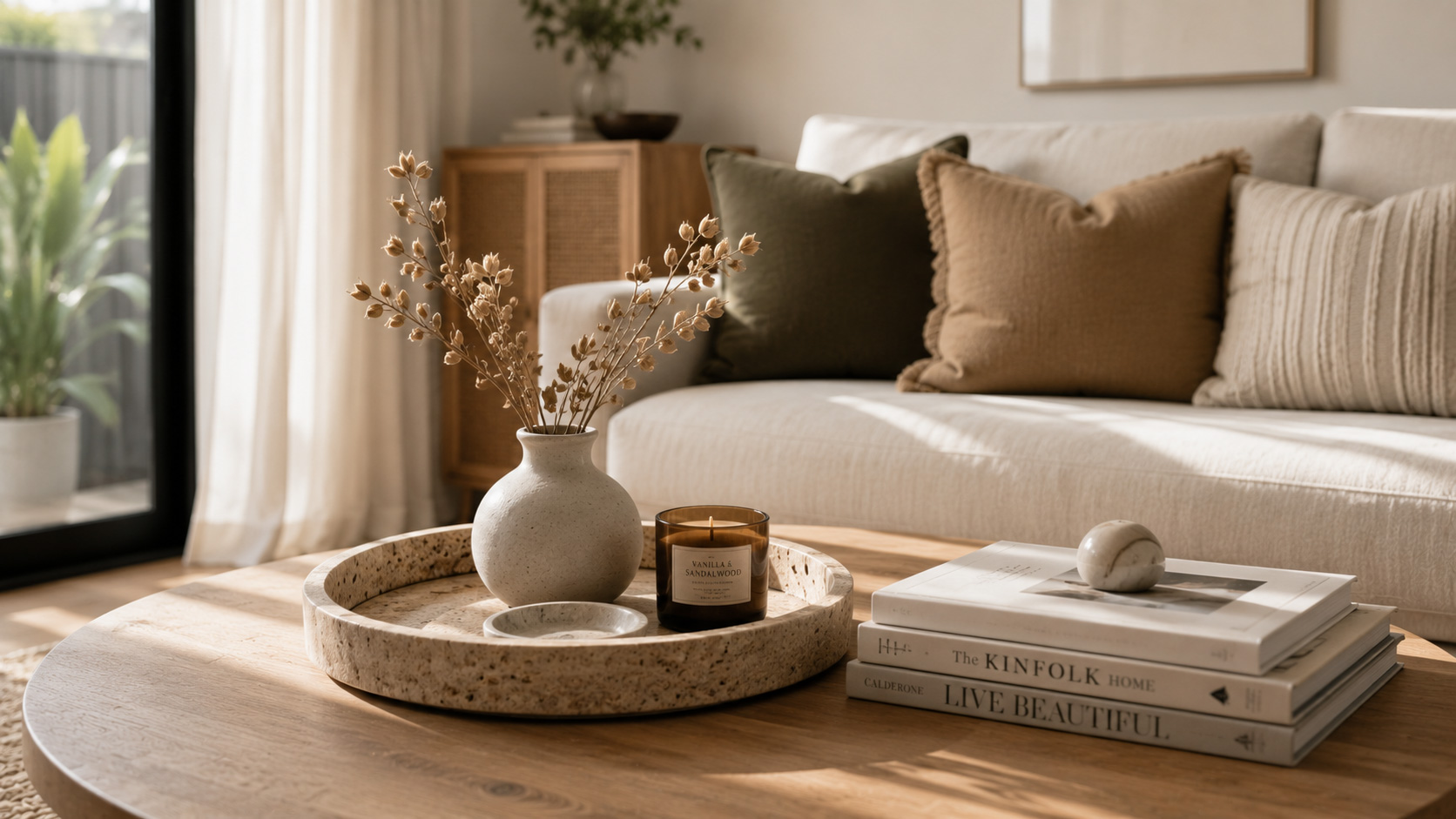
A well-styled coffee table can pull a living room together in a way that’s hard to define but immediately noticeable. A poorly styled one – or one that’s either bare or completely covered in clutter – has the opposite effect. The good news is that coffee table styling follows a few simple principles that make it easier than it looks. Here’s how to get it right.
Why Coffee Table Styling Matters
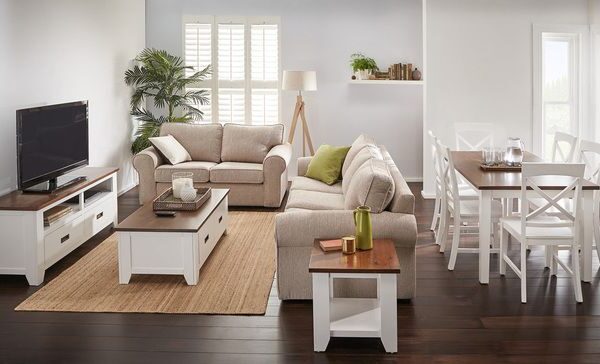
The coffee table sits at the visual centre of most living rooms. It’s one of the first things you notice when you walk in, and it sits in the sightline from almost every seat in the room. That position means it has an outsized effect on how the whole space feels – a styled coffee table makes a room look considered; an unstyled one makes even a beautiful sofa look unfinished.
The goal isn’t to make the coffee table look like a display in a furniture catalogue. It’s to make it look lived-in and intentional at the same time – functional enough for daily use, styled enough to feel like a design choice.
Start with a Tray
If there’s one tool that makes coffee table styling easier, it’s a tray. A tray groups smaller objects together and gives them a defined boundary, which instantly makes a collection of items look more deliberate and less like they’ve been left there by accident.
Choose a tray that’s proportionate to the coffee table – roughly one third to half the length of the surface works well, leaving room for other elements alongside it. Materials like timber, marble, brass and woven rattan all work well depending on the style of the room.
Once the tray is in place, arrange a small selection of objects within it. This becomes the anchor of the whole coffee table arrangement, and everything else sits alongside it rather than competing with it.
The Rule of Three Revisited
As with bedside table styling, the rule of three applies on a coffee table – group objects in odd numbers and at varying heights for the most natural-looking arrangement.
A classic coffee table grouping within a tray might include:
- A candle or small object at the tallest height
- A small decorative piece or vase at mid height
- Something flat and low – a coaster set, a small dish or a stone – as the grounding element
Outside the tray, a stack of books and a small plant or dried stem arrangement are the two additions that do the most work on a coffee table. The books add height variation and a sense of personality; the plant or stems add a natural element that softens the overall look.
What to Include – and What to Leave Off
Worth including:
- A tray to anchor the arrangement
- A small stack of books or coffee table books – two or three is enough, and they should be books you’d actually read or that reflect your interests
- A candle – practical and decorative, and it gives the table a purpose beyond display
- A small vase with a single stem, dried botanicals or a compact plant
- A small decorative object with some personal meaning or visual interest – a ceramic piece, a stone, a small sculpture
Worth leaving off:
- Remotes, chargers and cables – these belong in a drawer or basket, not on the styled surface
- Too many small items at the same height – this creates visual noise rather than interest
- Anything that makes sitting down and actually using the table awkward – the styling should work around the function, not replace it
- Candles without holders, which look unfinished and are a safety concern
The test is whether the table still looks good when it’s actually being used – a coffee cup, a phone and a magazine should be able to join the arrangement without the whole thing falling apart. If the styling is so elaborate that everyday objects have nowhere to go, simplify it.
How to Match Your Styling to Your Interior Style
The objects on your coffee table should feel like they belong in the same room as everything else around them – pulled from the same colour family, the same material palette, the same general aesthetic.
Contemporary / modern interiors: Keep the styling minimal. One or two objects, a single stem in a simple vase, and a small tray in a matte finish. Less is more.
Hamptons or coastal interiors: Natural textures work well – a woven tray, a linen-bound book stack, white or blue ceramics, dried coastal grasses or pampas stems.
Japandi interiors: Restraint is the key. A single ceramic object, a small plant, a smooth stone. Nothing decorative for its own sake.
Farmhouse or rustic interiors: A wooden tray, stacked hardcover books, a candle in an earthy tone, a sprig of dried eucalyptus or lavender.
For more on how these interior styles translate across furniture and décor choices, our furniture style guide covers each aesthetic in detail.
Seasonal and Occasional Updates
One of the easiest ways to keep a living room feeling fresh without buying new furniture is to update the coffee table styling with the seasons.
In warmer months, lighter elements work well – a small succulent, a white or terracotta candle, fresh stems in a simple vase. In cooler months, richer textures and deeper tones feel more appropriate – a chunky candle, darker dried botanicals, a heavier ceramic piece.
The books and tray can stay consistent as the stable foundation; it’s the smaller accent pieces that rotate. This keeps the styling feeling current without requiring a complete overhaul each time.
Occasional updates for specific events – a dinner party, a holiday period, a change in the season – are also a low-effort way to make a home feel more considered. A few seasonal additions to the coffee table arrangement can shift the feeling of the whole room.
Final Thoughts
Coffee table styling is one of the simplest and most affordable ways to elevate a living room. Start with a tray, group objects in odd numbers at varying heights, keep it functional enough for daily use, and match the aesthetic to the rest of the room. If you’re still looking for the right coffee table to style, our coffee table range includes options across different sizes, shapes and materials to suit most living room configurations.