





Few furniture pieces have the instant recognition of an egg chair. That distinctive cocoon shape has been a design icon since the 1950s, and its popularity hasn’t waned – if anything, it’s grown. Walk through any well-styled outdoor space or living room in Australia and there’s a good chance you’ll spot one. But with so many versions available at very different price points, knowing what to look for before you buy makes a significant difference. Here’s everything you need to know.
Why Egg Chairs Have Stayed Popular
The egg chair’s enduring appeal comes down to a combination of form and function that few other chairs achieve. The rounded, enveloping shape creates a sense of enclosure that feels genuinely cocooning – it’s a chair you actually want to spend time in, not just look at. It also has a strong visual presence that can anchor a room or outdoor space in a way that a standard chair rarely does.
Beyond aesthetics, egg chairs are versatile. They work on a patio, in a living room, in a bedroom corner, or on a balcony. They suit coastal homes, contemporary interiors and garden settings equally well. That flexibility, combined with a silhouette that’s become genuinely iconic, is why they’ve maintained their popularity across decades of changing furniture trends.
Indoor vs Outdoor Egg Chairs – What’s the Difference?
This is the first distinction to get clear on, because buying an indoor egg chair and placing it outdoors is a mistake that leads to early deterioration.
Indoor egg chairs are typically upholstered in fabric or genuine leather, with a frame made from timber or metal. They’re designed for climate-controlled environments and aren’t built to handle UV exposure, moisture or temperature extremes. Placing one outdoors – even in a covered area – will significantly shorten its lifespan.
Outdoor egg chairs are made specifically for outdoor conditions. They typically feature a wicker or synthetic rattan exterior woven over a powder-coated steel or aluminium frame, with weather-resistant cushions that can handle rain, humidity and direct sun. The materials are UV-stabilised to prevent fading and designed to dry quickly after rain.
If you want an egg chair for a patio, alfresco or garden setting, always choose one that’s specifically designed for outdoor use. Browse our egg chairs to see outdoor-rated options.
Hanging vs Freestanding – Which Should You Choose?
Egg chairs come in two main configurations: hanging (suspended from a frame or ceiling) and freestanding (with a base that sits on the floor). Both have their place, and the right choice depends on your space and how you plan to use it.
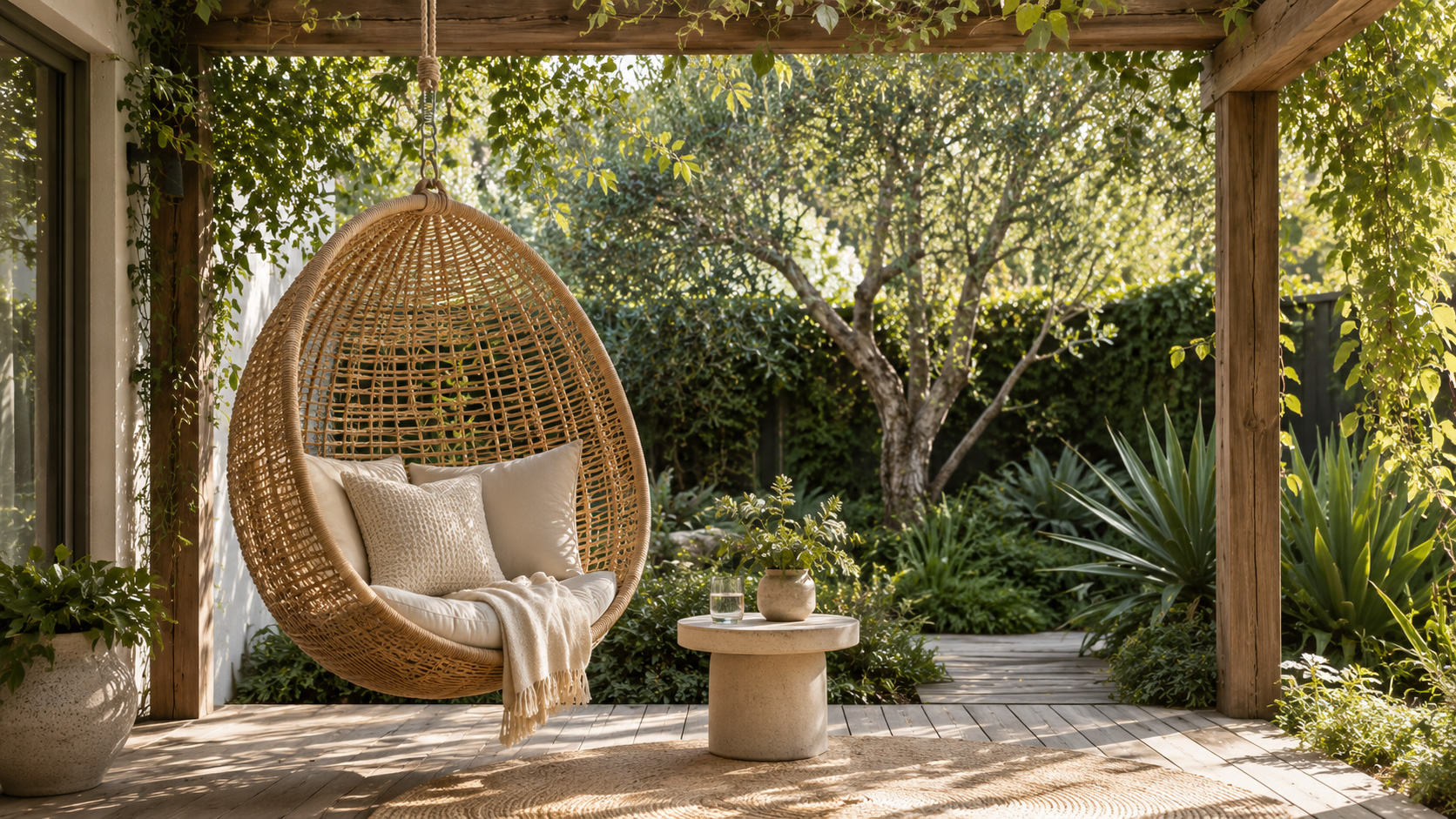
Hanging egg chairs have the more iconic look – the gentle swing and suspended position are a big part of their appeal. They come in two versions: those that hang from a dedicated A-frame stand, and those designed to be mounted directly from a ceiling beam or pergola. The A-frame version is more portable and doesn’t require any installation; the ceiling-mounted version has a cleaner look but needs a structurally sound fixing point that can handle the dynamic load of a swinging chair.
Before buying a hanging egg chair, check the weight capacity and make sure your ceiling or pergola beam can support it. A professional installation is recommended for ceiling-mounted versions.
Freestanding egg chairs sit on a solid base – usually a circular or pod-style base – and don’t swing. They’re more stable, easier to place, and don’t require any structural consideration. They’re a good choice for indoor use or for outdoor spaces where a swinging chair might not be practical, such as a narrow balcony or a space with children around.
Size and Weight Capacity – What to Check Before You Buy
Egg chairs are larger than they sometimes appear in photos, so always check the dimensions before purchasing.
A standard outdoor egg chair typically measures around 100-110cm wide and 150-170cm tall (including the frame or stand for hanging versions). The seat itself is usually around 90-100cm wide inside – comfortable for one adult, and occasionally used as a snug two-person seat for smaller adults or a parent and child.
Weight capacity is particularly important for hanging egg chairs. Most quality models support between 100-150kg, but always verify this against the product specifications. For ceiling-mounted versions, the fixing point needs to support not just the static weight of the chair and occupant but the dynamic load of movement.
Also check the dimensions against your available space. An egg chair with an A-frame stand typically needs a footprint of around 120-140cm in diameter – more than the chair itself suggests. Measure before you buy.
Materials and Weather Resistance
For outdoor egg chairs, material quality is the difference between a piece that lasts years and one that fades and deteriorates within a season.
Synthetic rattan or wicker: The most common exterior material for outdoor egg chairs. Look for UV-stabilised resin wicker that won’t fade or become brittle in the sun. The weave should be consistent and tight, with no loose sections.
Frame material: Powder-coated steel is the most common frame material. It’s strong and affordable but can rust over time if the coating is chipped. For coastal environments, look for frames with additional rust-resistant treatment or consider an aluminium-framed option if available.
Cushions: The cushion is where you spend most of your time, so it matters. Outdoor egg chair cushions should be filled with a quick-dry foam or polyester fill that doesn’t hold moisture after rain. The cover fabric should be UV-resistant and easy to remove for washing. Check whether replacement cushions are available from the manufacturer – this extends the usable life of the chair significantly.
How to Style an Egg Chair in Your Space
An egg chair is a statement piece by nature, so it works best when the surrounding space is kept relatively simple.
Outdoors: Place it in a corner of the patio or under a shade structure where it can be the focal point of the space. A small side table beside it and a few outdoor cushions or a throw complete the look. If you have a larger outdoor lounge area, an egg chair works well as a secondary seating option alongside a main outdoor lounge set.
Indoors: In a living room, an egg chair works well in a reading corner – positioned beside a floor lamp and a small side table, away from the main sofa arrangement. In a bedroom, it can occupy a corner that would otherwise be empty, adding both function and visual interest. For indoor use, our accent chairs range includes options that complement an egg chair aesthetic if you’re building out a seating arrangement.
Colour and tone: Most outdoor egg chairs come in natural wicker tones, grey or white. These work with almost any outdoor setting. If you’re placing one indoors, match the frame colour to other metal finishes in the room for a cohesive look.
Final Thoughts
An egg chair is one of those purchases that tends to become a favourite spot in the home – the place people gravitate to with a book, a coffee or a phone. Getting the choice right means checking the indoor vs outdoor rating first, deciding between hanging and freestanding based on your space, and paying attention to material quality rather than just the overall look. A well-made egg chair should last many years with basic care, and it’s one of the few furniture pieces that earns its place through both style and genuine daily use.