





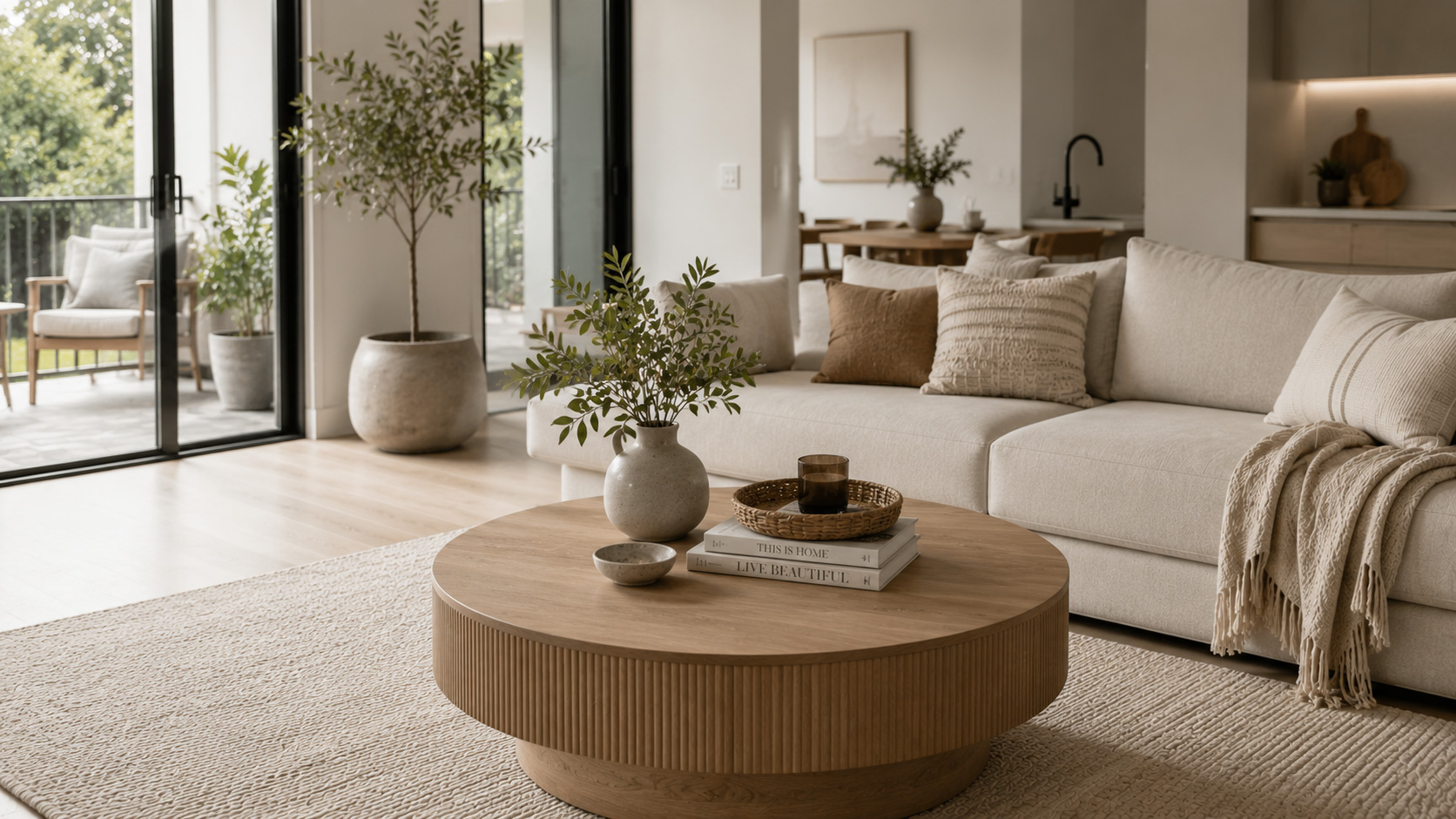
The coffee table is one of those pieces that tends to get chosen last – after the sofa, the rug, the cushions – and yet it sits right at the centre of the living room and has a significant impact on how the whole space feels. Choose one that’s too large and the room feels cramped. Too small and it looks lost in front of the sofa. The wrong height and it’s uncomfortable to use. Getting the coffee table right is worth more attention than it usually gets. Here’s how to approach it.
The Coffee Table Does More Work Than You Think
A coffee table isn’t just a surface to put your cup on. It anchors the seating arrangement, defines the boundary of the living area in an open-plan space, and contributes significantly to the visual weight and style of the room.
In a well-designed living room, the coffee table acts as a bridge between the sofa and the rest of the space – its scale, shape and material tying together the elements around it. When it’s right, you don’t really notice it. When it’s wrong, it’s hard to ignore.
Getting the Height Right
Height is the first thing to get right because it directly affects how comfortable the table is to use day to day.
The standard guideline is for the coffee table to sit within 3-5cm of the sofa’s seat height – slightly lower is acceptable, slightly higher feels awkward. Most sofas have a seat height of around 43-48cm, which means the ideal coffee table height is roughly 40-50cm.
If your sofa has a particularly low seat – as many deep-seated contemporary sofas do – look for a coffee table on the lower end of this range. A table that sits noticeably higher than the seat height requires an uncomfortable forward reach every time you pick something up from it.
Also consider the people who use the living room most. Households with older residents or people with mobility concerns may prefer a slightly higher coffee table that’s easier to reach without leaning forward.
Getting the Size and Shape Right
Size and shape are closely related decisions, and both depend on the dimensions of your sofa and the room.
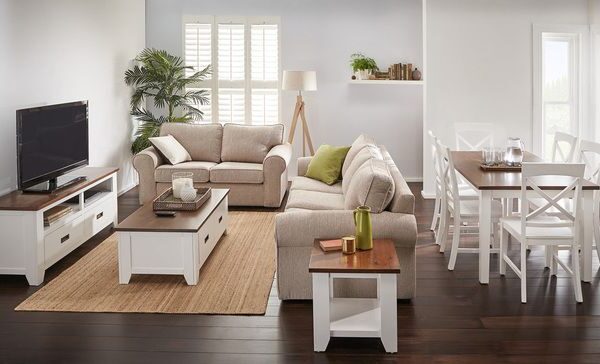
Length: As a general rule, the coffee table should be roughly two thirds the length of the sofa. For a 2.4m sofa, a coffee table of around 1.2-1.6m looks proportionate. Going shorter than two thirds can look undersized; going longer than the sofa itself tends to look too dominant.
Distance from the sofa: Leave 35-45cm between the sofa and the coffee table. Close enough to reach comfortably without leaning forward; far enough to move freely and cross your legs without kicking it.
Shape: Round and oval tables work well with L-shaped or sectional sofas, softening the angular configuration and making it easier to move around the table from different directions. Rectangular tables suit straight sofas and more formal living room layouts. Square tables work well with square sofa arrangements or in smaller rooms where a rectangular table would feel elongated.
For larger modular or sectional sofas, two smaller coffee tables placed side by side can work better than one oversized single piece – they’re easier to move, more flexible in arrangement, and often look more considered.
Material and Style – Matching to Your Sofa and Room
The coffee table’s material and style should feel connected to the sofa and the broader room – not necessarily matching, but belonging to the same visual family.
Timber coffee tables are the most versatile and work across almost every interior style – contemporary, Hamptons, Japandi, farmhouse and coastal. The tone of the timber matters: light oak suits neutral and Scandinavian-influenced interiors; dark walnut suits more dramatic or moody spaces; whitewashed or bleached timber suits coastal and relaxed settings.
Glass-top coffee tables create a sense of space and lightness that makes them particularly well-suited to smaller living rooms. They take up less visual space than a solid surface, which means the room feels more open even with a large table present. They suit contemporary interiors particularly well.
Marble and stone-effect tables add a sense of considered luxury without requiring an entirely formal interior. A marble-effect top on a slim metal base is a popular contemporary choice that works well alongside upholstered sofas in neutral tones.
Metal frame tables – particularly in matte black or brushed brass – suit contemporary and industrial-inspired living rooms. They tend to have a slimmer visual profile than timber, which suits rooms where lightness is a priority.
For style guidance on how different materials and aesthetics work together in a living room, our furniture style guide covers the main interior directions in detail.
Storage vs No Storage – Which Do You Need?
Coffee tables with storage – typically a shelf below the surface, a drawer, or a lift-top mechanism – are worth considering in living rooms where the surface tends to accumulate clutter.
A lower shelf is the most common storage addition and works well for keeping books, remotes and throws within reach without leaving them on the surface. It adds some visual weight to the table but keeps the top clear.
A lift-top coffee table has a surface that hinges upward to reveal a storage compartment below, and often acts as a raised surface for working or eating from the sofa. These are particularly practical in apartments or living rooms that serve multiple functions.
If your living room already has ample storage – a sideboard, entertainment unit shelving, or built-in cabinetry – a simple coffee table without storage is often the cleaner and more elegant choice.
Browse our coffee tables to compare sizes, shapes and storage options.
Coffee Table Alternatives Worth Considering
A traditional coffee table isn’t the only option, and in some living room configurations an alternative works better.
Ottomans: A large upholstered ottoman in front of the sofa functions as a coffee table with the addition of extra seating or footrest functionality. Add a tray on top to create a stable surface for drinks and books. Ottomans work particularly well in family living rooms where a hard-edged coffee table is a safety concern with young children, or in rooms that double as a TV lounge where putting your feet up is part of the plan.
A pair of side tables: In smaller living rooms or in front of a 2-seater sofa, two side tables placed at either end of the sofa can substitute for a coffee table entirely. They take up less floor space, require no clearance in front of the sofa, and can be moved independently. Browse our side tables for options that work in this configuration.
Nesting tables: A set of nesting tables offers flexibility – stack them together for a compact footprint, separate them when more surface space is needed. They suit living rooms that are used in different configurations depending on the occasion.
Final Thoughts
The right coffee table for your sofa is the one that’s the correct height for comfortable daily use, proportionate in length to the sofa, the right shape for the room layout, and visually consistent with the style of the space around it. It’s a more considered decision than it might initially seem, but getting it right makes the whole living room feel more intentional – and more comfortable to spend time in.