







Matching dining sets – where the table and every chair are identical and sold as one unit – used to be the default. These days, more and more people are deliberately mixing chairs with their tables, and the results often look far more considered and interesting than a perfectly matched set ever could. If you’ve been wondering whether you can pull it off at home, the short answer is yes – as long as you follow a few simple principles.
Match the Style, Not the Set
The most important rule when mixing dining chairs is to work within the same broad style or aesthetic, even if the individual pieces look different from each other.
A sleek, contemporary dining table pairs well with chairs that share clean lines and a modern sensibility – even if one chair is upholstered in boucle and another is a simple wooden frame. What makes them work together is that they belong to the same visual family.
Conversely, mixing a rustic farmhouse-style table with ultra-modern acrylic chairs tends to feel jarring rather than eclectic. The contrast is too sharp and the pieces don’t have enough in common to feel intentional.
Think of it this way: the chairs don’t need to be identical, but they should feel like they could plausibly exist in the same room. If each piece looks like it wandered in from a completely different interior, the overall effect will feel more like a waiting room than a dining area.
How to Mix Materials
Mixing materials is one of the most effective ways to add depth and character to a dining space – and it’s easier to get right than most people expect.
A few combinations that tend to work well:
Timber and upholstered chairs: A wooden dining table paired with upholstered chairs in a fabric like boucle or velvet softens the overall look and adds warmth. The contrast between the hard timber surface and the soft upholstery creates a balance that feels both practical and inviting.
Metal frames with fabric seats: Chairs with a metal frame and an upholstered seat are versatile mixers. The metal keeps things looking contemporary and structured, while the fabric seat brings comfort and colour into the equation.
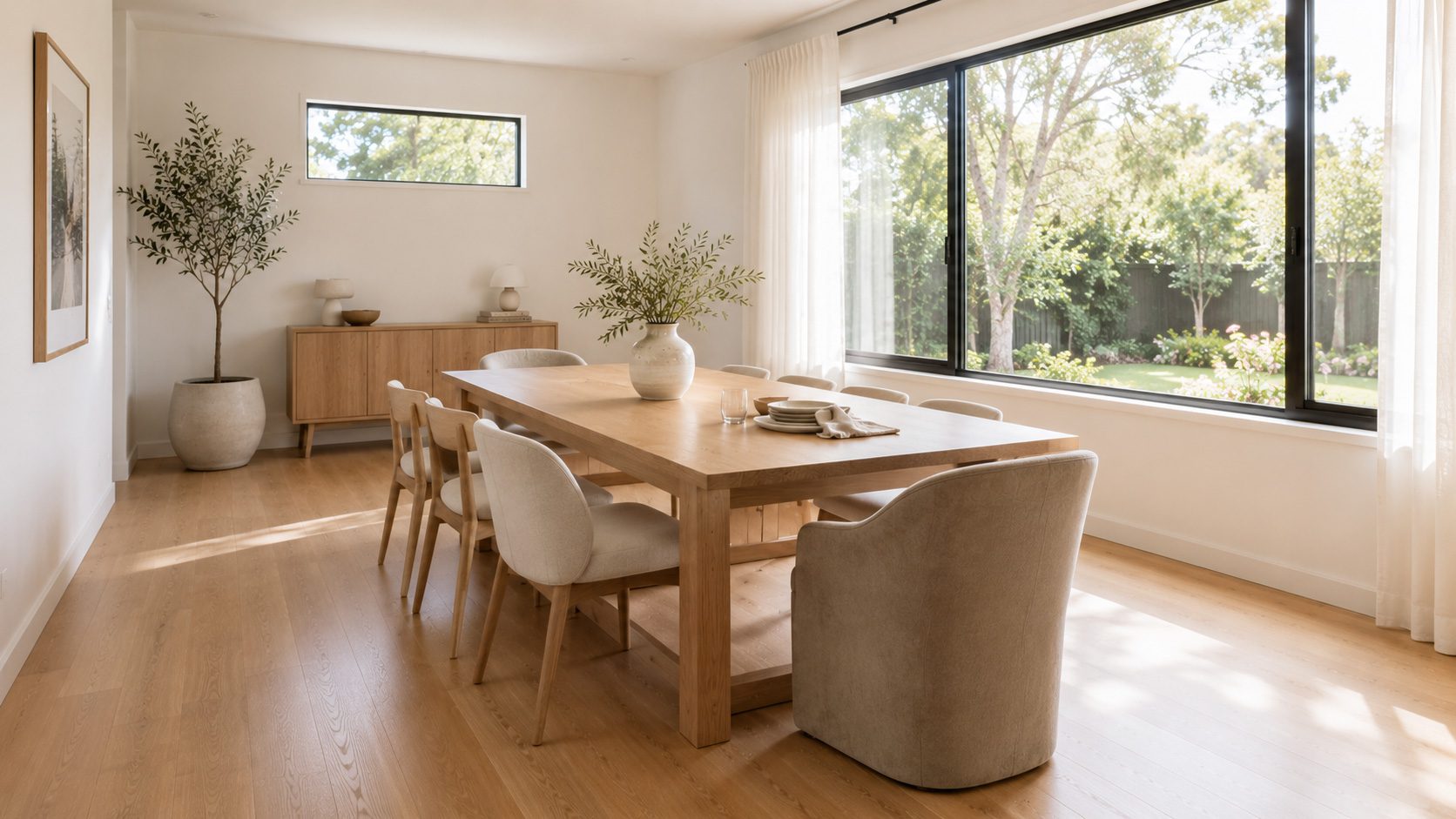
All-timber with one upholstered accent: If you prefer a more cohesive look, a set of simple wooden chairs with a single upholstered carver at the head of the table is a subtle way to introduce mixing without going too far.
The key with materials is to make sure there’s at least one element that ties the different chairs back to the table – whether that’s a shared timber tone, a consistent metal finish, or a colour that runs through each piece.
Browse our dining chairs to see the range of materials and styles available.
How to Mix Colours
Colour mixing in dining chairs follows similar logic to cushion styling – work with a palette rather than trying to match everything exactly.
If your table is a neutral tone (natural timber, white, black or grey), you have a lot of flexibility with chair colours. You could go with two chairs in a deeper tone and four in a lighter one, or introduce a single accent colour through one or two chairs while keeping the rest neutral.
If your table has a stronger colour or finish – a dark walnut, a marble-effect top or a painted base – keep the chairs more restrained. Let the table be the feature and use chairs that complement rather than compete.
A practical starting point: pull a colour from elsewhere in the room – a rug, pendant light, curtains or artwork – and use that as your guide for one of the chair colours. It creates a sense of the room being designed as a whole rather than assembled piece by piece.
The One-in-Four Rule for Accent Chairs
If you want to introduce a statement chair without the whole arrangement feeling chaotic, the one-in-four rule is a useful guide.
For a table that seats four, use one accent chair – typically placed at the head of the table. For a table that seats six, one or two accent chairs work well. For eight or more, you have a bit more room to play and could use up to two or three different chair styles.
The accent chair is usually the most visually interesting piece – an upholstered velvet chair, a boucle armchair, or a design with a distinctive shape. The remaining chairs act as a quieter backdrop that lets the accent piece stand out without the whole table feeling busy.
This approach works particularly well with our rectangular dining tables, where the defined head-of-table positions give the accent chair a natural home.
What to Avoid
A few common mistakes that tend to undermine an otherwise well-executed mix:
Too many different styles at once. Two or three chair styles in one setting is eclectic and intentional. Four or five starts to look like you couldn’t make a decision. Keep the variety controlled.
Ignoring seat height. If you’re mixing chairs from different ranges, always check the seat height against your table height. A mismatch of more than a few centimetres will be uncomfortable to sit at and will look noticeably off.
Mixing chair sizes awkwardly. An oversized armchair next to a petite side chair can look disproportionate. If you’re using chairs of different sizes, make sure the difference feels deliberate rather than accidental – for example, placing larger carver chairs at the ends and smaller side chairs along the length.
Forcing a mix that doesn’t suit the space. Not every dining area needs a mixed chair look. In a smaller, more formal dining room, a consistent set of chairs can feel more appropriate and less visually busy. Mixing works best in relaxed, contemporary or eclectic interiors where a bit of variation feels natural.
Final Thoughts
Mixing and matching dining chairs is less about following strict rules and more about having a clear visual intention. Decide on a style direction, choose a colour palette, and make sure there’s at least one element connecting the different chairs back to the table. Done well, a mixed dining setting looks considered and individual in a way that a standard matched set rarely does. If you’re starting from scratch, it’s worth looking at our dining tables and chairs together to get a sense of which combinations work before you commit.