





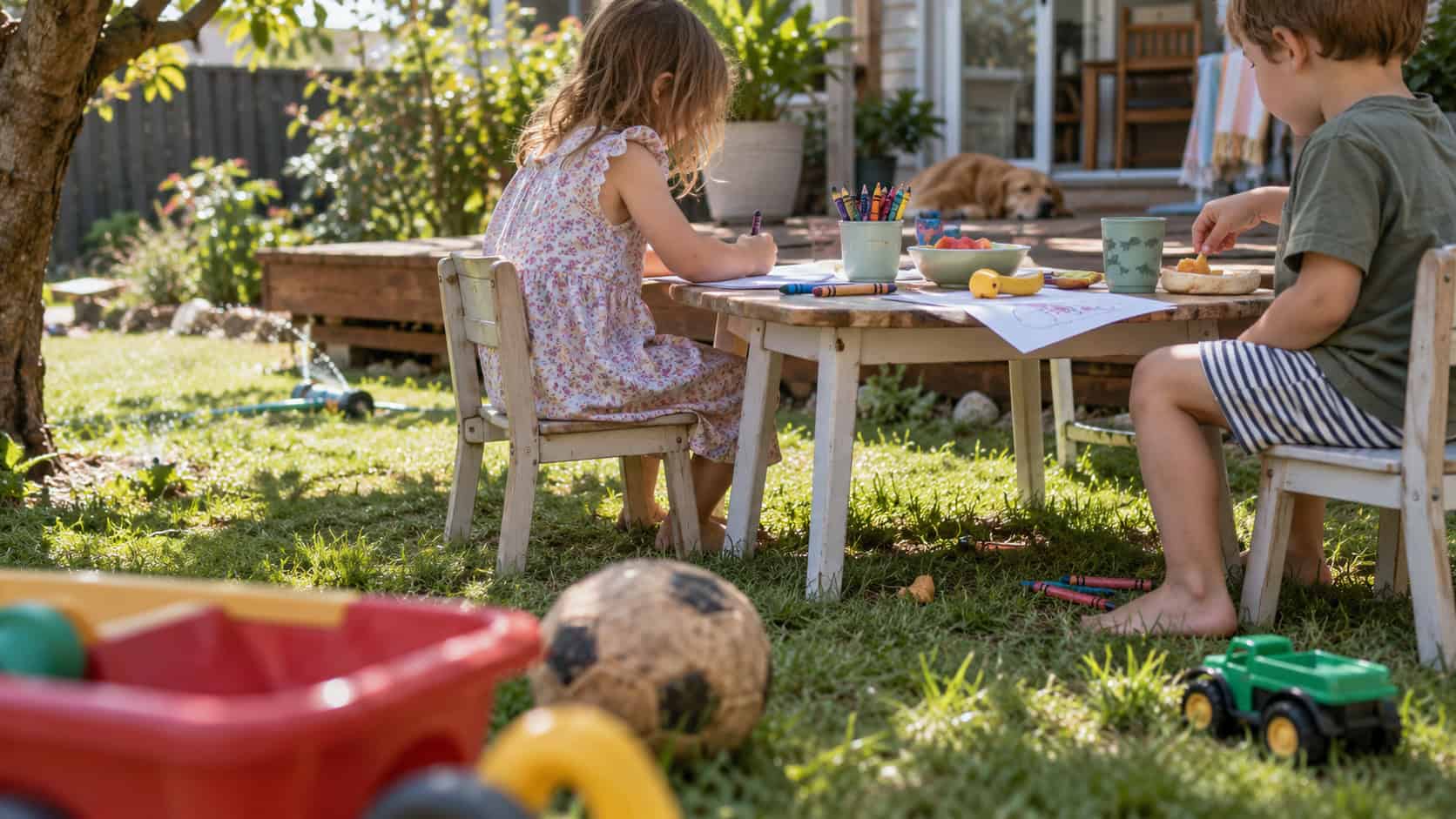
Kids’ outdoor furniture works best when it is chosen for the things children actually do outside. A small table and chairs might become a place for morning snacks one day, drawing and craft the next, then a base for games when friends come over. That means the most useful setup is not simply a miniature version of adult furniture. It needs to feel comfortable at a child’s scale, suit the available space and be easy enough for everyday family life.
It is also worth thinking beyond appearance. A colourful set may catch your eye, but size, stability, placement, cleaning and shade usually have a bigger effect on whether the furniture gets used. Starting with those practical factors makes it easier to choose something that fits naturally into your backyard, patio or balcony.
Start with Your Child’s Age and How They Will Use It
Before comparing styles, think about the activities the furniture needs to support. Younger children may mainly use a table for snacks, simple play and drawing, while older children may want more room for craft projects, board games or sitting with friends. If the setup will be used for meals, tabletop space and easy-clean surfaces may matter more than decorative details. If it is mainly a reading or play corner, seating comfort and placement may take priority.
The goal is not to choose furniture that fits one very specific moment, but to pick something that suits the way your family uses the outdoor area now. Browsing our kids’ outdoor furniture can help you compare the types of compact setups that are designed around children’s everyday use.
Getting the Size and Height Right
Correct proportions make a noticeable difference. Children should be able to sit down and get up without struggling, place their feet comfortably and reach the tabletop without having to stretch. A table that is too high can make simple activities awkward, while chairs that are too large may feel unstable or uncomfortable.
It can be tempting to buy significantly oversized furniture so a child can ‘grow into it’, but that often reduces how useful the set is in the meantime. A better approach is to check the seat height, tabletop height and legroom against your child’s current size, then consider how much growing room the design realistically allows without compromising comfort now.
How Much Space Do You Need?
Measure more than the footprint of the table and chairs. Children need room to pull chairs out, move around the set and switch between sitting and playing. In a compact courtyard or balcony, even a small amount of extra clearance can make the difference between a setup that feels easy to use and one that constantly gets in the way.
Before you choose the spot, keep active play areas a little separate and check that there is enough room for children to move comfortably and for an adult to reach the area when helping with meals, crafts or cleanup:
- chairs to pull back freely without hitting walls, railings or other furniture
- clear walking space around the table
Where Should Kids’ Outdoor Furniture Go?
Different surfaces and locations create different priorities. On a lawn, stability matters because the ground may not be perfectly level. On a deck or patio, the furniture is usually easier to position, but you still need to leave clear walking routes. A covered alfresco can be particularly practical because it provides more protection from sun and changing weather, while a balcony or small courtyard may call for a compact set that is easy to move when the space needs to serve another purpose.
Visibility is another useful consideration. Many families prefer the children’s area to sit somewhere that feels independent but can still be seen easily from the main outdoor seating, kitchen or entertaining zone. That can make the setup more convenient without placing it directly in the middle of adult traffic.
Materials and Easy Cleaning
Outdoor furniture for children will inevitably meet food spills, dirt, sunscreen, water and the occasional craft mess. Easy cleaning therefore matters more than a pristine showroom finish. Smooth surfaces that can be wiped down quickly are usually simpler to live with than materials that trap crumbs, paint or moisture in hard-to-reach areas.
Outdoor suitability matters too. The furniture should be intended for the conditions it will face rather than treated like indoor furniture that happens to be sitting outside. If the set will remain exposed for long periods, think about how the material handles regular sun and moisture, and follow the manufacturer’s care instructions to keep it in good condition.
Shade and Sun Exposure Matter
A comfortable children’s area is not just about the table and chairs. In many Australian outdoor spaces, shade can strongly influence when the setup is usable. The position of the sun changes through the day, so look at where shade actually falls during the times your children are most likely to be outside rather than assuming a spot is protected because it is shaded in the morning.
A covered patio, tree canopy or appropriately positioned outdoor umbrella can make the area more practical. The furniture itself should still be positioned so children can move around comfortably without an umbrella base, post or other shade structure creating a trip hazard.
A Quick Comparison: What Matters Most?
If you are comparing several setups, the most useful differences usually come back to a handful of practical points rather than styling alone.
| Consideration | Why It Matters | What to Check |
| Size | Makes sitting, reaching and moving easier | Seat height, table height and legroom |
| Material | Outdoor use gets messy quickly | Easy-clean surfaces and outdoor suitability |
| Placement | Affects comfort and day-to-day supervision | Shade, visibility and clear walking space |
| Weight & stability | Furniture may be moved but should still feel secure | Stable construction that is manageable to reposition |
Storage and Keeping the Area Tidy
A children’s outdoor zone can become cluttered quickly once toys, art supplies, small cushions and drink bottles are added. Keeping a nearby storage option can make the area much easier to reset at the end of the day. It also means the table does not have to become permanent storage for everything used outside.
The best storage solution depends on what needs to be packed away and how exposed the area is. If you want to keep outdoor accessories close by, our outdoor storage options can help create a more organised setup without moving everything back inside after each use.
When Should You Upgrade to Larger Furniture?
There is no single age when every child suddenly needs larger furniture. Fit is a better guide than the calendar. If knees feel cramped, the tabletop sits too low, the chair no longer supports a comfortable sitting position or the surface is becoming too small for the activities your child uses it for, it may be time to move up.
This is another reason not to over-focus on buying the largest possible set from the beginning. Furniture that fits properly tends to be more enjoyable and more useful. When the proportions stop working, upgrading is usually more practical than asking a child to keep adapting to a setup they have clearly outgrown.
Final Thoughts
Choosing kids’ outdoor furniture becomes much simpler when you focus on how it will actually be used. Start with size and comfort, then look at placement, cleaning, shade and how easily the setup fits into the rest of your outdoor area. Those practical details will usually matter more over time than choosing a design purely because it looks appealing in a photo.
A well-chosen setup can give children their own place to eat, create, play and spend time outside without taking over the whole backyard. The best option is one that feels comfortable for them, manageable for you and genuinely suited to everyday family life.