





Introduction – Outdoor Storage Is Easy to Underestimate
An outdoor storage box can make a surprisingly big difference to how easy your outdoor area is to live with. It gives cushions, furniture covers, pool towels and smaller accessories a dedicated place to go, which helps keep a patio, deck or balcony looking calmer without carrying everything back inside after every use.
The best option is not simply the biggest box you can fit. Capacity matters, but so do placement, weather exposure, opening space and how often you need to reach what is inside. Thinking through those details before you buy will help you choose storage that is genuinely useful rather than another bulky object to work around.
What Do You Actually Need to Store?
Start with the contents, not the container. A box intended mainly for outdoor cushions may need a wide, unobstructed interior, while one used for small garden or pool accessories can work well with less volume. Make a quick list of the items you expect to store most often, then allow some spare capacity rather than choosing a box that is already full on day one.
- Outdoor cushions and throws – prioritise internal width and easy access.
- Furniture covers – allow enough room to fold them loosely rather than compressing them into a corner.
- Pool towels and small accessories – consider how often you will open the box during the day.
- Kids’ outdoor items or garden accessories – a simpler, easy-to-reach layout can be more useful than maximum capacity.
How to Choose the Right Storage Box Size
Capacity figures can be helpful for comparing products, but the external dimensions are just as important. Measure the footprint where the box will sit and check that it will not narrow a walkway, crowd a dining setting or make the area feel visually heavy. Also look at the height if the box will sit below a window, beside a lounge or against a low wall.
Remember that the lid needs room to open. A box can fit neatly against a wall when closed but become awkward if the lid hits a railing, window ledge or piece of furniture. If you expect to access it frequently, leave enough space to stand comfortably in front of it and lift the lid without moving other furniture first.
Match the Box to the Way You Will Use It
A simple way to narrow the choice is to match the storage design to the job it needs to do:
| Main use | What matters most | Useful placement |
| Cushions and covers | Wide opening, practical capacity, easy everyday access | Near an outdoor lounge or alfresco area |
| Pool towels and accessories | Convenient opening and a location close to the pool | Poolside, without blocking circulation |
| Mixed outdoor items | Flexible internal space and enough spare capacity | Deck, patio or garden storage zone |
Where Should You Put an Outdoor Storage Box?
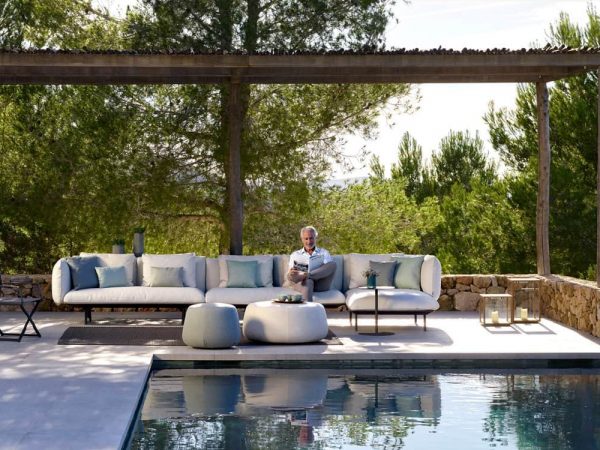
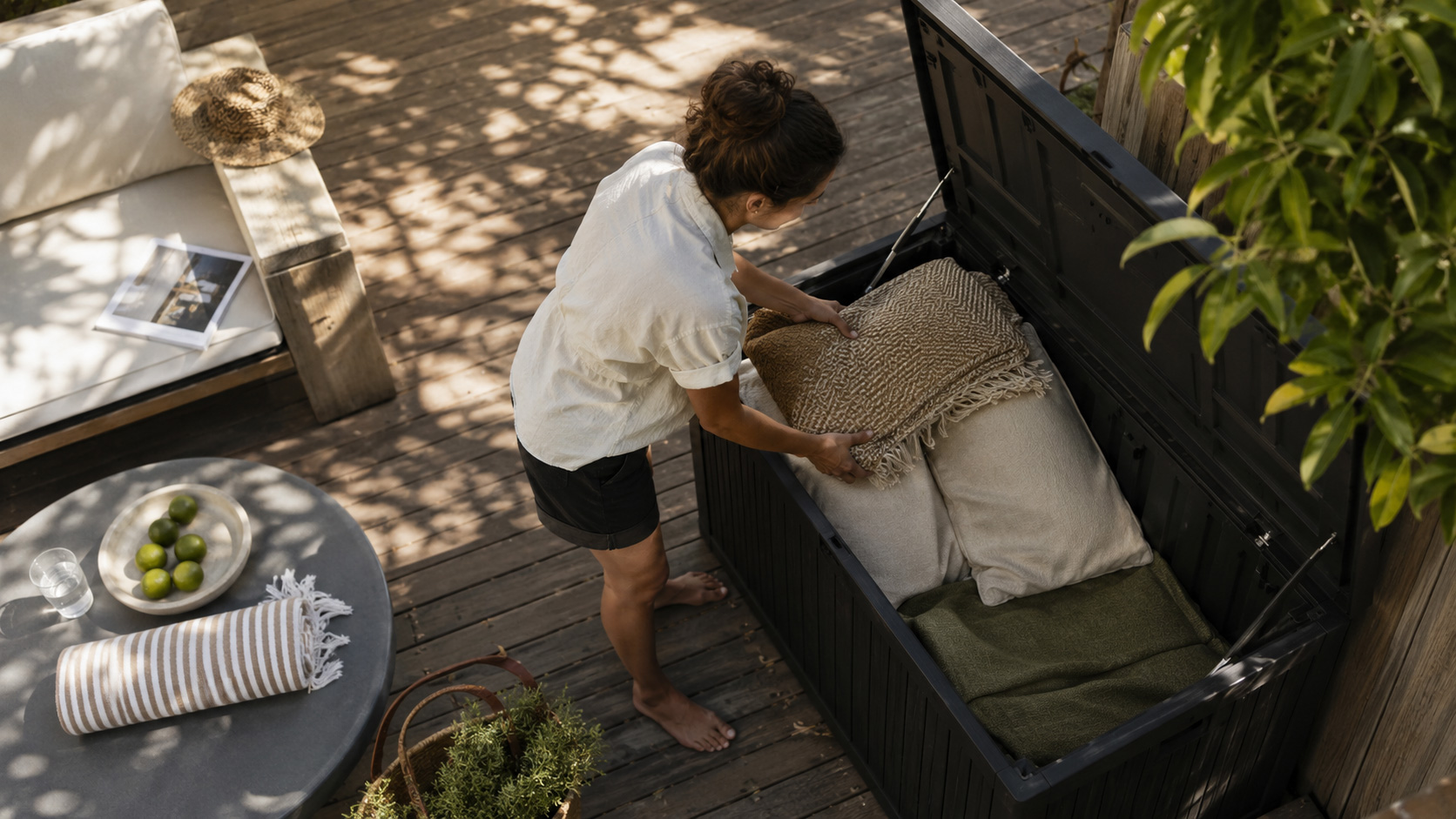
The most useful location is usually close to the furniture or activity the box supports. On a patio or deck, that may mean beside the outdoor lounge so cushions can be packed away quickly. Near a pool, convenient access is helpful for towels and accessories, but the box should not interrupt the path around the water or become an obstacle when people are moving through the area.
On a balcony or smaller courtyard, placement has an even bigger effect because every centimetre counts. A box pushed into the only clear walkway can make the whole space feel cramped. If it will sit in an exposed position, also think about how much direct sun and rain it will receive compared with a box under a covered alfresco area.
Weather Resistance – What Should You Look For?
Outdoor storage should be selected with weather exposure in mind, but it is important not to assume that every outdoor box is completely waterproof. Check the manufacturer’s description for the specific level of weather resistance, drainage or sealing provided. If the contents must stay especially dry, such as fabric cushions, consider both the product specification and the position of the box.
Ventilation can matter too. Packing damp cushions or towels into an enclosed box can create unpleasant odours and moisture problems even if the storage itself keeps rain out. Let fabric items dry fully before storing them for longer periods, and use the box as part of a sensible care routine rather than treating it as a substitute for drying and maintenance.
Materials and Maintenance
The construction affects the look, weight and maintenance of a storage box. Wicker-style designs can blend naturally with outdoor lounge settings and bring more texture to the space, while simpler resin or plastic-style constructions are often chosen for an easy-care, practical appearance. The best choice depends on the furniture around it and how visible you want the storage to be.
If you like a coordinated wicker look, our wicker storage boxes are a natural place to compare options. Whatever the material, follow the care directions for the specific product and keep hinges, lid edges and surfaces clear of accumulated dirt so the box remains easy to use.
Does the Lid and Opening Design Matter?
Yes, especially if you will use the box several times a week. A large capacity is not much help if the opening is awkward or the lid is difficult to manage while you are carrying cushions. Check how far the lid opens, whether it stays open as intended and how easily you can reach items at the bottom without unloading everything first.
For frequent-access storage, usability can be more important than squeezing in a little extra volume. If the box will mainly hold seasonal items, you may care less about daily access and more about fitting everything neatly for longer periods.
Can an Outdoor Storage Box Double as Furniture?
Some storage boxes are designed to visually complement an outdoor setting and may look at home beside a lounge or dining area. That does not automatically mean the lid is suitable for sitting on or using as a table. Unless the product specifications explicitly support those uses, treat the box as storage rather than assuming it can carry additional weight.
If you want storage that becomes part of the overall furniture arrangement, browse our outdoor storage options with both function and appearance in mind. A box that shares similar tones or textures with nearby furniture can feel integrated without needing to match everything exactly.
How to Keep the Inside Organised
A large empty box can quickly become a jumble if everything is dropped into it together. Keep frequently used items near the top or front, group smaller accessories in simple storage bags or containers, and avoid burying everyday items underneath bulky seasonal pieces. The aim is to make putting things away almost as easy as leaving them outside.
For longer-term seasonal storage, it also helps to decide what genuinely belongs in the box and what should be stored elsewhere. Our guide to storing outdoor furniture during the off-season covers the broader preparation and protection steps when your outdoor area will not be used for an extended period.
Final Thoughts
A useful outdoor storage box should fit the things you actually own, sit comfortably in the space and make everyday packing away easier. Before buying, look beyond the headline capacity and check the external dimensions, lid clearance, weather exposure, material and how often you expect to open it.
When those practical details are right, outdoor storage becomes less about hiding clutter and more about making the whole area easier to use. Choose a size and design that supports your routine, leaves room to move and suits the furniture already around it.