






Why Add a Storage Ottoman to Your Bedroom?
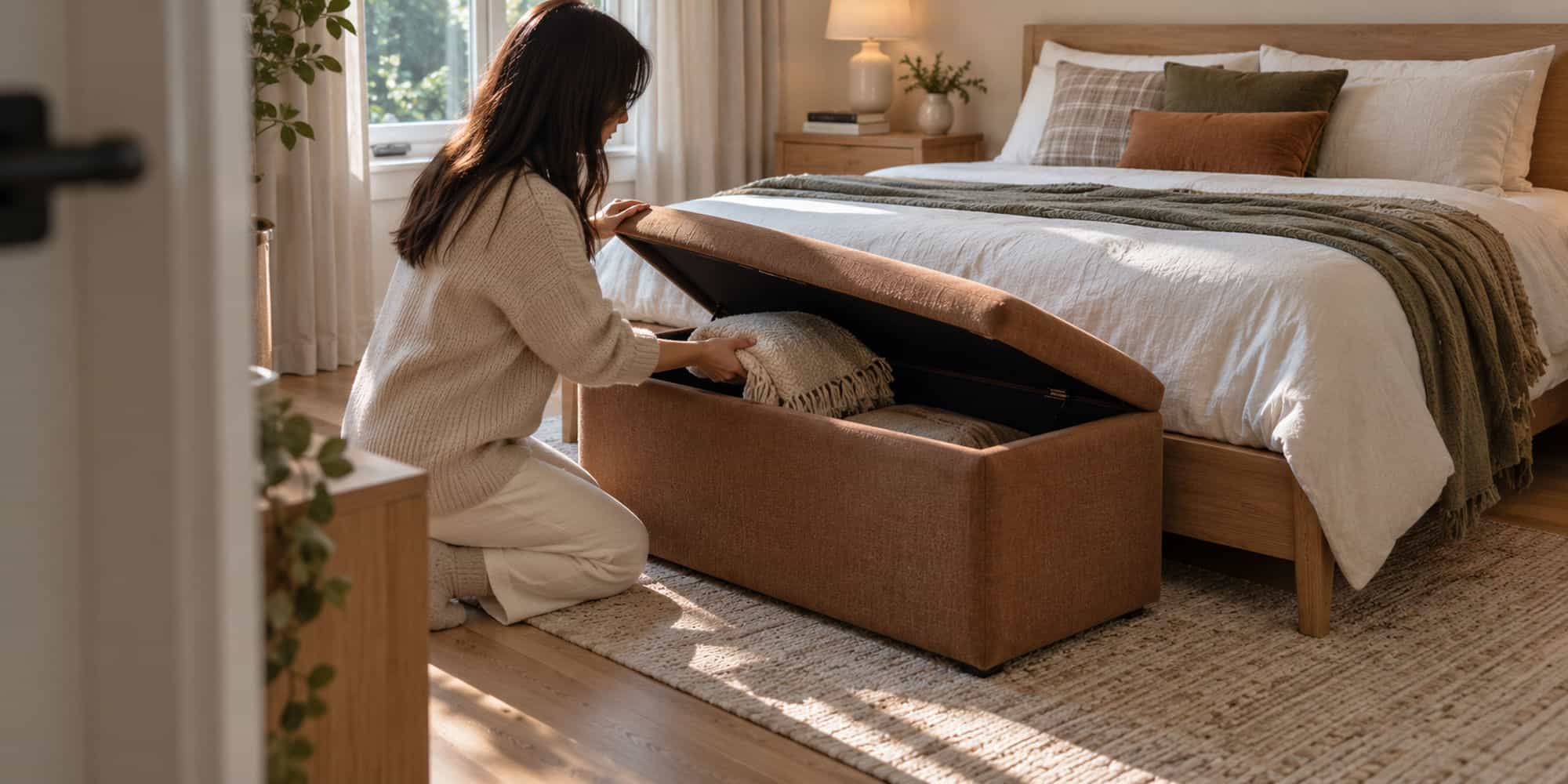
A storage ottoman for the bedroom can give everyday items a home without asking you to make space for another tall cabinet. Positioned at the end of a bed or against a spare wall, it offers a low, practical piece of furniture with a compartment hidden beneath the top.
The key is choosing one that works with the space you have and the things you genuinely need to put away. A storage ottoman is not a substitute for an entire wardrobe, but it can be particularly handy for items you want close by without leaving them on show.
Decide What You Want to Store First
Before looking at colours or shapes, make a quick list of what the compartment will hold. Spare throws, lightweight blankets, extra cushion covers and seasonal accessories are useful candidates.
Check the inside dimensions as well as the external measurements. A generously padded design can look large but offer less storage than you expect, while a narrower bench with an efficient compartment may be enough for folded textiles. Measure your bulkiest item before buying rather than relying only on a photograph or a capacity label.
Where Should You Put a Bedroom Storage Ottoman?
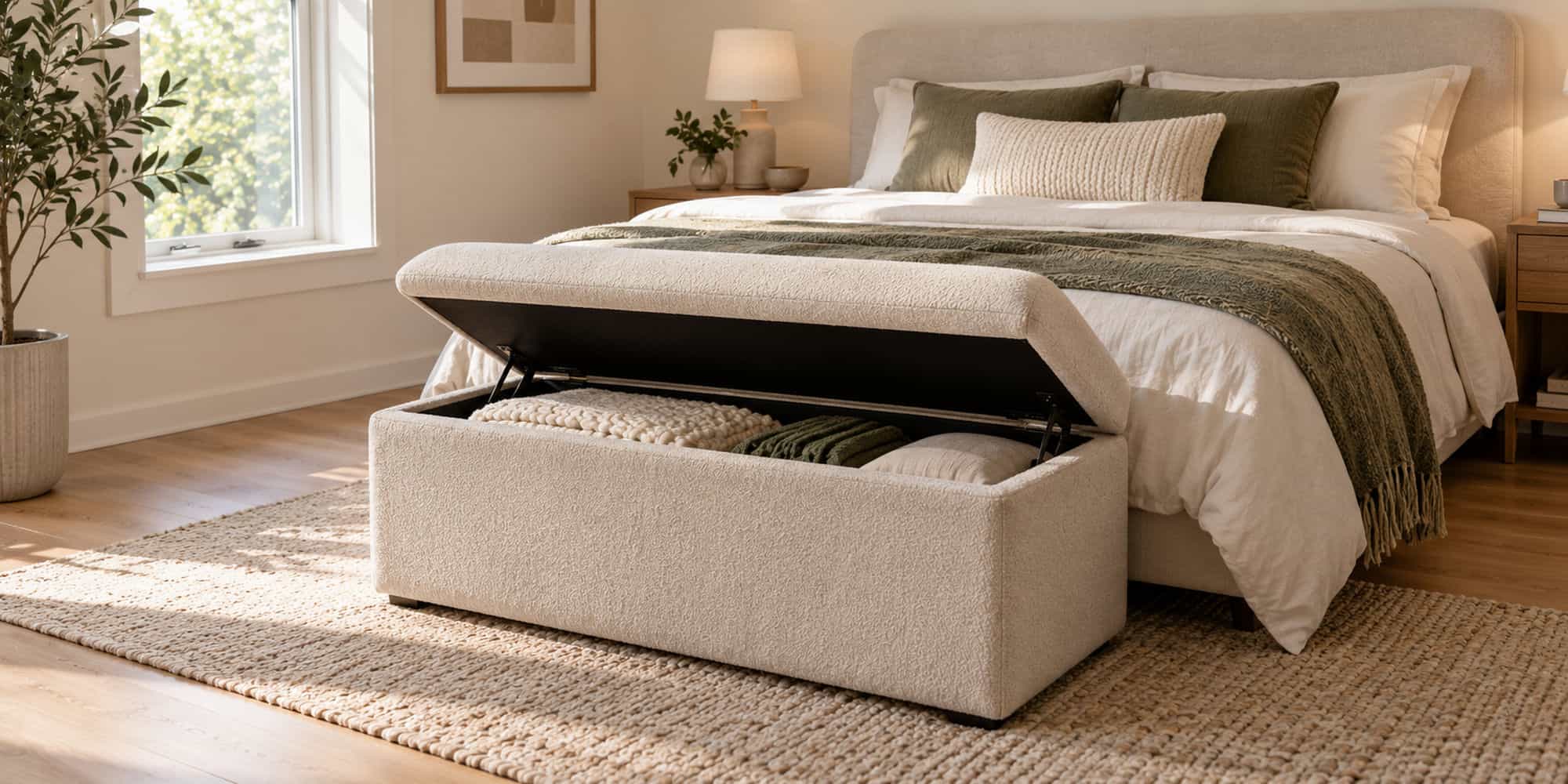
At the foot of the bed is the classic position. A rectangular storage ottoman can help finish the bed visually while putting spare linen within easy reach. Leave enough room to walk around it and open the top without hitting the bed frame, nearby drawers or a wardrobe door. If the bedroom is narrow, a compact piece against an unused wall may feel less crowded.
Think about where you stand while getting ready, where you open cupboard doors and whether you need access to sockets or bedside drawers. For a wider look at organising bedroom storage, our chest of drawers versus wardrobe guide covers the roles of larger pieces.
Choose the Right Size and Shape
The best dimensions depend on your bedroom layout and the size of the bed. A long bench can look balanced at the end of a double, queen or king bed, but it does not need to match the mattress width exactly. A small square or rounded ottoman may be easier to place in a corner. Take note of the overall height too, especially if it will sit beside a low-profile bed.
Mark the ottoman footprint with masking tape and walk around the room as you normally would. Then imagine the lid fully open. Consider the space taken by handles or hinges, if present, and where you will stand to lift and access the contents. Testing both the closed and open positions is more useful than judging a piece by its measurements alone.
Check How the Storage Compartment Opens
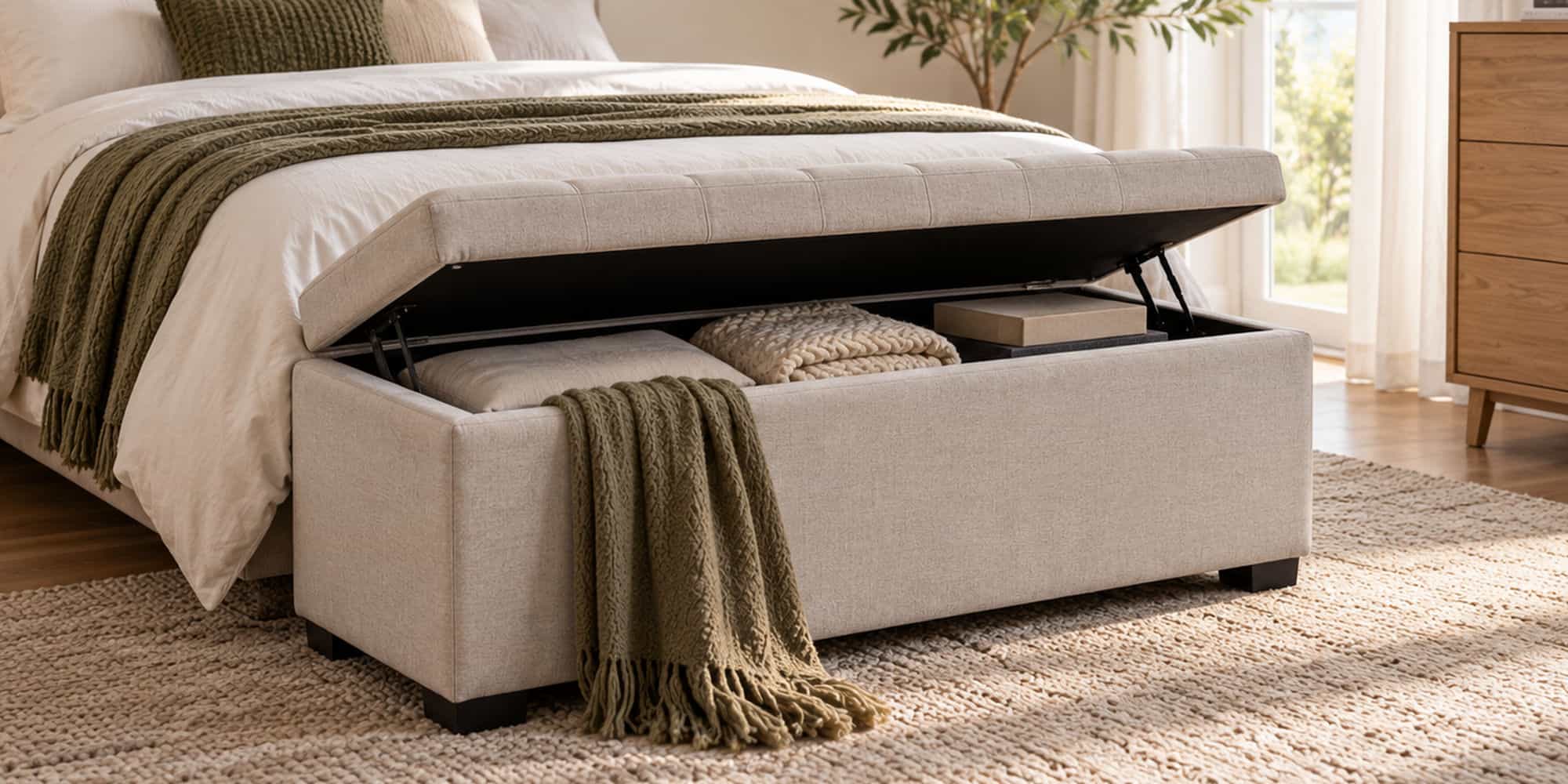
A hinged lift-up top offers direct access to the compartment, while other designs use removable lids or different opening arrangements. Think about which will be easiest to use with the bed or wall nearby. Look for clear product information about the lid, its opening space and any fitted support mechanism rather than assuming every storage ottoman works the same way.
If you expect to open it every morning, accessibility matters more than a clever-looking feature you rarely use. Follow the manufacturer’s instructions when operating the top, and make sure children do not play inside the storage compartment.
Upholstery, Colour and Everyday Care
Fabric can give a storage ottoman a softer look beside upholstered bed frames, while leather-look finishes create a cleaner, more defined appearance. Textured fabrics, velvet and simple woven finishes can each work in a bedroom, but the exact cleaning requirements depend on the material and construction.
Read the care label before choosing. Some upholstered storage footstools have removable machine-washable covers; others have fixed covers that require gentle vacuuming or wiping. Those options are product-specific, not a feature to expect on every ottoman. Coordinate the piece with your bed, rug or bedroom furniture through one repeated colour or texture rather than trying to match every finish exactly.
Can a Storage Ottoman Be Used as a Seat?
Some storage ottomans are designed to provide occasional seating as well as hidden storage, but not all are. Check the actual model’s intended use and any stated loading or safety guidance before sitting on it. A padded-looking top does not, by itself, establish that it is suitable for a person’s weight.
If you want somewhere to sit while putting on shoes, pay attention to the seat height and how steady the piece feels on your flooring. If you only need hidden storage, there is no reason to make extra seating a deciding factor.
A Quick Checklist Before You Buy
To make the comparison easier, run through these practical questions rather than starting with a particular shape or fabric:
• What will go inside, and will the usable compartment fit it?
• Is there enough space around the closed ottoman and the open lid?
• Does the height work with your bed and daily routine?
• Are the upholstery care instructions manageable?
• Is sitting on it an approved use for this exact model?
A well-chosen ottoman should make the bedroom easier to live in, not become one more item you have to work around.
Final Thoughts
The best bedroom storage ottoman fits three things at once: your belongings, your available floor space and your everyday routine. Hidden storage is useful only when you can reach it comfortably, so measure carefully and pay attention to the opening design as well as the appearance.
Explore our ottoman range for styles that could suit your room, and check each product description to confirm whether a particular design includes storage and is suitable for the way you intend to use it.
FAQ
What can I store in a bedroom ottoman?
Folded throws, spare cushion covers, lightweight blankets and occasional bedroom accessories are practical options. Check the usable internal dimensions and any storage guidance before putting heavy or unusually bulky items inside.
Is a storage ottoman useful in a small bedroom?
It can be, especially when a low piece fits an otherwise unused area. Measure the footprint and the clearance needed to open it; a compact ottoman is not space-saving if it blocks a wardrobe or walkway.
Does every ottoman have storage?
No. Some are solid or padded footstools without any internal compartment. Look for an explicit storage description and product photos showing how the top or compartment opens.
Can you sit on a bedroom storage ottoman?
Only when the manufacturer specifies that the particular product is intended for seating. Check the product’s use and load guidance instead of assuming a padded top makes it suitable as a bench.