






Wooden vs Upholstered Bed: What Is the Difference?
Choosing between a wooden and an upholstered bed frame is not simply a question of which one looks better. The frame changes how your bedroom feels, how you use the headboard and how much upkeep you take on. Both styles can work beautifully in an Australian home, but they have different everyday advantages.
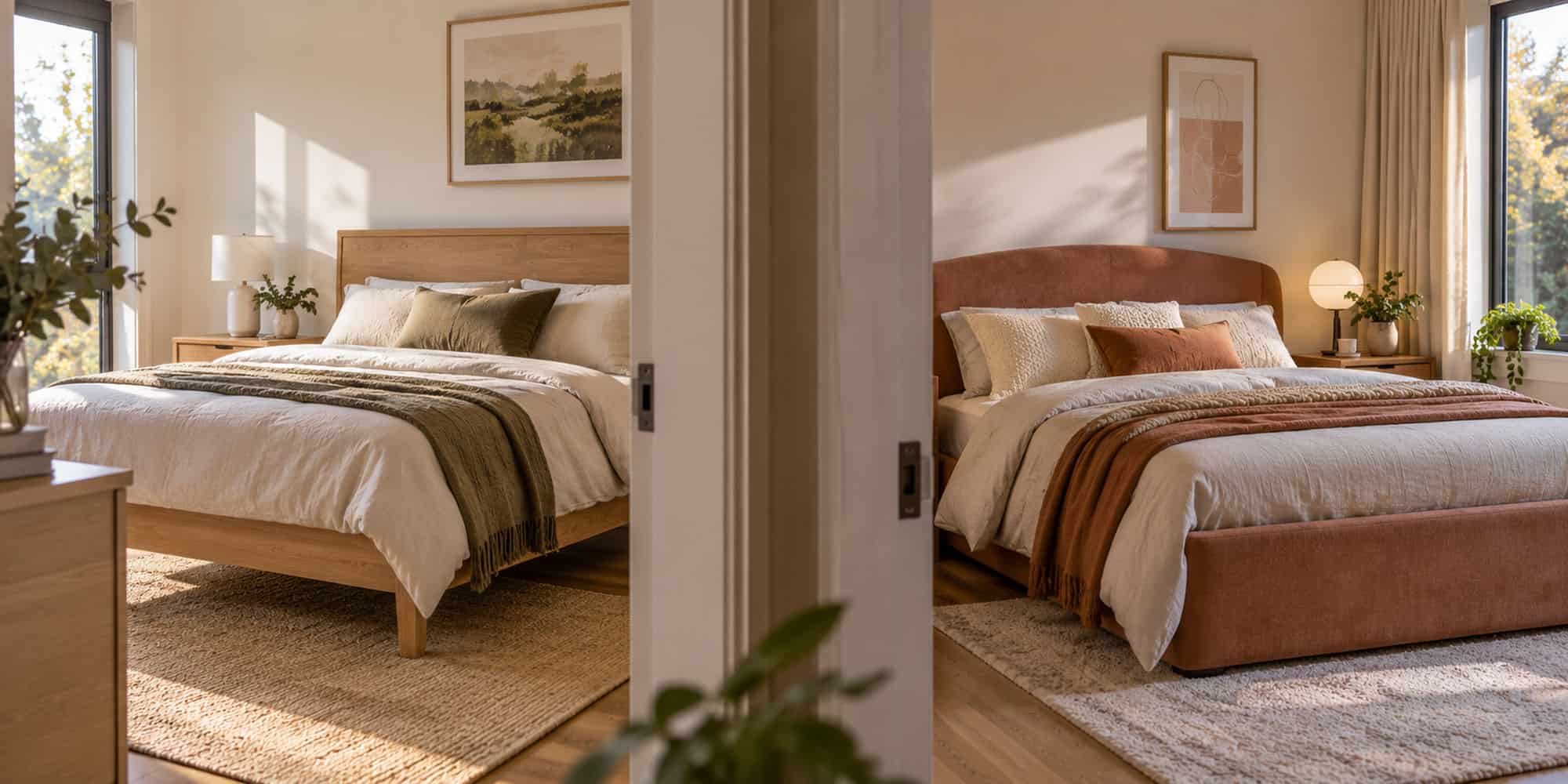
A wooden bed frame puts timber or a wood-finish surface on show. An upholstered bed frame uses fabric and often padding around the headboard, and sometimes around the sides or footboard. The best choice depends on your room, your habits and the construction of the particular bed—not a blanket claim that one material is always superior.
The Look: Soft Texture or Natural Timber?
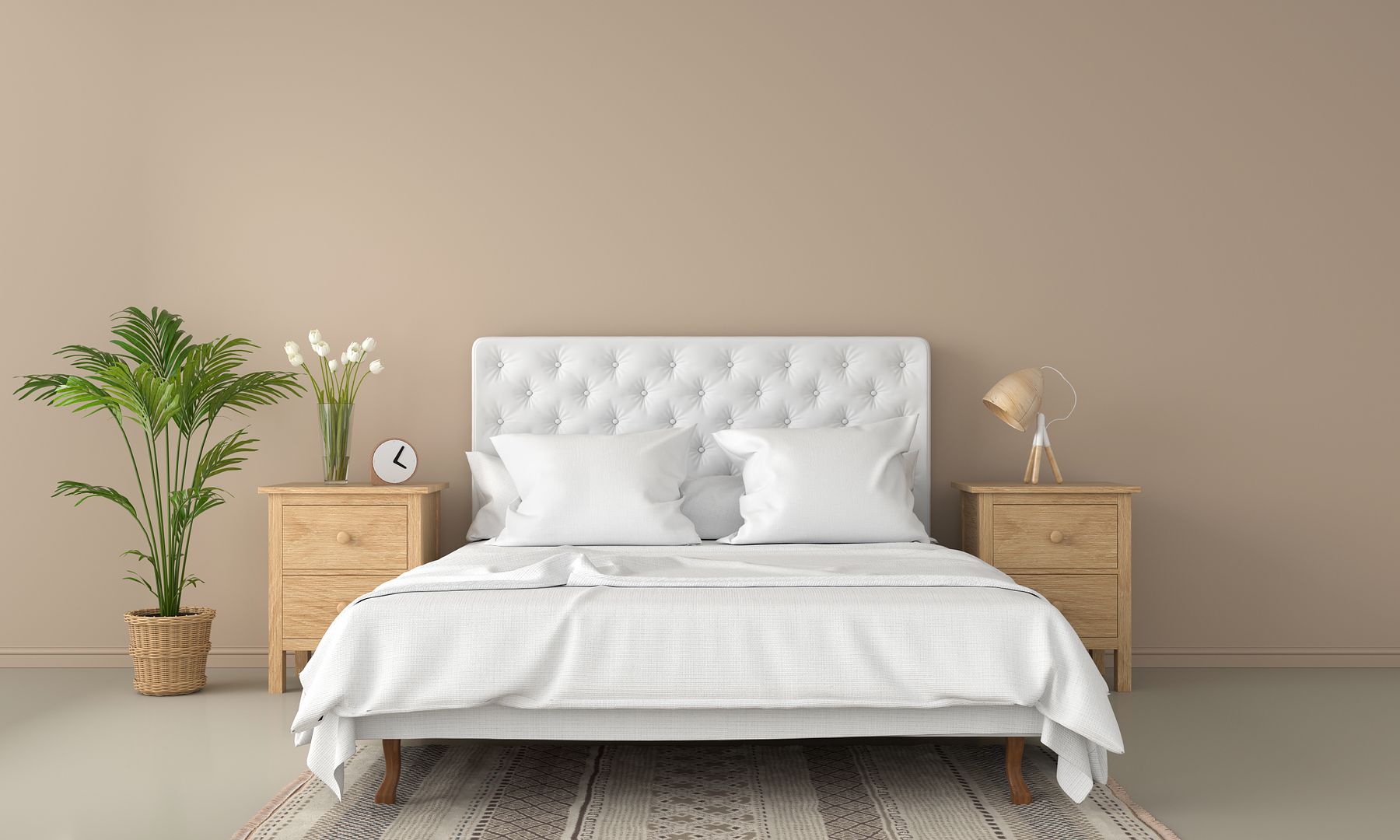
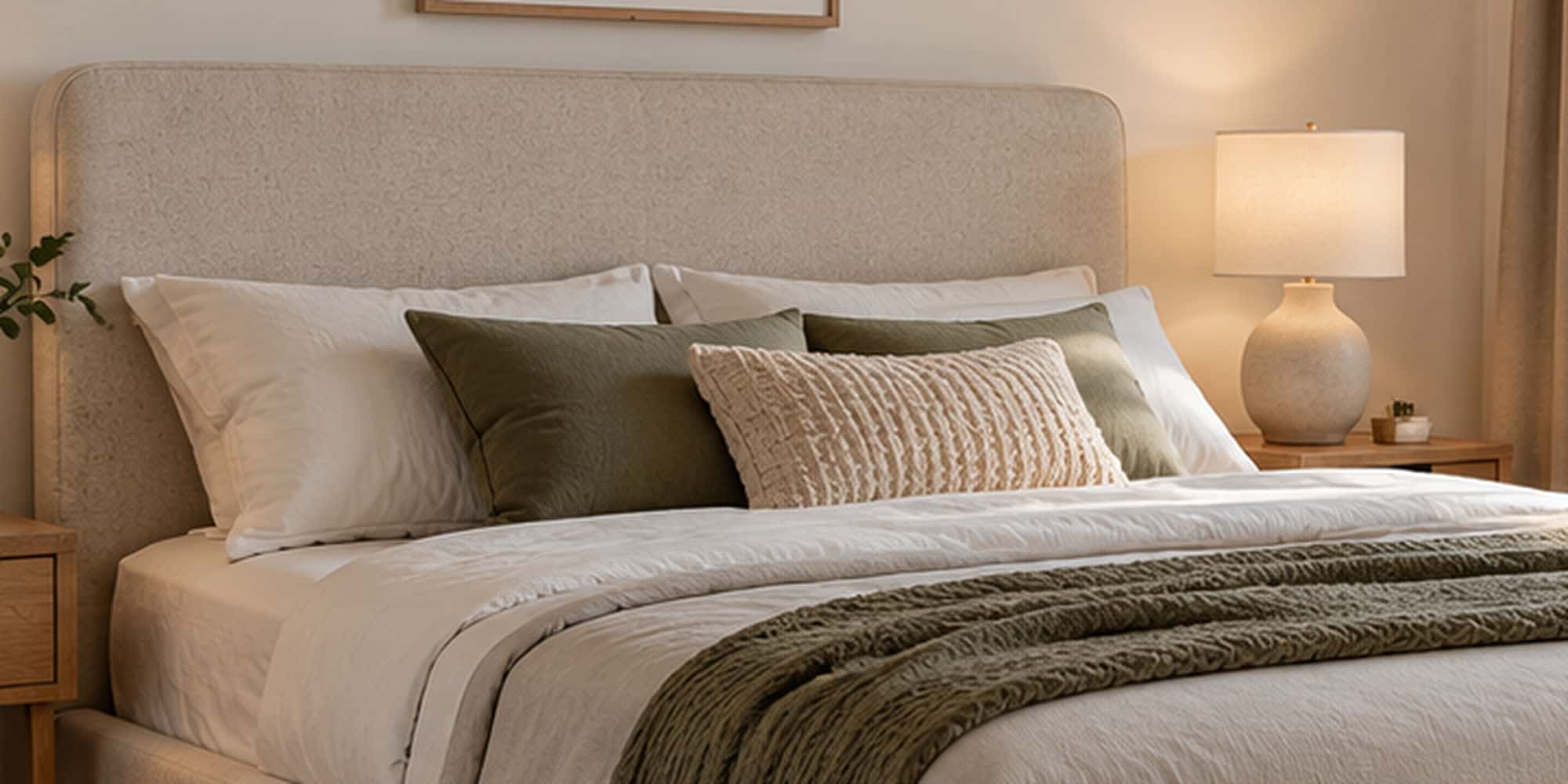
An upholstered bed can soften a bedroom visually. Fabric introduces texture, and a padded headboard can become an inviting focal point, especially when paired with layered bedding. Neutral upholstery suits a quiet, contemporary room, while a stronger colour or a shaped headboard can make the bed the main design feature. Explore our fabric bed frames for examples of this softer look.
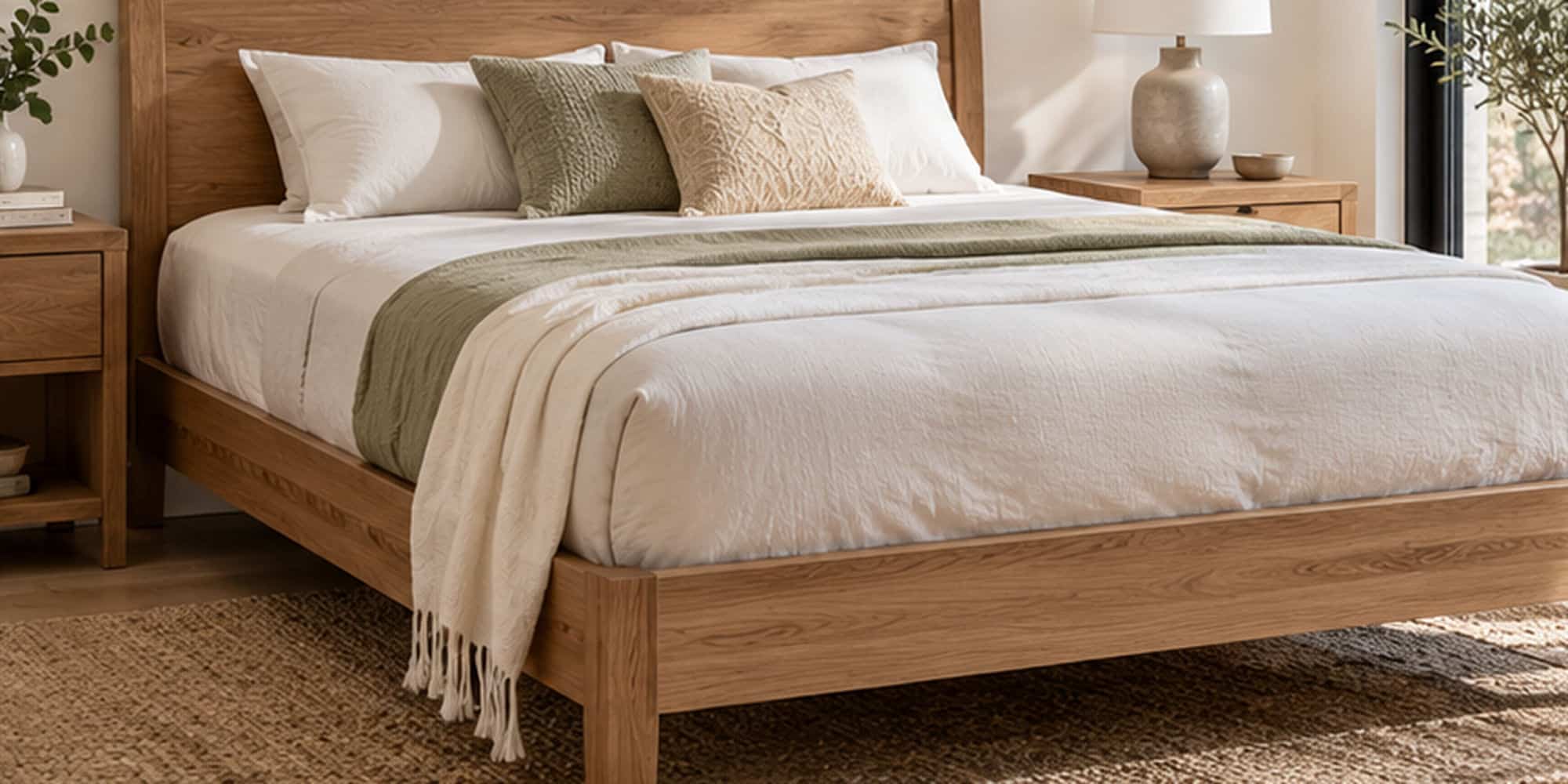
Wooden frames offer a different kind of warmth through grain and tone. Pale timber can make a small room feel light and relaxed; deeper finishes can look more traditional or grounded. A simple timber profile is also easy to coordinate with existing bedroom furniture. Browse our solid wood bed frames if natural texture is the direction you prefer.
Comfort: How Will You Use the Headboard?
If you regularly sit up in bed to read or unwind, the headboard deserves special attention. A padded upholstered headboard can provide a softer surface to lean against. The thickness, shape and firmness of the padding vary, so a photograph alone cannot tell you how supportive a particular design will feel.
Wooden headboards give a firmer surface. That may be perfectly comfortable if you prefer to use pillows behind your back, and some timber designs include wide or shaped panels that suit this arrangement. Neither frame material changes your mattress into a softer or firmer one; mattress comfort and bed-base support are separate buying decisions.
Cleaning and Everyday Maintenance
Wooden frames are often straightforward to dust and wipe, although the right cleaner depends on whether the surface is lacquered, painted, oiled or unfinished. Wipe spills promptly, follow the care instructions for the actual finish and avoid assuming that all timber can be treated the same way.
Fabric surfaces generally need a different routine. Regular gentle vacuuming can help remove surface dust, and any spot cleaning should follow the upholstery label. Some upholstered beds have removable, washable covers; others have fixed upholstery that must not be machine washed. Check the product’s care details before you commit, especially if the bed is likely to encounter makeup, drinks or pets.
Durability Depends on More Than the Covering
It is tempting to assume that timber automatically lasts longer or that an upholstered bed is less sturdy. In practice, support rails, joints, slats, centre beams, fittings and assembly all matter. An upholstered exterior can cover a combination of materials, while two wooden frames may use very different kinds of timber and construction.
Before buying, check what the base includes and which mattress dimensions it supports. Do not assume slats, a centre support or a mattress are included just because the product is pictured as a complete bed. If you are also reconsidering your mattress, our mattress buying guide covers the separate questions worth checking.
Which Style Works Better in a Smaller Bedroom?
For a compact bedroom, measure the entire frame—not only the mattress. A thick upholstered headboard, wide padded sides or a footboard can add to the overall footprint. Equally, a solid timber headboard or projecting legs can take up more room than expected. A slimline design in either material may be the smarter option.
Look at the space beside the bed, the route to the wardrobe and whether doors or drawers can still open fully. Also compare the height of the headboard with your window sill, artwork or wall lighting. Getting those proportions right will usually do more for a small room than choosing a material based on appearance alone.
A Quick Decision Check
Choose an upholstered design if you particularly value a soft headboard, layered fabric texture and a cosy visual feel—and you are comfortable with the care required by the chosen covering. It may be especially appealing when the bed is the room’s main decorative feature.
Choose a wooden design if you prefer visible grain, a cleaner-edged profile and straightforward access to the frame surface for dusting. Either option can suit a modern or traditional interior. Compare the actual dimensions, finish, construction and care instructions before making the final decision.
Final Thoughts
The wooden vs upholstered bed decision is really about how you want your bedroom to work. Upholstery offers tactile softness and a different styling opportunity; wood brings visible natural character and a generally simpler wipe-clean surface. Neither guarantees better support, a longer lifespan or a lower price.
Start with the headboard you would enjoy using, the upkeep you can realistically manage and the space available around your mattress. Then explore our bed frames to find a design that fits your room as well as your routine.
FAQ
Are upholstered bed frames harder to clean than wooden ones?
They usually involve different care rather than a simple harder-or-easier answer. Wooden finishes can often be wiped according to their care instructions. Upholstery may need vacuuming and fabric-safe spot cleaning, while only certain removable covers can be washed.
Is a wooden bed frame stronger than an upholstered bed frame?
Not automatically. Upholstered beds can contain timber or metal structural parts beneath the fabric. Check the frame construction, centre support, slats, load guidance and assembly instructions for the specific model rather than judging strength from the outside material.
Which bed frame is better for a small bedroom?
The frame with the more suitable overall dimensions and layout is the better choice. Compare external width, length, headboard thickness and any projecting sides or footboard. Both wooden and upholstered styles are available in space-conscious designs.
Does an upholstered headboard make a mattress more comfortable?
A padded headboard can make sitting up and leaning back more pleasant, but it does not alter the feel or support of the mattress itself. Assess the mattress and bed base separately.