





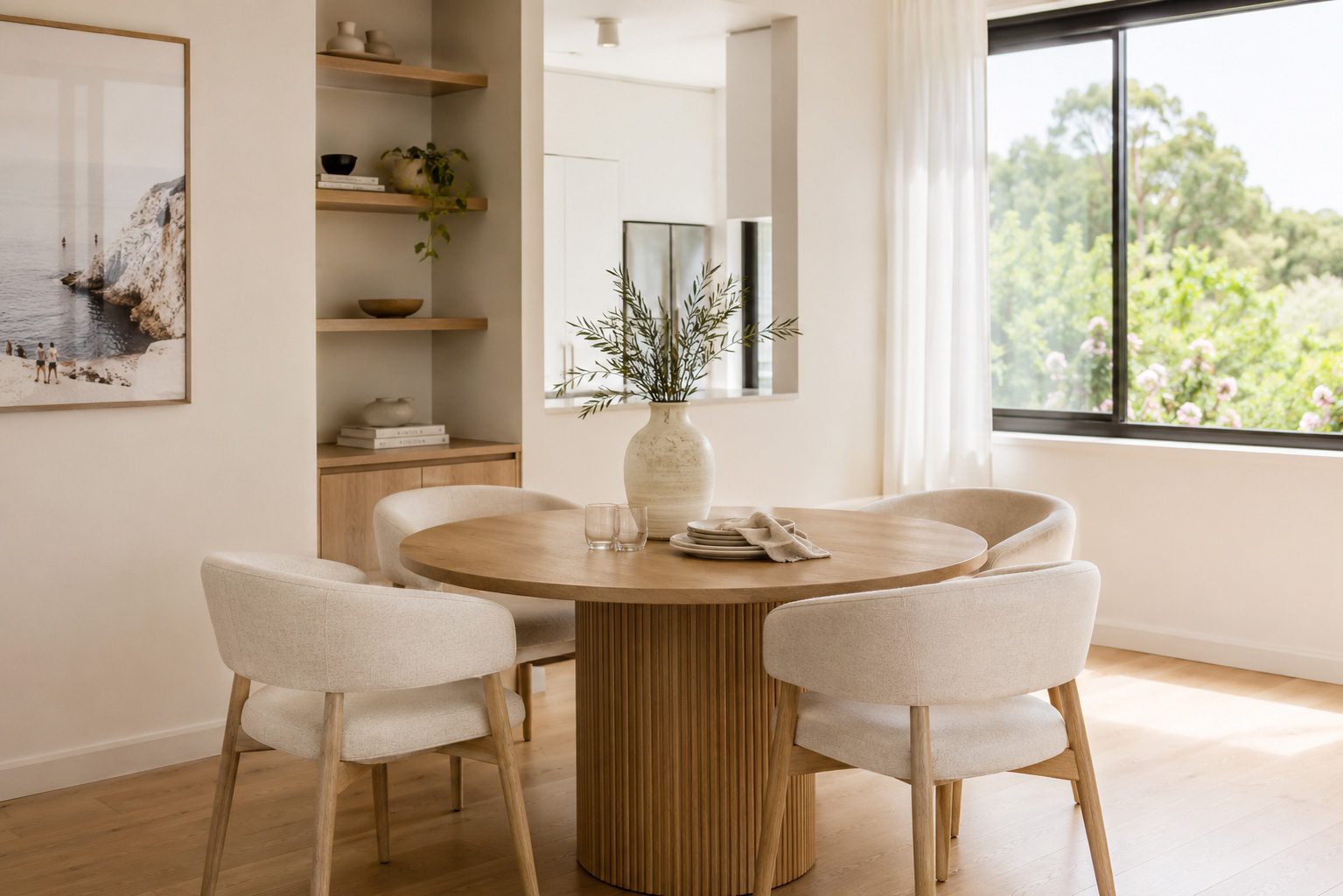
Choosing a dining table seems straightforward until you’re actually standing in front of a dozen different options trying to figure out which one works for your home. Shape is one of the first decisions to make, and it has a bigger impact than most people expect – on how the room feels, how many people you can seat, and how easily everyone can move around. Here’s a practical breakdown to help you decide.
The Case for a Rectangular Dining Table
Rectangular tables are the most common choice for good reason. They work well in most room shapes, offer plenty of surface area, and scale up easily when you need to seat a crowd.
The long sides of a rectangular table allow you to add extra chairs without disrupting the overall layout – just pull up a seat at the end or squeeze in an extra along the side. This makes them particularly practical for families who entertain regularly or households where the dining table doubles as a workspace or homework station.
Rectangular tables also tend to suit more formal dining settings. The defined head-of-table positions give the space a natural structure, which works well if you host dinner parties or family gatherings where a sense of occasion matters.
The main trade-off is in smaller or square rooms – a long rectangular table can feel like it dominates the space, leaving little room to move around comfortably.
Browse our rectangular dining tables to see the range of sizes and finishes available.
The Case for a Round Dining Table
Round tables have a lot going for them, particularly for smaller households and more intimate dining settings. With no head of the table, everyone sits as an equal – conversation flows more naturally and the whole atmosphere feels a little more relaxed.
From a practical standpoint, round tables are easier to move around. There are no corners to navigate, which makes them a better fit for compact dining areas or open-plan spaces where traffic flow matters. They’re also a safer option in homes with young children for the same reason.
The limitation of a round table is scalability. There’s a ceiling on how many people you can comfortably seat before the table becomes too wide to reach across, and adding extra chairs tends to feel more awkward than it does with a rectangular design.
For smaller households of two to four people, a round table is often the better choice. If you regularly host six or more, you may find yourself wishing for a bit more length.
Explore our round dining tables if you’re leaning in this direction.
What About Oval?
Oval tables sit somewhere between the two – and for many people, they’re actually the best of both worlds.
Like a rectangular table, an oval has length, which means you can seat more people along the sides. But like a round table, the curved ends mean no sharp corners, better traffic flow around the table, and a slightly softer, more relaxed look in the room.
Oval tables work particularly well in longer rooms where a rectangular table might feel too rigid, or in households that want the seating capacity of a rectangle without the formal feel. They tend to suit contemporary and transitional interiors well.
The one consideration with oval tables is that they can be harder to extend – many oval designs are fixed, so if you frequently need to add extra seats for guests, check whether the model you’re considering has an extension option.
Take a look at our oval dining tables for available styles.
How Room Shape Affects Your Decision
Your room shape should play a significant role in your decision, not just your personal preference.
Rectangular rooms suit rectangular or oval tables best. The table’s length mirrors the room’s proportions and creates a natural sense of balance.
Square rooms are where round or oval tables really shine. A rectangular table in a square room can feel awkward and leave dead corners on either side. A round or oval table fills the space more naturally and leaves room to move on all sides.
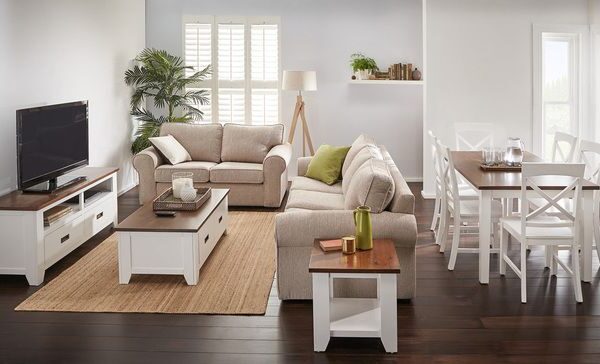
Open-plan spaces give you the most flexibility. If the dining area flows into a living room or kitchen, the table shape matters less from a spatial perspective – focus instead on how many people you need to seat and what aesthetic works with the rest of the room.
As a general rule, leave at least 90cm between the edge of the table and the wall or nearest piece of furniture. This gives people enough room to pull out a chair and sit down comfortably without feeling cramped.
How Many People Do You Need to Seat?
This is often the deciding factor, so it’s worth being honest about your actual needs rather than just your ideal scenario.
2-4 people regularly: A round or small oval table works well. It keeps the space feeling proportionate and avoids the emptiness of a large table used by only two people most of the time.
4-6 people regularly: A rectangular or oval table in the mid-range size is your best bet. This is the most common household size and the widest range of tables is available at this scale.
6+ people regularly or frequent entertaining: A longer rectangular table gives you the most flexibility. Look for extendable options if you want the best of both worlds – a manageable size day-to-day with the capacity to expand when needed.
If you’re pairing your table with new chairs, our dining sets include matched table and chair combinations across different sizes, which takes some of the guesswork out of the process.
Final Thoughts
There’s no universally right answer here – the best dining table shape depends on your room, your household size and how you use the space day to day. If you’re still unsure, a good starting point is to measure your dining area, work out the maximum table size that allows comfortable clearance on all sides, and then decide which shape fits best within those dimensions. Get the shape and size right first, and everything else – finish, material, style – becomes a much easier decision from there.