






A bedroom that feels calm, comfortable and well put-together doesn’t require a full renovation or an unlimited budget. Most of the things that make a bedroom genuinely relaxing – good light, quality bedding, a tidy layout – are well within reach if you prioritise the right things and make considered choices. Here’s how to approach it.
Start with the Bed – It’s Worth Prioritising
If there’s one place to put your budget in a bedroom, it’s the bed. Not necessarily the frame – though that matters too – but the mattress. A bad mattress affects your sleep, your energy levels and how you feel every morning. It’s the one bedroom purchase that earns its cost every single night.
When budgeting for a bedroom refresh, resist the temptation to spend heavily on decorative pieces at the expense of the mattress. A well-chosen mattress on a simple, clean bed frame will always feel more luxurious than an elaborate frame paired with a mattress that’s past its best.
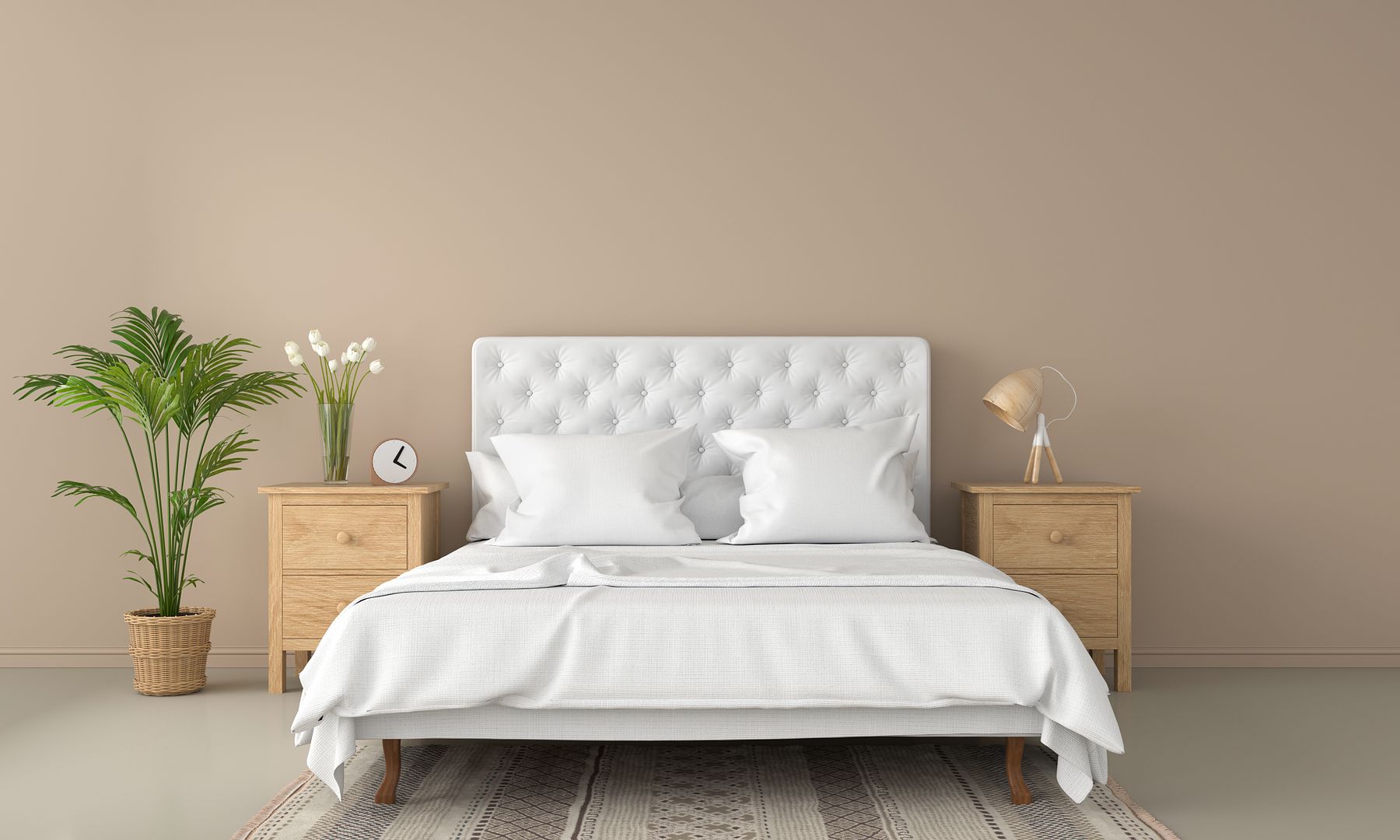
For the frame itself, simplicity tends to age better and photograph better than more ornate designs. A fabric upholstered bed frame in a neutral tone – warm white, stone, charcoal or oatmeal – works with almost any bedroom colour palette and tends to look more expensive than its price suggests. Browse our bed frames to find options that suit your style and budget.
Keep the Colour Palette Simple
One of the most effective things you can do to make a bedroom feel more relaxing – at no cost – is to simplify the colour palette.
Bedrooms with too many competing colours tend to feel busy and overstimulating, which is the opposite of what you want in a space designed for rest. A palette of two or three tones – typically a neutral base with one or two complementary accents – is usually all you need.
Neutral doesn’t have to mean boring. Warm whites, soft greiges, dusty blues, sage greens and earthy terracottas all work beautifully as bedroom base colours. The key is choosing tones that feel calm rather than energetic, and making sure the bedding, walls and larger furniture pieces work within the same general palette rather than pulling in different directions.
If repainting is off the table, you can shift the feel of a room significantly just by changing the bedding and soft furnishings to tones that are more cohesive with each other.
Layer Your Bedding for a Luxe Feel
Hotel-style bedding looks luxurious not because it’s necessarily expensive, but because it’s layered thoughtfully. The same effect is achievable at home with a bit of intention.
Start with well-fitted bed sheets in a neutral tone – white, ivory or soft grey are the most versatile. Natural fibres like cotton or linen breathe well and tend to get softer with washing, which makes them a better long-term investment than cheaper synthetic options.
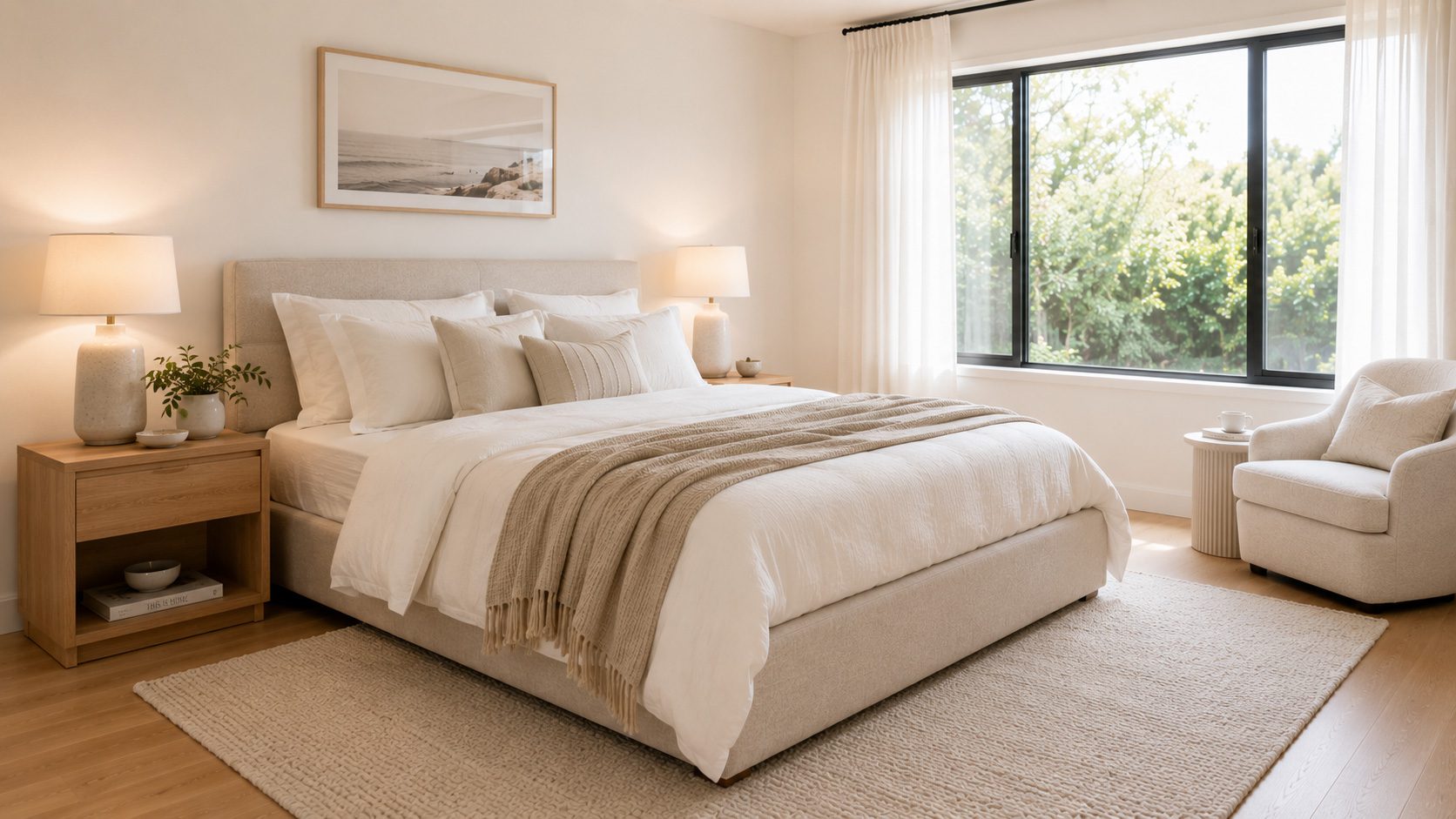
Over the sheets, add a duvet or quilt in a slightly warmer or complementary tone. Then layer a throw across the foot of the bed – either folded neatly or draped casually depending on the look you’re going for. Finally, arrange pillows in a combination of sleeping pillows and a couple of decorative cushions at the front.
The layering itself is what creates the effect. It adds depth and texture to the bed in a way that a single flat duvet never does, and it costs nothing beyond the pieces themselves.
Add Warmth with Lighting
Overhead lighting is one of the most common reasons bedrooms feel harsh and uninviting. A single ceiling light flooding the room with bright, cool light is functional but rarely relaxing.
The fix is simple and inexpensive: add bedside lamps. A warm-toned bulb (look for 2700K or lower on the colour temperature scale) creates soft, ambient light that’s far more suited to winding down at the end of the day. Two matching lamps on either side of the bed frames the room symmetrically and adds a sense of considered design even if everything else is fairly simple.
If bedside lamps aren’t in the budget immediately, a floor lamp in the corner of the room is a good alternative. The goal is to have a light source that doesn’t require turning on the overhead light when you’re in the bedroom in the evenings.
Use Furniture Thoughtfully – Less Is More
A cluttered bedroom rarely feels relaxing, no matter how nice the individual pieces are. One of the most effective things you can do on a budget is edit what’s in the room rather than add to it.
Each piece of furniture should earn its place. A bedside table on each side of the bed, a chest of drawers or wardrobe for clothing storage, and perhaps a small bench or ottoman at the foot of the bed – that’s often all a bedroom needs. Anything beyond that should have a clear purpose.
An ottoman at the foot of the bed is a particularly versatile addition. It provides a place to sit when getting dressed, acts as extra storage if it has a lift-up lid, and adds a layered, finished look to the end of the bed without taking up much space. Take a look at our ottomans for options that work at the foot of a bed.
For bedside table styling tips that keep the surface functional without feeling cluttered, our guide on how to style a bedside table covers it in detail.
Small Touches That Make a Big Difference
Once the fundamentals are in place, a few small additions can lift the overall feel of the room significantly – and most of them are inexpensive.
A plant or two. Greenery makes a bedroom feel more alive and less sterile. A small potted plant on the bedside table or a larger floor plant in the corner adds warmth and texture at minimal cost. Choose low-maintenance varieties that do well in lower light conditions – snake plants, pothos and peace lilies all work well in bedrooms.
A rug. If you have hard floors, a rug under or beside the bed immediately makes the space feel warmer and more finished. It doesn’t need to be large or expensive – even a small rug on the side of the bed you step out of first thing in the morning makes a noticeable difference.
Blackout curtains. Quality sleep is part of a relaxing bedroom, and blackout curtains make a genuine difference if your room gets early morning light. They don’t need to be expensive – simple linen-look blackout curtains in a neutral tone work well in almost any bedroom.
Declutter the surfaces. Free bedside tables and dressers of anything that doesn’t need to be there. Clear surfaces make a room feel calmer instantly, and it costs nothing.
Final Thoughts
Creating a relaxing bedroom on a budget is really about making smart priorities rather than spending less on everything equally. Put your money into the mattress and bedding first, keep the colour palette simple and cohesive, layer the soft furnishings for warmth and texture, and edit the furniture down to what’s genuinely useful. The result is a bedroom that feels calm and considered – without requiring a significant outlay to get there.