



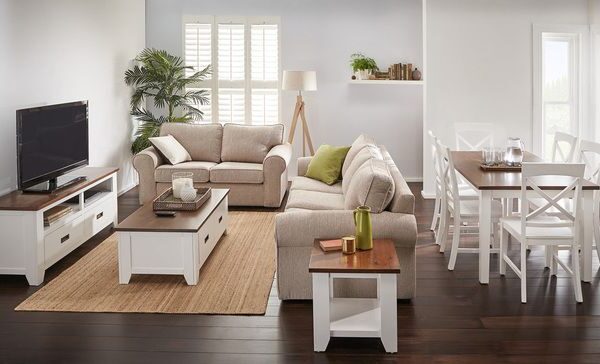


One of the most common frustrations in furniture shopping is buying pieces you love individually, only to find they don’t quite work together in the room. More often than not, this comes down to style – each piece is pulling in a slightly different direction, and the result feels incoherent rather than curated. Understanding the main furniture styles and what defines each one makes it much easier to shop with intention and build a space that feels considered from the start. Here’s a practical guide to the styles you’ll encounter most in Australian homes.
Modern / Contemporary
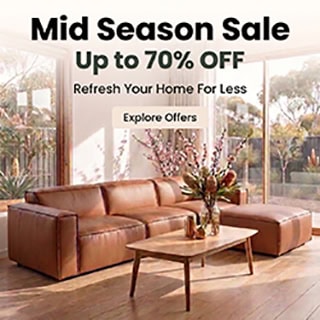
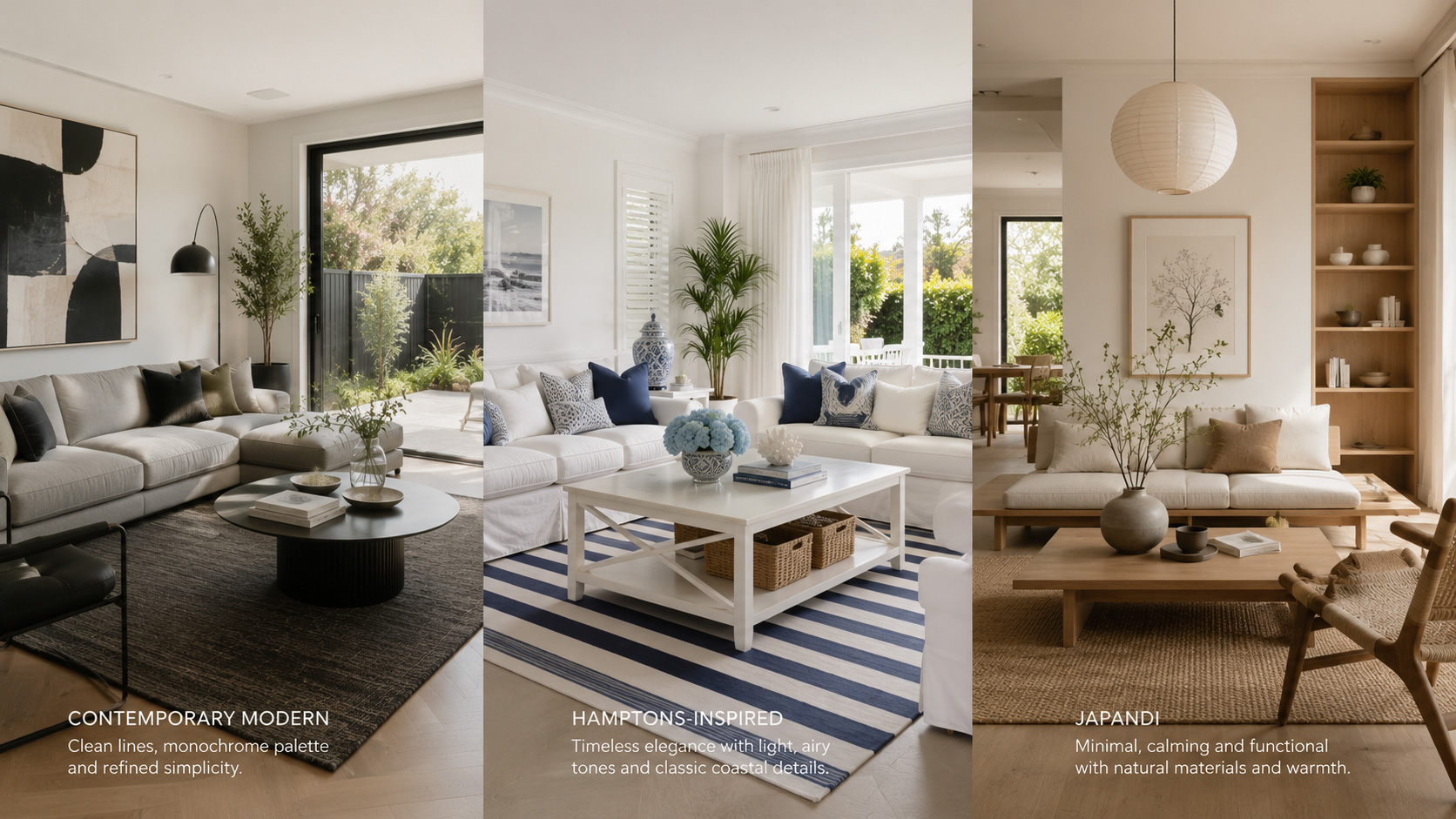
The terms modern and contemporary are often used interchangeably, but they’re slightly different. Modern as a design style refers to a specific movement from the early-to-mid twentieth century characterised by clean lines, minimal ornamentation and functional forms. Contemporary, strictly speaking, refers to what’s current right now – which in practice often overlaps significantly with modern principles.
In furniture terms, modern and contemporary pieces share several defining characteristics:
- Clean, straight or gently curved lines with no fussy detailing
- Neutral colour palettes – whites, greys, blacks and warm naturals
- Materials like leather, metal, glass and smooth upholstery fabrics
- A focus on form and proportion over decoration
- Furniture that sits lower to the ground with a sleek profile
Modern and contemporary interiors tend to feel uncluttered and calm. The challenge is avoiding a space that feels cold or impersonal – warmth is usually introduced through texture (boucle fabrics, timber accents, soft rugs) rather than colour or pattern.
Browse our modern furniture range for pieces that suit a contemporary interior direction.
Hamptons
The Hamptons style takes its name from the affluent coastal communities on Long Island, New York, and has become one of the most popular interior aesthetics in Australia – particularly in beachside suburbs and new builds.
Hamptons interiors are characterised by:
- A palette of whites, creams, soft blues and navy
- Timber floors (often wide-plank or whitewashed) and painted white cabinetry
- Wicker, rattan and natural textures alongside painted timber furniture
- Striped or linen upholstery fabrics
- Relaxed but polished – comfortable without feeling casual
Furniture in a Hamptons-style space tends to have a classic, slightly traditional quality – think upholstered sofas with generous cushioning, timber dining tables with turned or tapered legs, and wicker occasional chairs. The overall feel is coastal and elevated without being overtly beachy.
Wicker outdoor furniture translates the Hamptons aesthetic beautifully to outdoor spaces. Our wicker outdoor furniture range suits this style particularly well, both in covered alfresco areas and open garden settings.
Japandi
Japandi is a portmanteau of Japanese and Scandinavian design – two aesthetics that, despite their geographic distance, share a surprising amount of common ground. Both prioritise simplicity, natural materials, craftsmanship and a sense of calm. The result of combining them is a style that feels warm, minimal and grounded.
Key characteristics of Japandi interiors:
- A muted, earthy palette – warm whites, soft greiges, charcoal, terracotta and sage
- Natural materials: timber, linen, cotton, stone and ceramics
- Furniture with simple, clean lines and visible joinery or craftsmanship
- A deliberately pared-back approach – only what’s necessary is in the space
- Warmth through texture and natural tones rather than pattern or colour
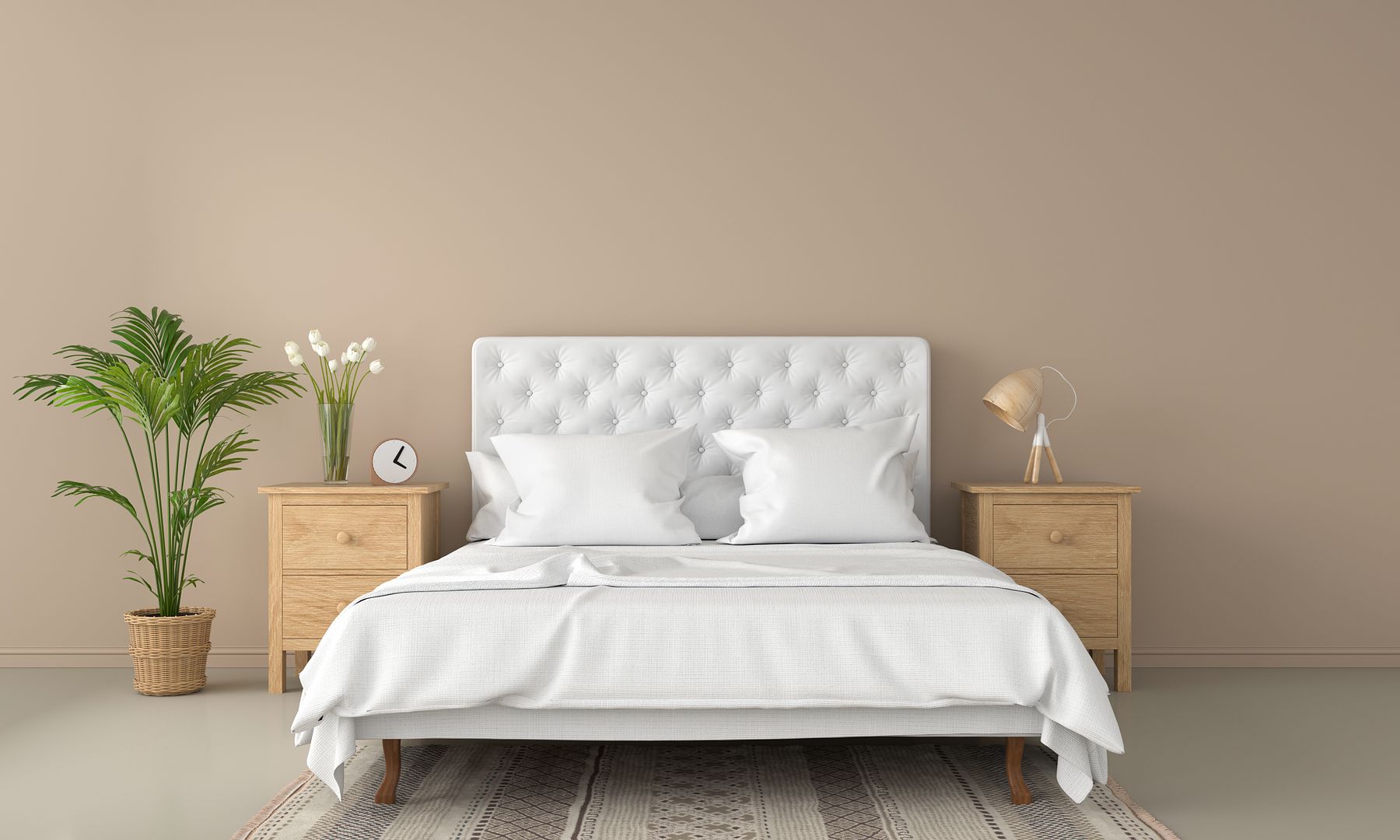
Japandi is one of the most liveable aesthetics in practice because it prioritises calm and function over decoration. It suits bedrooms particularly well – the stripped-back approach and natural materials create a genuinely restful environment. Timber bed frames, linen bedding and simple bedside tables in natural tones are the building blocks of a Japandi bedroom. Our bed frames in timber finishes work well within this aesthetic.
Coastal Australian
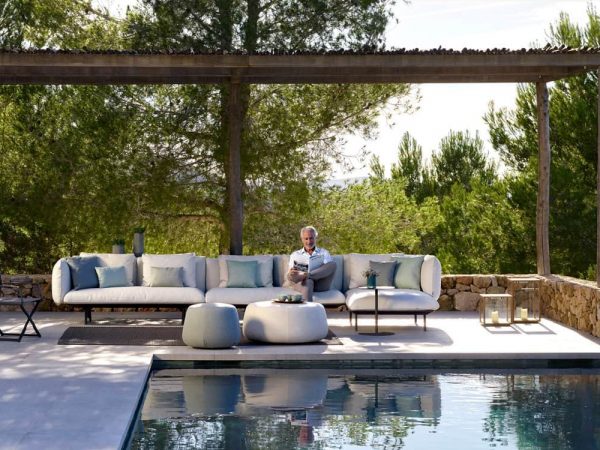
Distinct from Hamptons, the coastal Australian style is more relaxed, less formal and draws more directly from the natural environment. It’s less about a curated coastal aesthetic and more about a genuine connection to the outdoors – light, air, natural materials and an easy, unpretentious feel.
Defining elements include:
- A palette drawn from the natural landscape – sand, stone, ocean blue, eucalyptus green
- Rough-hewn or reclaimed timber, stone surfaces and natural fibre rugs
- Furniture that feels relaxed and lived-in rather than showroom-polished
- Indoor-outdoor flow, with furniture and materials that work in both spaces
- A mix of textures – linen, cotton, wicker, timber – rather than a single dominant material
The coastal Australian style suits a wide range of homes and doesn’t require a beachside location to feel authentic. The key is choosing materials and tones that feel connected to the natural environment rather than trying to replicate a specific look.
Farmhouse / Rustic
The farmhouse or rustic style draws on the aesthetic of rural and country living – solid timber furniture, aged finishes, handmade or artisanal details and a sense of warmth and informality.
Key characteristics:
- Solid timber furniture with visible grain, knots and natural imperfections
- A warm palette of whites, creams, warm browns and deep greens or navies
- Aged, distressed or patinated finishes that suggest history and use
- Natural textiles – linen, cotton, wool – in understated patterns
- Practical, functional furniture with sturdy proportions
Farmhouse-style dining rooms are particularly popular in Australia. A solid timber dining table paired with upholstered or timber dining chairs, a woven rug and simple pendant lighting above the table creates a space that feels warm and inviting without being overly formal. Our dining tables in timber finishes suit this direction well.
How to Mix Styles Without It Looking Messy
In practice, very few homes are a pure expression of a single style. Most people are drawn to elements from several different aesthetics, and that’s entirely normal. The key to mixing styles successfully is having a dominant direction and treating the other elements as accents rather than equals.
A useful approach:
Choose one primary style that accounts for around 70-80% of the furniture and finishes in a room. This becomes the backbone of the space.
Introduce a secondary style through a few accent pieces – an occasional chair, a rug, a piece of artwork. This adds depth and personality without pulling the room in too many directions at once.
Find a common thread. Even very different styles can coexist if they share something – a consistent colour palette, a similar material finish, or a shared sense of scale and proportion. A Japandi living room can accommodate a Hamptons-influenced occasional chair if both pieces share a neutral palette and a clean line.
Avoid equal competition. The problem with mixed interiors that don’t work is usually that no single style is dominant. When everything is given equal weight, nothing stands out and the result feels eclectic in a chaotic rather than considered way.
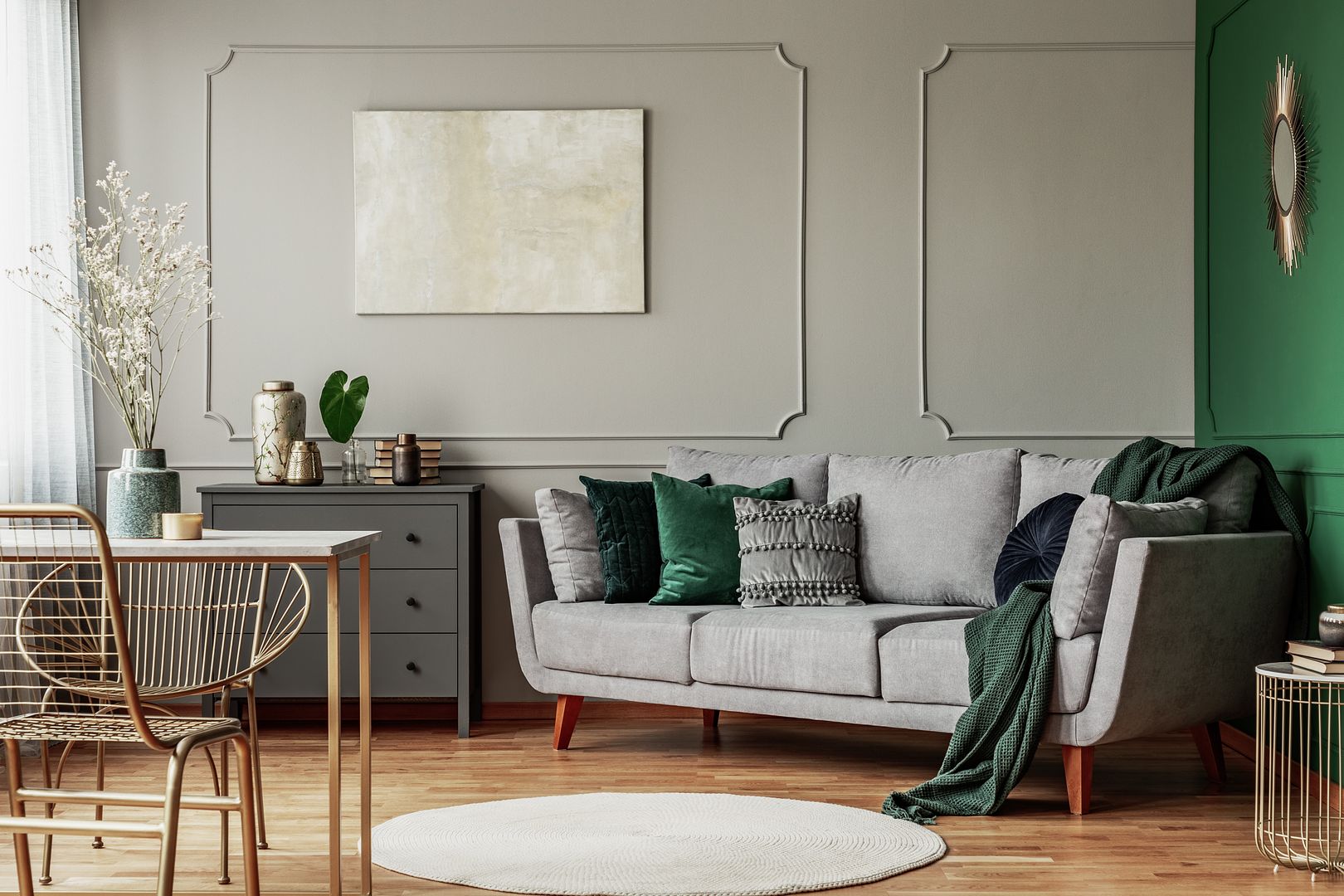
For help bringing a sofa-centred living room together in a cohesive style, our guide on how to style your sofa with cushions and throws covers how to use soft furnishings to tie a space together.
Final Thoughts
Knowing your style direction before you start shopping is one of the most useful things you can do to avoid expensive mistakes. You don’t need to commit rigidly to a single aesthetic – most well-designed spaces are a blend – but having a clear primary direction makes every individual purchase decision easier. When you’re standing in front of two dining chairs and can’t decide, knowing which one belongs in your style direction usually makes the answer obvious.